Ricette di Sicilia
Cibo, cultura e tradizioni siciliane
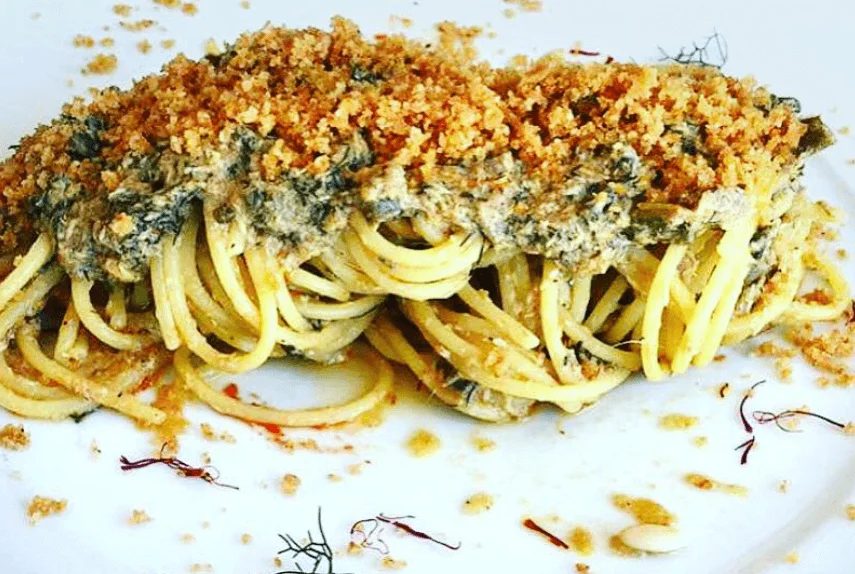
Pasta con le Sarde (Authentic Sicilian Recipe)
Authentic Pasta con le Sarde from Palermo with wild fennel, sardines, raisins and pine nuts. Traditional Sicilian spring recipe linked to St Joseph’s Day.
📖 What is it
Authentic Pasta con le Sarde from Palermo with wild fennel, sardines, raisins and pine nuts. Traditional Sicilian spring recipe linked to St Joseph’s Day.
🛒 Ingredients
- ✓ 280 g bucatini
- ✓ 700 g very fresh sardines
- ✓ 3 bunches of wild fennel
- ✓ 1 onion
- ✓ 1 sachet of saffron
- ✓ 30 g butter
- ✓ Dry white wine
- ✓ 70 g anchovy fillets in oil
- ✓ Half a glass of extra virgin olive oil
- ✓ 2 tablespoons pine nuts
- ✓ 50 g raisins
- ✓ 40 g peeled and toasted almonds
- ✓ A cup of breadcrumbs
- ✓ Salt
- ✓ Freshly ground black pepper
📊 Nutritional Information
Pasta con le Sarde is a traditional Sicilian pasta made with fresh sardines, wild fennel, raisins, pine nuts and saffron. Originating in Palermo, it embodies the balance of sea and land typical of the island’s cuisine. In many Sicilian households, it is also connected to St Joseph’s Day celebrations in March, when seasonal and symbolic dishes take centre stage.
👨🍳 Preparation
- 1
Clean the wild fennel thoroughly, wash it well and boil it in plenty of salted water. Drain it, reserving the cooking water, then finely chop the fennel.
- 2
Prepare the sardines by removing the heads, tails, and bones, then wash and pat them dry.
- 3
In a large frying pan, gently fry the chopped anchovies with sliced onion in extra virgin olive oil.
- 4
After about 10 minutes, add the pine nuts, raisins soaked in warm water, the boiled fennel, and the sardines. Stir and cook for around 5 minutes.
- 5
Deglaze with white wine, then season with salt, freshly ground black pepper, and saffron dissolved in half a glass of warm water.
- 6
Cook, stirring constantly, until the sauce thickens.
- 7
Cook the bucatini in the reserved fennel cooking water until just al dente, then drain and add to the pan with the sauce. Mix well.
- 8
Transfer the pasta to a buttered ovenproof dish sprinkled with breadcrumbs. Scatter over the chopped almonds and dot with butter.
- 9
Bake for 20 minutes. Serve hot, though it’s equally delightful warm or cold.
🧠 Why It Works
Pasta con le Sarde works because it is built on structural contrast and calibrated flavour layering. The richness of fresh sardines is balanced by the herbal intensity of wild fennel and the controlled sweetness of raisins. Pine nuts contribute fat and texture, while anchovies melt into the soffritto, creating umami depth without overpowering the fish. Saffron adds aromatic warmth and slight bitterness, tightening the flavour profile. Cooking the pasta in fennel-infused water reinforces aromatic continuity, and the optional oven finish with breadcrumbs and almonds introduces textural contrast and Maillard complexity. The result is gastronomically coherent, culturally precise and seasonally aligned with early spring.
🛠️ Troubleshooting
Why does my sauce taste too strong or fishy?
The sardines may not be very fresh or were overcooked. Use the freshest possible fish and cook briefly to preserve balance.
The pasta is too dry after baking. How can I fix it?
Ensure sufficient fennel cooking water is incorporated before baking and avoid excessive oven time.
The flavour is too sweet. What should I adjust?
Reduce the raisins slightly and increase fennel or add a touch more dry white wine to rebalance the profile.
Can I prepare Pasta con le Sarde in advance?
Yes. It can be assembled ahead and baked just before serving, though it is at its best freshly made.
💡 Tips and Variations
- •
For a richer take, try using artisanal spaghetti or homemade pasta to really bring out the texture.
- •
A handy tip is to lightly toast the pine nuts before adding them, which boosts their flavour and adds a lovely crunch.
- •
The star of the dish is the oily fish, especially the fresh sardines, which give it that unmistakable maritime character.
- •
If you prefer a vegetarian option, swap the sardines for grilled aubergines and add a pinch of oregano to keep that Mediterranean aroma.
- •
To enhance the umami, try adding a sprinkle of nutritional yeast flakes or a teaspoon of soy sauce while preparing the sauce.
- •
For a gluten-free version, opt for corn or rice pasta and ensure all ingredients are certified gluten-free.
- •
Remember: the magic of this dish lies in balancing intense flavours with the freshness of the ingredients for a harmonious, comforting result.
📦 Storage
- • Store the pasta in an airtight container in the fridge, where it will keep well for up to two days.
- • Before serving, gently reheat in a low oven or microwave to preserve its texture and aromas.
- • Avoid freezing pasta with sardines, as the fish may lose its texture and alter the original flavour.
🍷 Pairing
A Sicilian Grillo offers bright acidity and citrus clarity that cuts through the sardines’ richness while enhancing fennel aromas. An Etna Bianco brings volcanic minerality and saline tension, echoing the maritime character of the dish. As an elegant alternative from Southern Italy, a Fiano di Avellino provides structure, floral intensity and balanced freshness, complementing both the sweetness of raisins and the savoury depth of the fish.
❓ F.A.Q.
What is Pasta con le Sarde?
Pasta con le Sarde is a classic Sicilian pasta from Palermo made with fresh sardines, wild fennel, raisins, pine nuts and saffron, traditionally prepared in spring.
Is Pasta con le Sarde linked to St Joseph’s Day?
Yes. Although not exclusively a feast dish, in many Sicilian families it appears during St Joseph’s Day in March, when seasonal ingredients and symbolic foods are celebrated.
Which pasta shape is traditional?
Bucatini is the most common choice in Palermo, but spaghetti or perciatelli are also considered traditional.
Can I make it without wild fennel?
Wild fennel is central to the authentic flavour. Cultivated fennel fronds can be used as a substitute, but the aroma will be less intense.
Is it served baked or not baked?
Both versions exist. In Palermo, finishing the dish in the oven with breadcrumbs and almonds is a well-established variation.
🏛️ History and Tradition
The Origins of Pasta con le Sarde
Pasta con le sarde is one of the most emblematic dishes of Sicilian cuisine and represents a harmonious meeting point between sea and land. Its origins are commonly traced back to the Arab period in Sicily, between the ninth and eleventh centuries, when culinary traditions blended local ingredients with spices and techniques from the wider Mediterranean and Middle East. According to popular legend, the dish was created as a practical solution to feed troops, combining freshly caught sardines with wild fennel gathered from the surrounding countryside.
Arab Influence and the Balance of Flavours
The inclusion of raisins and pine nuts clearly reflects Arab culinary influence. The interplay of sweet and savoury, characteristic of Middle Eastern gastronomy, finds one of its most refined expressions in this dish. Sardines, abundant along the Sicilian coast, are paired with wild fennel, an aromatic plant that grows naturally across the island. The result is a distinctive and deeply aromatic flavour profile that has become synonymous with Sicilian cooking.
A Signature Dish of Palermo
Pasta con le sarde is especially associated with Palermo and its surrounding province, where the recipe has become part of the city’s culinary identity. While there are minor family variations, certain elements remain constant. The pasta is often bucatini or occasionally anelletti, and the finishing touch of toasted breadcrumbs, known locally as “muddica atturrata”, symbolically replaces grated cheese, reflecting older popular traditions.
Seasonality and Territorial Identity
The dish is traditionally prepared in spring, when wild fennel is at its most fragrant and tender. Its ingredients tell the story of Sicily itself: sardines from the sea, fennel from the countryside, raisins and pine nuts from the pantry. This combination embodies the Mediterranean ability to transform simple products into complex, balanced cuisine.
A Culinary Symbol of Sicily
Today, pasta con le sarde is recognised internationally as one of Sicily’s defining dishes. While interpretations may vary, its historical and cultural identity remains intact. Through its nuanced blend of flavours, it continues to reflect centuries of cultural exchange and the enduring relationship between Sicilian food and its territory.
Making pasta with sardines is like bringing a slice of Sicily to your table, with its vibrant aromas and centuries-old heritage. I warmly encourage you to give this recipe a go — it’s a wonderful way to experience authentic Mediterranean flavours and share something truly special with your loved ones. Don’t forget to tell me how you get on and spread the joy of this beautiful tradition using the share buttons below!
Rate this recipe
4.7/5 (122)
Click or tap the stars to rate