Ricette di Sicilia
Cibo, cultura e tradizioni siciliane
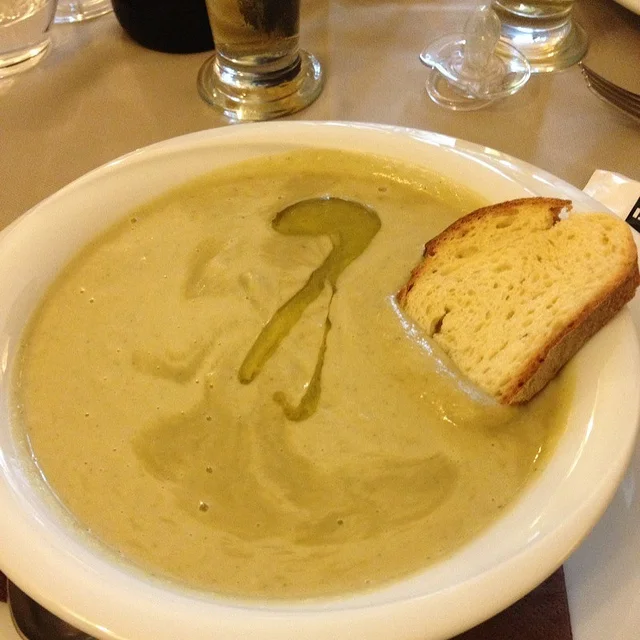
Macco di Fave (Sicilian Fava Bean Purée for Saint Joseph’s Day)
Authentic Macco di Fave recipe from Sicily: creamy fava bean purée with wild fennel, traditionally served on Saint Joseph’s Day, 19 March.
📖 What is it
Authentic Macco di Fave recipe from Sicily: creamy fava bean purée with wild fennel, traditionally served on Saint Joseph’s Day, 19 March.
🛒 Ingredients
- ✓ 800g dried shelled broad beans
- ✓ 1 onion
- ✓ 1 celery stalk
- ✓ Wild fennel
- ✓ Extra virgin olive oil
- ✓ Salt
- ✓ Freshly ground black pepper
- ✓ 400g cooked chard (optional)
📊 Nutritional Information
Macco di Fave is a traditional Sicilian fava bean purée made by slowly cooking dried broad beans until they break down into a thick, creamy consistency. Deeply rooted in the provinces of Agrigento, Enna and Caltanissetta, it is especially associated with Saint Joseph’s Day on 19 March, when it symbolises gratitude, providence and rural abundance.
👨🍳 Preparation
- 1
Soak the dried shelled broad beans overnight.
- 2
The following day, cook the beans in plenty of salted water along with the onion, celery, and wild fennel.
- 3
As the cooking nears completion, you can choose to add pasta or separately boiled chard.
- 4
Continue cooking gently, stirring often, and add a generous drizzle of extra virgin olive oil.
- 5
Serve the macco di fave piping hot, finished with a sprinkle of black pepper and a final splash of olive oil.
🧠 Why It Works
Macco di Fave works because it relies on the natural starch of dried, shelled broad beans rather than added thickeners. Long, gentle simmering allows the beans to collapse into a velvety purée, creating body and depth. Onion and celery provide foundational sweetness, while wild fennel introduces a distinctly Sicilian aromatic profile with subtle anise notes. The final drizzle of high-quality extra virgin olive oil enhances mouthfeel and acts as an aromatic carrier, amplifying herbal nuances. Optional chard contributes a mild bitterness that balances the earthy sweetness of the beans, resulting in structural harmony and territorial authenticity.
🛠️ Troubleshooting
Why is my Macco too watery?
Allow it to simmer uncovered and stir frequently so excess liquid evaporates and the beans release more starch.
The purée tastes flat. How can I improve it?
Adjust the salt carefully and finish with a generous drizzle of high-quality extra virgin olive oil to intensify aroma and richness.
My beans are not breaking down properly. What went wrong?
They may be old or insufficiently soaked. Soak for at least 12 hours and cook gently until fully softened before blending or stirring.
Can Macco di Fave be prepared in advance?
Yes. It keeps well for up to 48 hours in the fridge and can be frozen in portions for about one month.
💡 Tips and Variations
- •
For a heartier meal, try stirring in small pasta shapes like ditalini or broken spaghetti directly into the soup.
- •
Experiment by swapping wild fennel for other Sicilian herbs such as rosemary or mint to create a different aromatic profile.
- •
For an extra touch of luxury, drizzle a high-quality extra virgin olive oil over the macco just before serving.
- •
To keep it vegan and gluten-free, skip the pasta and rely solely on broad beans and herbs, preserving the traditional flavour.
- •
The key to perfect macco is slow, gentle cooking which allows the beans to release their creamy texture and rich taste.
📦 Storage
- • Store the macco in an airtight container in the fridge, where it will keep fresh for up to 48 hours.
- • For longer storage, freeze the cooked macco in individual portions, ready to enjoy for up to a month.
- • To reheat, warm gently in a pan over a low heat, stirring occasionally to prevent sticking and to maintain its creamy consistency.
🍷 Pairing
A Sicilian Grillo offers vibrant acidity and citrus lift, cutting through the creamy texture while enhancing the herbal notes of wild fennel. An Etna Bianco, with its volcanic minerality and subtle savoury profile, mirrors the dish’s earthy depth. For an option from Southern Italy, a Campanian Fiano di Avellino provides structure, floral intensity and balanced freshness, complementing the sweetness of the broad beans.
❓ F.A.Q.
What is Macco di Fave?
Macco di Fave is a traditional Sicilian purée made from dried broad beans slowly cooked until creamy, often served for St Joseph’s Day on 19 March.
Is Macco di Fave a soup or a purée?
Traditionally it is a thick purée, almost spoon-standing, but it can be adjusted with more liquid to resemble a rustic soup.
Why is Macco di Fave eaten on St Joseph’s Day?
In Sicily, legumes symbolise providence and abundance. Macco is prepared on 19 March as part of St Joseph’s altars and communal celebrations.
Can I use fresh broad beans instead of dried?
Yes, especially in spring. However, dried shelled broad beans provide a more authentic texture and deeper, traditional flavour.
Is Macco di Fave vegan and gluten-free?
The classic recipe is naturally vegan and gluten-free, provided no pasta is added.
🏛️ History and Tradition
The Origins of Macco di Fave for Saint Joseph’s Day
Macco di fave prepared for Saint Joseph’s Day is one of the oldest and most symbolic dishes within Sicilian culinary tradition. Widely prepared across the island on 19 March, it forms part of the votive tables dedicated to the saint. Broad beans, the central ingredient, are among the most ancient legumes cultivated in the Mediterranean and reflect Sicily’s deep agricultural roots.
The Symbolism of Broad Beans in Popular Tradition
In Sicilian rural culture, broad beans have long symbolised fertility and prosperity. As a hardy crop capable of thriving in modest soil conditions, they became associated with resilience and survival. According to popular devotion, Saint Joseph’s intercession ended a devastating drought, and the successful harvest of broad beans was interpreted as a tangible sign of renewed abundance.
A Humble Dish with Profound Meaning
Macco is a thick purée made by slowly cooking dried broad beans until they break down into a creamy consistency. It is traditionally flavoured with wild fennel and finished with extra virgin olive oil. The simplicity of its ingredients reflects the Lenten period during which the feast occurs, while its nourishing character embodies the resourcefulness of Sicilian rural cuisine.
The Votive Tables and the Act of Sharing
On Saint Joseph’s Day, macco di fave occupies a central place among the meat-free dishes served on votive tables. Prepared in large quantities, it is distributed and shared as a gesture of gratitude and solidarity. This communal act reinforces bonds of faith and kinship, renewing a tradition that connects spirituality with everyday sustenance.
A Living Expression of Sicilian Heritage
Today, macco di fave continues to be cooked throughout Sicily on 19 March. More than a simple legume dish, it represents continuity, collective memory and territorial identity. Through its modest ingredients and slow preparation, it preserves a centuries-old relationship between land, devotion and community life.
Making macco di fave is like stepping into a genuine slice of Sicilian tradition, a dish that tells tales of the countryside and honest flavours. I warmly encourage you to try this recipe at home, bringing a little corner of Sicily into your kitchen and sharing moments of flavour and togetherness with your loved ones. Don’t forget to use the sharing buttons to spread this simple yet storied delight with others.
Rate this recipe
Click or tap the stars to rate