Ricette di Sicilia
Cibo, cultura e tradizioni siciliane
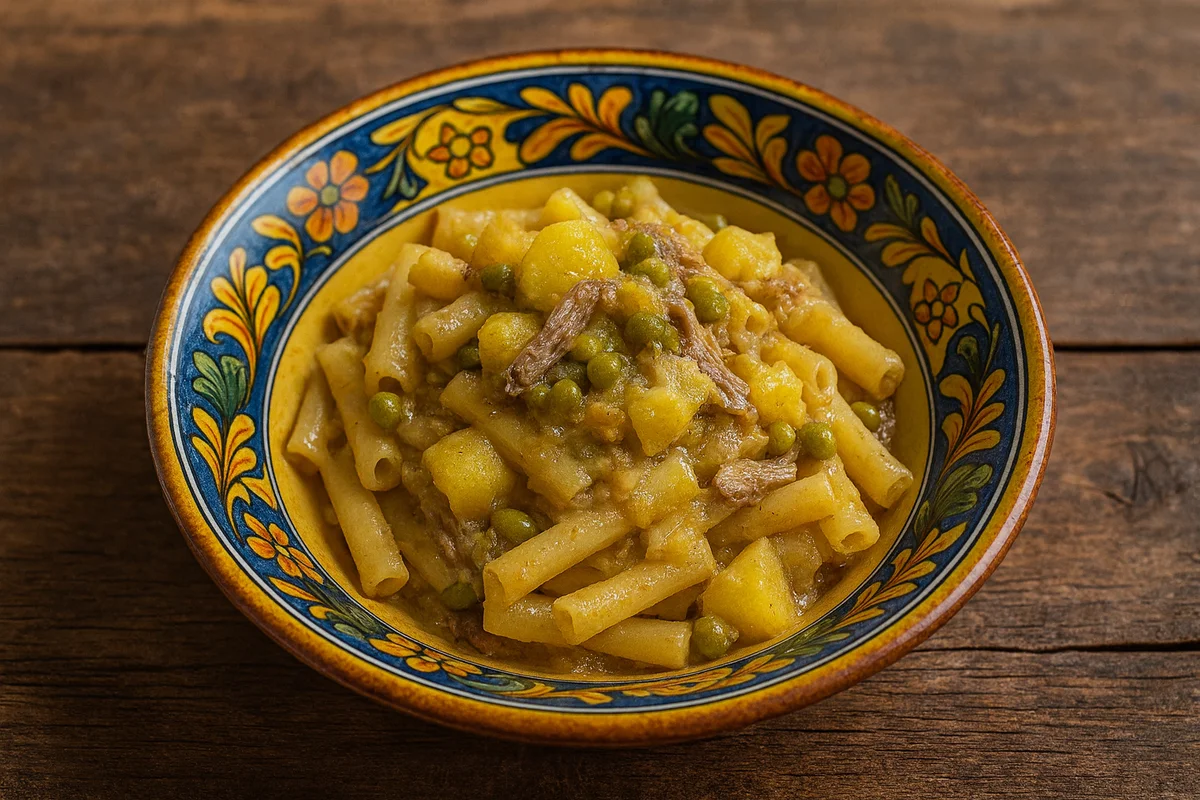
Sicilian Pasta Aggrassata: A Hearty Hug from Palermo
Delve into the authentic Sicilian pasta aggrassata, a humble yet robustly flavoured dish steeped in tradition.
📖 What is it
Delve into the authentic Sicilian pasta aggrassata, a humble yet robustly flavoured dish steeped in tradition.
🛒 Ingredients
- ✓ 320g short pasta of your choice
- ✓ 3 medium potatoes (peeled and diced)
- ✓ 3 large onions
- ✓ 200g fresh or frozen peas
- ✓ 300g beef, cut into chunks
- ✓ 4 bay leaves
- ✓ extra virgin olive oil
- ✓ 2 tbsp tomato purée (optional)
- ✓ freshly cracked black pepper
- ✓ Trapani sea salt
- ✓ grated Sicilian pecorino cheese
📊 Nutritional Information
This pasta is like a warm embrace on a Sunday lunch table: pasta aggrassata from Sicily is a rich, comforting first course hailing from Palermo’s culinary heritage. Tender beef is slow-cooked with onions and potatoes until they melt into a creamy, flavoursome sauce. It’s a recipe that rewards patience and gentle simmering, perfect for family gatherings or special occasions when you want to bring a wholesome, homey dish that tells the story of Sicily’s cosy, soulful cooking to your table.
👨🍳 Preparation
- 1
Thinly slice the onions and gently soften them in a large pan with a good glug of extra virgin olive oil, the bay leaves, salt, and pepper.
- 2
Add the diced potatoes, peas, and beef pieces, stirring well. If you like, stir in the tomato purée.
- 3
Pour in about a litre of water, bring to the boil, then reduce the heat, cover, and let it simmer gently for around 30 minutes until the potatoes and onions have almost broken down into a creamy consistency and the beef is tender and shredding.
- 4
Meanwhile, bring salted water to the boil for the pasta; cook it until just al dente, draining a few minutes before it’s fully cooked.
- 5
Tip the pasta into the pan with the creamy potatoes and peas, adding a splash of the cooking water if needed. Finish cooking, stirring frequently, until the pasta is beautifully coated and enveloped in the sauce.
- 6
Turn off the heat and serve immediately, drizzling with a little extra virgin olive oil and plenty of grated pecorino.
💡 Tips and Variations
For a heartier version, stir in some leftover stewed meat — this is the old-school basis of ‘pasta agglassata’. Alternatively, swap some of the mixed pasta for broken ’mezze maniche’ to catch more of that luscious sauce.
If you prefer a vegetarian take that honours the original, replace the meat with ‘hearty’ vegetables while keeping the key elements: plenty of onions, chunky potatoes, white wine, a touch of tomato purée or passata, grated cheese, and that classic slow-cooked finish until everything turns creamy and ‘aggrassato’.
To mimic the meatiness, try a mix of firm vegetables like mushrooms (champignons, mixed or porcini), diced aubergines, or cooked chickpeas or lentils — or a combination — preserving that satisfying bite and flavour depth.
Step-by-step vegetarian version:
- Base: gently soften finely sliced onions in extra virgin olive oil over low heat until soft and translucent.
- Vegetables in place of meat: add sliced mushrooms and/or well-drained aubergine cubes; for extra richness, toss in a cup of cooked chickpeas or lentils. Fry until golden.
- Potatoes and deglaze: add diced potatoes, stir, then splash with white wine and let the alcohol cook off.
- Slow cooking: cover with vegetable stock (or water plus a stock cube), bring to a gentle simmer and cook covered on very low heat until the vegetables are very tender and the sauce is thick and glossy—adding stock little by little as needed.
- Finishing the pasta: cook pasta until very al dente, drain and stir into the pan, blending with cooking water and a generous grating of cheese (pecorino or a vegetarian-friendly variety).
Tips and alternatives:
- Boost umami by stirring a teaspoon of tomato purée or a splash of soy sauce into the base.
- For a fully vegan version, replace cheese with a blend of nutritional yeast flakes and crushed nuts (like almonds or cashews) to give creaminess and deeper flavour.
- Always respect the original approach: gentle heat, slow cooking times, and a sauce that lovingly coats the pasta, not drowns it.
📦 Storage
- • Keep refrigerated in an airtight container for up to one day.
- • Reheat gently in a pan with a splash of water to restore the creamy texture.
- • Avoid freezing as the potatoes and onions will lose their texture.
🍷 Pairing
The perfect partner for pasta aggrassata is a medium-bodied Sicilian red wine — fresh, with enough tannin to balance the dish’s rich softness without masking its natural sweetness.
Recommended Sicilian reds:
- Nero d’Avola: medium to full-bodied, with ripe fruit and spicy notes that complement the slow-cooked beef, onions, and onions-rich sauce beautifully.
- Cerasuolo di Vittoria (Nero d’Avola + Frappato): fresher and more fragrant, a lighter choice if your aggrassata is less heavy or served as part of a multi-course meal.
- Etna Rosso (Nerello Mascalese): elegant, mineral and subtle, ideal if you’re after a refined match that cleanses the palate while staying rooted in Sicilian terroir.
Other reds and alternatives:
- If you’re outside Sicily, look for Sangiovese/Chianti or Barbera, known for their lively acidity and medium tannins—perfect companions for slow-cooked meat sauces.
- If your sauce tends towards the sweeter side thanks to onions and potatoes, and not too ‘red’, a structured Sicilian rosé (from Nero d’Avola or Nerello Mascalese) can be a fresh and delightful option, especially in warmer months.
Give this hearty Sicilian pasta aggrassata a go at home—you’ll find it’s the kind of comforting, soul-warming dish that brings people together. Perfect for cosy gatherings or a weekend feast, it’s a wonderful way to share a taste of Palermo’s rich culinary heritage. Don’t forget to drizzle it with some good olive oil and sprinkle on plenty of pecorino before serving. Gather your loved ones, tuck in, and enjoy the smiles that everyone at your table is sure to have. Do share your efforts too—I’d love to hear how you get on with this little Sicilian treasure!
Rate this recipe
Click or tap the stars to rate