Ricette di Sicilia
Cibo, cultura e tradizioni siciliane
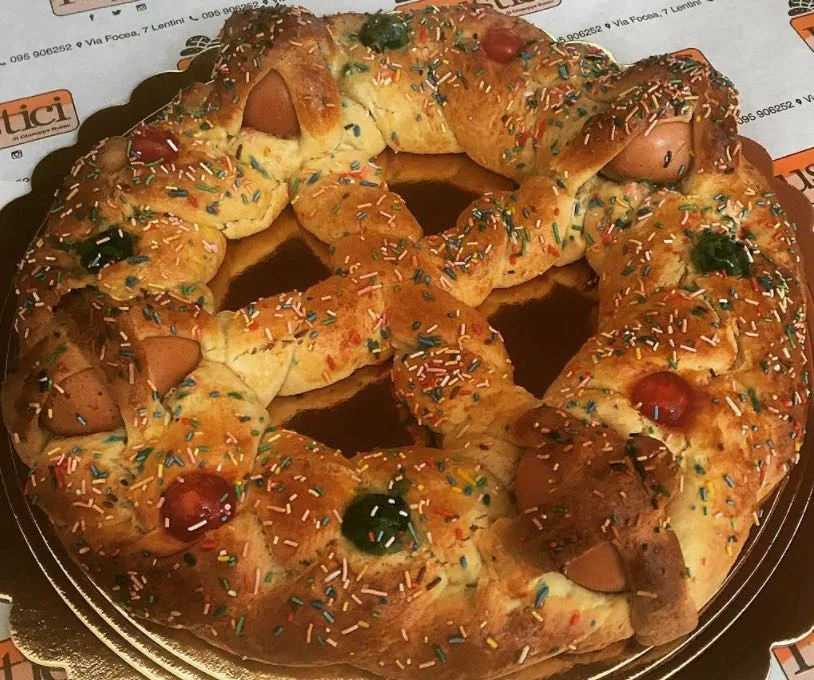
Ciciliu di Lentini Easter Cake: Traditional Sicilian Festive Delight
Discover Ciciliu di Lentini, a traditional Sicilian Easter cake with semolina and vibrant decorations, embodying Sicily’s festive culinary heritage.
📖 What is it
Discover Ciciliu di Lentini, a traditional Sicilian Easter cake with semolina and vibrant decorations, embodying Sicily’s festive culinary heritage.
🛒 Ingredients
- ✓ 500g semolina flour
- ✓ 500g plain flour
- ✓ 300g unsalted butter
- ✓ 300g caster sugar
- ✓ 1 sachet baking powder
- ✓ Milk, as needed
- ✓ 20 hard-boiled eggs
- ✓ Sugar 'devils' (diavoletti di zucchero)
- ✓ Glacé cherries
📊 Nutritional Information
Ciciliu di Lentini is a traditional Sicilian Easter cake, celebrated for its braided semolina dough and symbolic hard-boiled eggs. Originating from Lentini in eastern Sicily, this festive cake embodies the island’s rich culinary customs and the joyous spirit of Easter gatherings.
👨🍳 Preparation
- 1
Sift both flours together and mix with the caster sugar in a large bowl.
- 2
Add the butter cut into small cubes, the baking powder, and enough milk to bring the dough together into a soft, elastic ball.
- 3
Wrap the dough in cling film and chill in the fridge for half an hour.
- 4
Divide the dough into five equal portions and roll three into strands to braid, forming a ring about 20cm across.
- 5
Using a little extra dough, fashion a cross in the centre of the ring and place a hard-boiled egg at the end of each arm.
- 6
Decorate with glacé cherries and sugar devils for a colourful finish.
- 7
Bake in a preheated oven at 200°C until golden brown.
🧠 Why It Works
The Ciciliu di Lentini balances the nutty depth of semolina with soft plain flour, creating a tender yet structured dough. Butter enriches the pastry, while sugar adds sweetness that harmonises with the natural acidity of glacé cherries and the subtle bitterness of sugar devils. Braiding the dough and incorporating hard-boiled eggs not only enhances visual appeal but also reflects the symbolic renewal of Easter. Baking at a high temperature ensures a golden crust with a delicate crumb, while the aromatic vanilla and optional bitter almond extract deepen the flavour profile, reinforcing its Sicilian authenticity.
🛠️ Troubleshooting
Why is my dough too sticky or too dry?
Adjust milk quantity gradually; too much milk causes stickiness, while too little results in dry, crumbly dough. Aim for a soft, elastic consistency.
How to prevent the cake from becoming hard after baking?
Avoid refrigeration and store in airtight containers at room temperature to maintain the pastry’s delicate softness and prevent hardening.
What can I use if I don’t have glacé cherries or sugar devils?
Substitute with other candied fruits or dried berries to maintain the traditional colourful and sweet decoration.
Can I prepare the dough in advance and freeze it?
Yes, the dough can be wrapped tightly and frozen for up to one month. Thaw in the fridge before shaping and baking.
How to balance sweetness if using extra candied fruits?
Reduce caster sugar slightly in the dough to compensate for the additional sweetness from candied fruits, preserving flavour harmony.
💡 Tips and Variations
- •
Add your favourite candied fruits to the ciciliu for a personalised burst of colour and flavour.
- •
Try a pinch of cinnamon in the dough to introduce a warm, spicy note.
- •
For a richer version, fold in chopped almonds, honouring Sicily’s love of nuts like hazelnuts and almonds.
- •
Use moulds of different shapes to create a more dramatic and festive presentation.
- •
For a lighter twist, reduce the sugar and swap the butter for a mild extra virgin olive oil, while keeping the dough soft and tender.
- •
Enhance the aroma with a drop of natural bitter almond extract, which deepens the cake’s complexity.
- •
Patience is key when decorating the ciciliu — every detail reflects the care and love of this cherished tradition.
📦 Storage
- • Store the ciciliu in a tin or airtight container to keep its crispness and fragrance intact.
- • Keep it in a cool, dry place away from moisture, which can spoil the texture.
- • Avoid the fridge, as the cold can harden the pastry and take away its delicate softness.
🍷 Pairing
A Moscato Passito from Pantelleria, with its luscious sweetness and intense aromatic profile, beautifully complements the rich, buttery notes and sugary accents of the Ciciliu di Lentini. The fresh, floral character and balanced acidity of a Malvasia from the Lipari Islands provide a refined contrast that enhances the cake’s festive flavours. For an international touch, a Tuscan Vin Santo offers a complex bouquet of dried fruits and honeyed nuances, harmonising elegantly with the dessert’s traditional sweetness and festive spirit.
❓ F.A.Q.
What is the significance of the hard-boiled eggs in Ciciliu di Lentini?
The hard-boiled eggs symbolize rebirth and fertility, traditional themes of Easter in Sicily, and are integral to the cake’s festive presentation.
Can Ciciliu di Lentini be made ahead of Easter Sunday?
Yes, it can be prepared a day or two in advance and stored in an airtight container at room temperature to preserve its freshness and aroma.
How can I adapt the recipe for a lighter version?
Reduce the sugar and substitute butter with mild extra virgin olive oil to maintain softness while lowering fat content, preserving the cake’s delicate balance.
What is the best way to store Ciciliu di Lentini after baking?
Store it in a tin or airtight container in a cool, dry place away from moisture to keep the pastry crisp and fragrant without refrigeration.
Are there traditional decorations used on Ciciliu di Lentini?
Yes, glacé cherries and sugar 'devils' (diavoletti di zucchero) are traditional decorations that add colour and sweetness, enhancing the cake’s festive look.
🏛️ History and Tradition
The ciciliu from Lentini is a traditional Easter loaf from the Syracuse area, made with a rich leavened dough shaped into a large ring or basket, decorated with hard-boiled eggs, sugar sprinkles and candied fruit. It is closely associated with Lentini and its surroundings and is traditionally given to children on Easter morning as a festive gift.
Origins and meaning
Originally, ciciliu was a simple sweet bread made with humble but plentiful ingredients: local flour, animal fat, sugar or honey and eggs.
It was created as a “people’s” alternative to chocolate Easter eggs: when shop-bought eggs were too expensive or simply unavailable, families would prepare this large braided loaf with whole hard-boiled eggs baked into the dough.
The egg in the centre symbolises rebirth, new life and the end of Lent, while the ring or basket shape evokes abundance and a blessing over the household.
Easter traditions in Lentini
Local accounts recall that on Easter morning children in Lentini would receive their ciciliu, described as a sweet bread basket with an egg in the middle, and the day continued with music in the square and village festivities.
Ciciliu marks the close of the Lenten period: after weeks of fasting and restraint, this rich bread with butter or lard, sugar and eggs signals a joyful return to celebration and “luxury” foods.
Similar breads (cuddure, panareddi) exist in other parts of the Etna and Syracuse hinterland, but in Lentini the name ciciliu is distinctive and strongly tied to local identity.
Recipe evolution
While in the past the dough was closer to the rustic bread of Lentini, many modern versions use a mix of semolina and plain flour enriched with butter and baking powder, somewhere between a brioche and a milk bread biscuit.
The decorations have also become more elaborate: in addition to hard-boiled eggs, bakers add candied cherries, colourful sugar sprinkles and sometimes icing, making it a striking centrepiece on the Easter table.
Cultural significance
The ciciliu speaks of a rural Sicily where the Easter gift was homemade, using the family’s grain, eggs and fat rather than bought in a shop.
It is both sweet and ritual: a gesture of affection towards children, a symbol of religious hope linked to the Resurrection, and a tradition that still lives on today alongside modern chocolate eggs.
Making the Ciciliu di Lentini invites you to embrace a truly authentic Sicilian Easter ritual. Do give it a go at home and share this sweet slice of tradition with your loved ones — it’s the perfect way to bring a little warmth and joy to your celebrations.
Rate this recipe
Click or tap the stars to rate