Ricette di Sicilia
Cibo, cultura e tradizioni siciliane
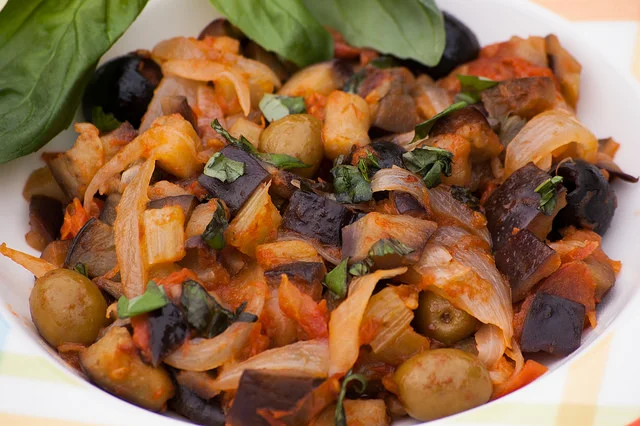
Sicilian Aubergine Caponata: Authentic Mediterranean Flavours from Sicily
Discover authentic Sicilian aubergine caponata, a sweet and sour Mediterranean classic. Perfect for summer sharing with rich, balanced flavours and tradition.
📖 What is it
Discover authentic Sicilian aubergine caponata, a sweet and sour Mediterranean classic. Perfect for summer sharing with rich, balanced flavours and tradition.
🛒 Ingredients
- ✓ 5 aubergines
- ✓ 200g pitted green olives
- ✓ 100g Pantelleria capers
- ✓ 100g celery
- ✓ 3 onions
- ✓ 150g tomato purée
- ✓ 100g sugar
- ✓ a glass of red wine vinegar
- ✓ 3g unsweetened cocoa powder
- ✓ vegetable oil for frying
- ✓ extra virgin olive oil
- ✓ salt
📊 Nutritional Information
Sicilian aubergine caponata is a traditional Mediterranean side dish combining sweet and sour flavours with local ingredients like aubergines, olives, and capers. Rooted in Sicily’s culinary heritage, this dish evokes the island’s warm summers and vibrant food culture, offering an authentic taste of Southern Italy’s vegetable cuisine.
👨🍳 Preparation
- 1
Cut the aubergines into cubes, place them in a colander and sprinkle with salt to draw out any bitterness.
- 2
After about 20 minutes, rinse them under cold water and pat dry with kitchen paper. Fry them in hot vegetable oil until golden.
- 3
Slice the onions and gently sauté them in a large pan.
- 4
Chop the celery, pit the olives, and blanch them together with the capers in boiling water for a few minutes.
- 5
Once the celery is nearly tender, drain and cool it under running water.
- 6
Add the celery, olives, and capers to the onions. Stir in the tomato purée, sugar, vinegar, and cocoa powder. Mix well.
- 7
After 10 minutes of cooking, remove from the heat and fold in the fried aubergines.
- 8
Give everything a good stir and let it rest.
- 9
Serve the aubergine caponata chilled.
🧠 Why It Works
This aubergine caponata achieves balance through the interplay of sweet sugar and sharp red wine vinegar, harmonising with the natural bitterness of aubergines and the briny depth of Pantelleria capers and green olives. The slow sautéing of onions and celery builds a gentle aromatic base, while the addition of unsweetened cocoa powder adds subtle complexity without overpowering. Frying the aubergines until golden ensures a satisfying firmness that contrasts with the softness of the cooked vegetables. The dish’s harmony reflects Sicilian culinary logic, where acidity, sweetness, and saltiness converge to create a refreshing yet hearty profile emblematic of the island’s gastronomic identity.
🛠️ Troubleshooting
Why does my aubergine caponata taste too bitter?
Ensure aubergines are salted and left to drain for about 20 minutes before rinsing; this process removes excess bitterness and improves flavour balance.
How can I fix a caponata that is too sour?
Adjust the balance by adding a small amount of sugar gradually to counteract excessive acidity from the vinegar.
What can I substitute if I don’t have Pantelleria capers?
Use high-quality salted capers from other Mediterranean regions, rinsed to reduce saltiness, to maintain the characteristic briny note.
How do I prevent the aubergines from becoming soggy during cooking?
Fry aubergine cubes in hot vegetable oil until golden and crispy on the outside, then drain well to preserve their firmness within the caponata.
Can I prepare caponata ahead and freeze it?
Yes, freezing in airtight containers preserves the flavours for up to a month; thaw gently and warm before serving to retain freshness.
💡 Tips and Variations
- •
For an extra layer of texture and sweetness, try adding a handful of toasted pine nuts and some raisins.
- •
If you prefer a sweeter note, feel free to increase the sugar slightly to balance the vinegar’s acidity.
- •
Use local aubergine varieties, like the Sicilian Violetta, for a more authentic flavour and perfect texture.
- •
For a fully vegan version, ensure your extra virgin olive oil is top quality and swap any animal-based ingredients for plant-based alternatives.
- •
The secret to perfection is to let the caponata rest for at least a day before serving, allowing the flavours to meld beautifully.
📦 Storage
- • Store the caponata in an airtight container in the fridge, where it will keep fresh for up to two days.
- • For longer storage, freeze in individual portions using freezer-safe containers; this will preserve the flavours for up to a month.
- • When ready to enjoy, gently warm it in the oven at 160°C for about 10 minutes or serve at room temperature to highlight its freshness.
🍷 Pairing
A Cerasuolo di Vittoria DOCG, with its vibrant acidity and structured tannins, beautifully complements the caponata’s sweet and sour profile, enhancing the dish’s Mediterranean freshness. A Sicilian Grillo DOC offers a lighter, aromatic counterpoint with citrus and floral notes that balance the richness of the aubergines and olives. For an international touch, a Piedmont Dolcetto d’Alba DOC provides soft tannins and juicy red fruit character, harmonising with the caponata’s complexity while respecting Southern Italian culinary traditions.
❓ F.A.Q.
What is the best aubergine variety to use for Sicilian caponata?
The Sicilian Violetta aubergine is ideal for caponata due to its tender flesh and balanced flavour, which enhances the dish’s authenticity and maintains the desired consistency.
Can Sicilian aubergine caponata be prepared in advance?
Yes, allowing the caponata to rest for at least 24 hours before serving deepens the flavour integration, making it more aromatic and balanced.
How should I store leftover caponata to preserve its freshness?
Store caponata in an airtight container in the refrigerator for up to two days or freeze in portions for up to one month, reheating gently to maintain its flavour.
Is Sicilian aubergine caponata suitable for a vegan diet?
Absolutely. The recipe is naturally plant-based, especially when using high-quality extra virgin olive oil and omitting any animal-derived ingredients.
What seasonal occasions is aubergine caponata traditionally served in Sicily?
While enjoyed year-round, caponata is especially popular in summer when aubergines are at their peak, often featured in festive gatherings and family meals.
🏛️ History and Tradition
The Origins of Sicilian Caponata
Caponata di melanzane is one of the most emblematic dishes of Sicilian cuisine and captures the very essence of Mediterranean cooking. Rooted in the island’s rural and maritime traditions, it developed as a way of combining humble, seasonal ingredients into a preparation of remarkable depth and character. The aubergine, now the undisputed star of the dish, was introduced to Sicily during the Arab period and quickly became central to the island’s culinary identity.
A Meeting of Mediterranean Cultures
Caponata reflects centuries of cultural layering. The Arab legacy is evident in the distinctive sweet-and-sour balance achieved with vinegar and sugar, while Spanish influence contributed to the widespread use of tomatoes. This interplay between sweetness and acidity has become one of the defining characteristics of Sicilian gastronomy. The result is a dish that is at once rustic and sophisticated, simple in ingredients yet complex in flavour.
From Aristocratic Tables to Popular Tradition
One theory suggests that the name “caponata” may derive from “capone”, a prized fish once served in sweet-and-sour preparations on aristocratic tables. In more modest households, aubergines replaced the expensive fish, creating a vegetable-based version that retained the agrodolce character. This transformation highlights the ingenuity of Sicilian cookery, where necessity often inspired enduring culinary traditions.
Ingredients and Regional Variations
The classic Palermo-style caponata features fried aubergines, celery, olives, capers and tomato sauce, all brought together by its characteristic sweet-and-sour dressing. Yet across Sicily, countless local variations exist. Some include peppers, potatoes or even toasted almonds. This diversity reflects the vitality of the tradition and its close relationship with local produce.
A Culinary Symbol of Sicily
Today, caponata is recognised internationally as one of Sicily’s signature dishes. It is typically served as an antipasto or side dish and is often prepared in advance, allowing the flavours to mature and harmonise. More than a simple recipe, caponata tells a story of cultural exchange, historical memory and the enduring bond between Sicilian cuisine and its Mediterranean landscape.
Making this aubergine caponata is like bringing a slice of Sicily right into your kitchen, with all its rich history and unique flavours. I warmly encourage you to give this recipe a go, make it your own, and share it with friends and family – because every mouthful is a little journey to the heart of the island. Happy cooking and bon appétit!
Rate this recipe
4.5/5 (92)
Click or tap the stars to rate