Overview
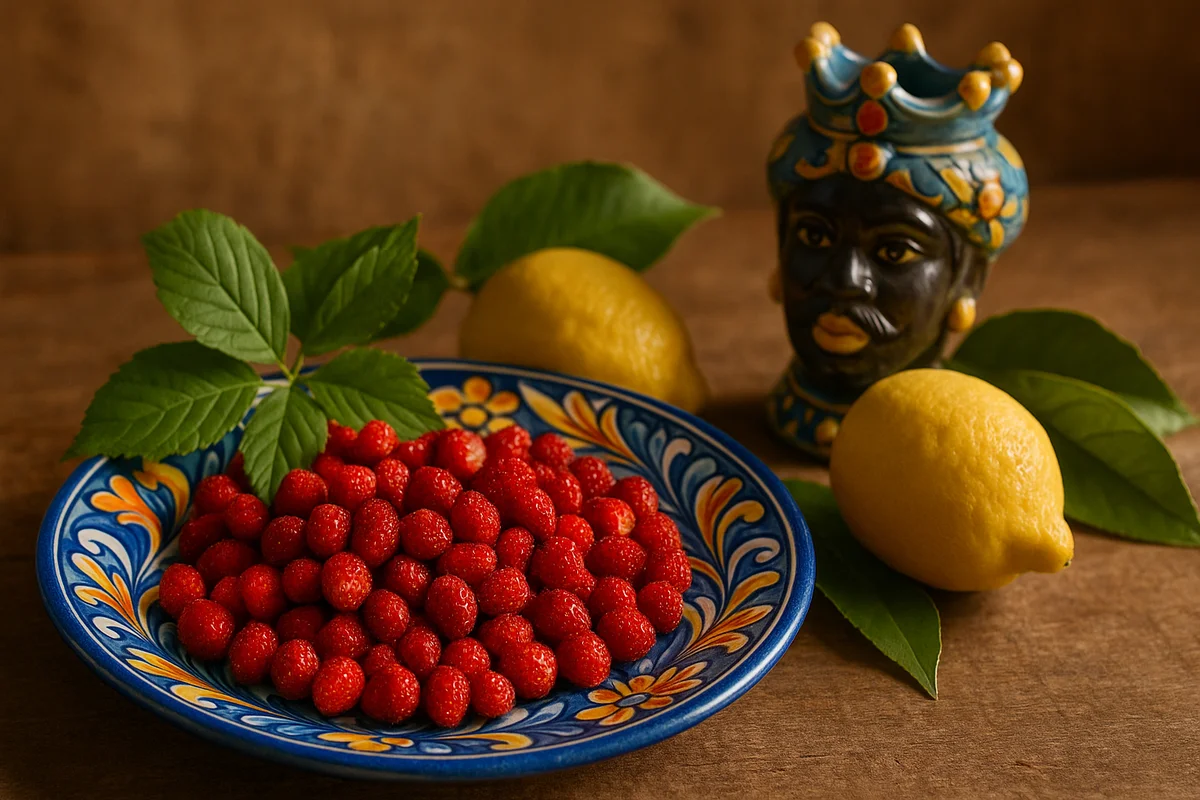
Wild strawberries, known in Sicilian dialect as “fràuliddi” or “fràvuliddi di voscu”, are the tiny fruits of Fragaria vesca, a wild plant that grows spontaneously in the woods and cool, shaded mountain areas of Sicily, especially in the Nebrodi, Madonie and Etna ranges. These minuscule red berries, only 1–2 centimetres in size, hold an astonishingly intense aroma and flavour, far superior to cultivated strawberries, and are among the most sought-after natural delicacies in Sicily.
In island tradition, picking wild strawberries was a seasonal activity for both children and adults during late-spring woodland walks. Discovering a bush laden with berries was considered a small treasure, a precious gift from nature. Their concentrated flavour and penetrating perfume make them perfect for refined preparations, delicate desserts and fine preserves, though the most cherished way to enjoy them remains fresh, just picked, when their aroma is at its peak.
Characteristics
Wild strawberries are much smaller than cultivated ones, measuring between 0.5 and 2 centimetres. Their shape is elongated and conical, with a bright, deep red colour when ripe, often with darker shades. The surface is studded with tiny yellow or red achenes.
Their aroma is exceptional—extremely intense, sweet and penetrating, instantly recognisable and far stronger than that of common strawberries. The flavour is concentrated, sweet with a perfectly balanced hint of acidity, complex and lingering. The texture is soft and juicy, almost melting on the palate.
High-quality wild strawberries have a deep, even red colour, a powerful aroma, and a firm yet tender texture. Fully ripe berries detach easily from the plant with a gentle touch.
Varieties
Wild forest strawberries
Those that grow spontaneously in the woods, the most fragrant and flavourful. They are small, irregularly shaped and extraordinarily aromatic. Harvesting them is laborious, but the result is incomparable.
Cultivated wild strawberries
Cultivated varieties that retain the qualities of the wild type while being slightly larger and more productive. They offer excellent flavour and perfume, though many regard the truly wild ones as superior.
White or yellow strawberries
Rare varieties with pale white-yellow fruits, very sweet and aromatic. They are less common but equally delicious.
Habitat and harvesting
In Sicily, wild strawberries grow spontaneously in cool, shaded mountain areas, in beech, chestnut and oak woods, along shaded paths and at the edges of streams. They prefer humus-rich, cool, slightly acidic soil.
Harvesting takes place between May and July depending on altitude and exposure. The berries ripen gradually, so the same plant may produce fruit for several weeks. Harvesting requires patience and care: the berries must be picked one by one with their small stem, taking care not to crush them.
It is important to harvest only where permitted and always leave part of the fruits to allow the plant to reproduce. Sustainable harvesting ensures future generations can enjoy this delicacy.
Use in cuisine
Wild strawberries, because of their precious nature and intense flavour, are used in special preparations.
Fresh consumption
The best way to appreciate wild strawberries is to eat them fresh and natural, without anything to overshadow their taste. At most, a light sprinkle of sugar or a few drops of lemon. They make a refined, exquisite dessert.
With cream
Wild strawberries served with fresh whipped cream or sour cream create an elegant dessert where the intense berry flavour meets the cream’s delicate richness.
Jam
Wild strawberry jam is considered among the finest. Its intense fragrance remains even after cooking, producing a preserve with a unique flavour, perfect for filling pastries or spreading on bread.
Dessert decoration
Wild strawberries decorate cakes, tarts, cassate and refined desserts. Their delicate appearance and strong perfume make them ideal for elegant presentations.
Syrup and liqueur
The juice of wild strawberries is used to make wonderfully fragrant syrups for granitas and cocktails, as well as fine aromatic liqueurs. Wild strawberry syrup has an unmatched perfume.
Ice cream and sorbet
Wild strawberry ice cream is a refined speciality, intensely flavoured and vividly coloured. The sorbet is equally prized—refreshing and perfumed.
Flavoured vinegar
A less common preparation in which wild strawberries are macerated in white wine vinegar with sugar, producing a sophisticated sweet-and-sour condiment for salads and cheeses.
Preparation
Wild strawberries must be handled with extreme care as they are very delicate. They should be washed briefly and gently just before use by immersing them in cold water and draining immediately, or by passing them quickly under a gentle stream of water.
They are dried by patting them very gently with kitchen paper. The green stem is left on for fresh consumption and removed only for cooked preparations or jam. They may be used whole or, if particularly large, halved.
For jams, it is important not to cook them too long to preserve their aroma. A short cooking over medium heat, with sugar and lemon, best maintains their characteristic perfume.
Storage
Wild strawberries are even more delicate and perishable than cultivated strawberries. They keep in the refrigerator for only 1–2 days, arranged in a single layer on a plate lined with kitchen paper, and should not be washed beforehand.
They should be eaten as soon as possible, ideally on the day of harvest, when their fragrance is at its peak. They must never be piled or compressed, as they crush easily and release juice.
They freeze well: arranged whole on trays and frozen quickly, then transferred to airtight containers. They keep for 8–10 months while retaining much of their aroma. They may also be frozen with sugar or as a purée.
Tips for purchasing and picking
When picking wild strawberries, choose fully red, bright, fragrant fruits. Avoid those still white or green (unripe) or those too dark and soft (overripe or deteriorated). Harvest in the cool morning hours when they are firmer.
If purchasing them (rare at market but occasionally available), check that they are extremely fresh, intensely perfumed, and free from bruises or mould. The aroma should be powerful and characteristic. Favour locally grown, freshly harvested berries.
Take care during foraging not to confuse wild strawberries with similar-looking but inedible fruits. True wild strawberries have a pronounced perfume, a textured surface with raised achenes, and grow on low plants with characteristic three-part leaves.
Nutritional properties
Wild strawberries have nutritional values similar to cultivated strawberries but with higher concentrations of certain components. They provide about 30–35 calories per 100 grams and are about 90% water.
They are extremely rich in vitamin C—often more than cultivated strawberries—with levels exceeding 60 mg per 100 grams. They contain high concentrations of antioxidants, particularly anthocyanins and flavonoids. They are a good source of potassium, magnesium, folic acid and fibre.
Their antioxidant, anti-inflammatory and protective properties exceed those of common strawberries thanks to their higher concentration of bioactive compounds. They also have diuretic, cleansing and refreshing qualities.
In Sicilian folk medicine, wild strawberries were regarded as particularly beneficial, almost medicinal. They were given to convalescents and children as a natural tonic.
Cultivation
Wild strawberries can also be grown in gardens or pots, recreating woodland conditions. They prefer shaded or semi-shaded spots, humus-rich, cool and well-drained soil, and a slightly acidic environment.
They propagate easily by runners (like common strawberries) or from seed. Once established, they require little maintenance and produce fruit for many years. Yields are more modest than cultivated strawberries, but the flavour is incomparable.
In Sicily, some enthusiasts grow wild strawberries in mountain gardens, reproducing natural conditions. The plants naturalise easily if they find a suitable environment.
Curiosities
Wild strawberries have been consumed by humans since prehistoric times. They are mentioned in ancient texts as a prized, healthy fruit. In the Middle Ages they were considered a precious gift of nature, cultivated in monastery gardens.
In Sicilian tradition, finding a bush laden with wild strawberries during a woodland walk was considered a sign of good fortune. Children returned home with red-stained hands and mouths, proud of their “treasure”.
Wild strawberries were used in folk medicine not only as food but also to prepare infusions with the leaves, considered cleansing and beneficial for the urinary system. The dried leaves were used for herbal teas.
In some Sicilian mountain areas, there was a tradition of making a homemade liqueur by macerating wild strawberries in alcohol with sugar and spices. This liqueur, prepared in summer, was stored and offered to guests during winter festivities as a special treat.
Wild strawberries have inspired Sicilian poets and writers. Their intense perfume and concentrated sweetness have been used as metaphors for the hidden, precious beauty of Sicilian nature—small, yet of inestimable value.