Overview
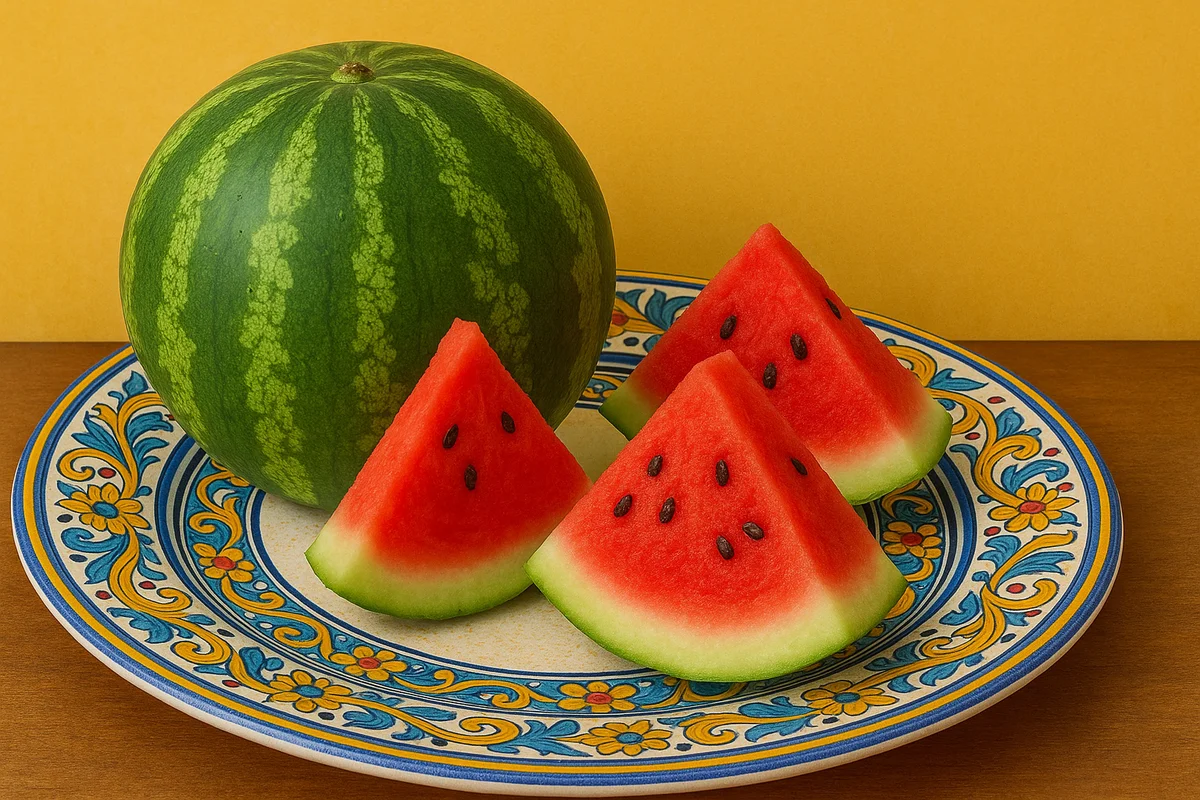
Known locally in Sicily as "mellone d'acqua" or simply "mellone," watermelon is one of the Mediterranean summer’s most beloved fruits. With its juicy, sweet flesh, it holds a special place in Sicilian culinary heritage, enjoyed fresh, turned into granita, or incorporated into time-honoured sweet treats.
The cultivation of watermelon in Sicily has a rich history, nurtured by the island’s warm, sun-drenched climate which produces fruit of exceptional quality, characterised by high natural sweetness and perfectly textured flesh.
Seasonality
Watermelon is quintessentially a summer fruit, reaching peak ripeness in Sicily between June and September. Harvests begin as early as late May in the island’s warmer lowlands, such as the plains of Gela and Ragusa, extending through to October in the hillier regions.
To enjoy watermelon at its sweetest, mid to late summer is ideal, when sugar levels hit their pinnacle. Fully ripened fruits boast the crisp, succulent flesh that defines premium Sicilian watermelon.
Varieties
Sicily cultivates several delightful watermelon varieties, each with its own particular traits:
- Siracusa Watermelon: a traditional variety with deep red flesh, notably sweet and sparingly seeded, prized fresh for its delicate flavour.
- Crimson Sweet: a round melon adorned with pale green stripes, offering a crisp texture and a syrupy sweetness, perfect for granitas.
- Sugar Baby: a smaller, round melon with a dark green, almost black rind, boasting intensely sweet flesh.
- Dumara: elongated with striped skin, primarily grown around Ragusa and Gela, celebrated for its distinctive shape and flavour.
Nutritional Qualities
Watermelon is a wonderfully hydrating fruit, over 90% water, making it a brilliant thirst quencher during the warmer months.
Calorie-wise, it’s very light, at roughly 30 calories per 100 grams of flesh. It’s packed with vitamins, particularly vitamin C and vitamin A in the form of beta-carotene—the pigment responsible for its vibrant red colour, alongside lycopene, a potent antioxidant.
It also provides essential minerals like potassium and magnesium, invaluable for combating summer fatigue and replenishing electrolytes lost through sweating. The fruit’s natural sugars, primarily fructose, lend a gentle sweetness that’s never overpowering.
Culinary Uses
In Sicilian kitchens, watermelon is incredibly versatile—equally at home as a refreshing snack or a key ingredient in more sophisticated dishes.
Fresh Consumption
The classic way to enjoy watermelon in Sicily is simply sliced and served chilled, often at the end of a summery meal or as a cooling treat during the hottest parts of the day. Some locals enjoy it with a light sprinkle of salt, a charming tradition that enhances the fruit’s natural sweetness.
Watermelon Granita
One of the island’s most beloved preparations is the watermelon granita, especially famed in Catania and Messina. The flesh is blitzed with sugar and a splash of lemon juice before being frozen and shaved into a vibrant red, intensely refreshing frozen treat.
Gelo di Anguria
A traditional Palermitan dessert, this watermelon jelly is made from watermelon juice, sugar, and starch, delicately flavoured with cinnamon and garnished with jasmine, chopped pistachios, and chocolate drops. Served chilled, it’s a spoonful of summer festivities.
Watermelon Salad
Along the coast, fresh watermelon cubes find their way into salads alongside cherry tomatoes, black olives, red onion, and mint, dressed simply with extra virgin olive oil and salt. It’s a light, colourful starter, perfect for sunny meals.
Watermelon Mostarda
In parts of western Sicily, the white rind of the watermelon is transformed into a sweet preserve cooked with sugar, cinnamon, and cloves, resulting in a soft, aromatic mustarda that’s a delightful accompaniment.
Buying Tips
When selecting a ripe and sweet watermelon, keep these points in mind:
- Weight: a ripe watermelon will feel heavier than it looks, thanks to its high water content.
- Sound: tapping the rind lightly with your knuckles should produce a deep, hollow sound when the melon is perfectly ripe.
- Yellow Spot: a creamy yellow patch on the skin shows where the melon rested on the ground as it ripened—the larger and yellower, the better.
- Skin: look for a shiny, taut rind free from dents or soft spots.
- Stem: a dry stem suggests the fruit is ripe, whereas a greenish one might mean it was picked too soon.
Storage
Whole watermelons can be kept at room temperature in a cool, well-ventilated spot for about a week. In Sicily, there’s a charming tradition of soaking them in cold water tubs during summer to keep them refreshingly cool.
Once cut, watermelon should be refrigerated, tightly covered with cling film to stop the flesh drying out or absorbing other fridge odours. Stored like this, it stays fresh for 3–4 days.
Watermelon flesh freezes well, cut into cubes for later use in granitas or smoothies, retaining quality for up to three months.
Fun Facts
In Sicily, watermelon plays a starring role in summer village festivals, served chilled by the slice amid lively music and traditional dancing.
What some might see as waste—watermelon seeds—are toasted lightly with a pinch of salt in many Sicilian households, enjoyed as a crunchy, protein-rich snack bursting with good fats.