Sicily is a land rich in olive-growing tradition, with roots that reach back into myth.
Among the many varieties of extra virgin olive oil produced across the island is Valdemone, which has obtained PDO status.
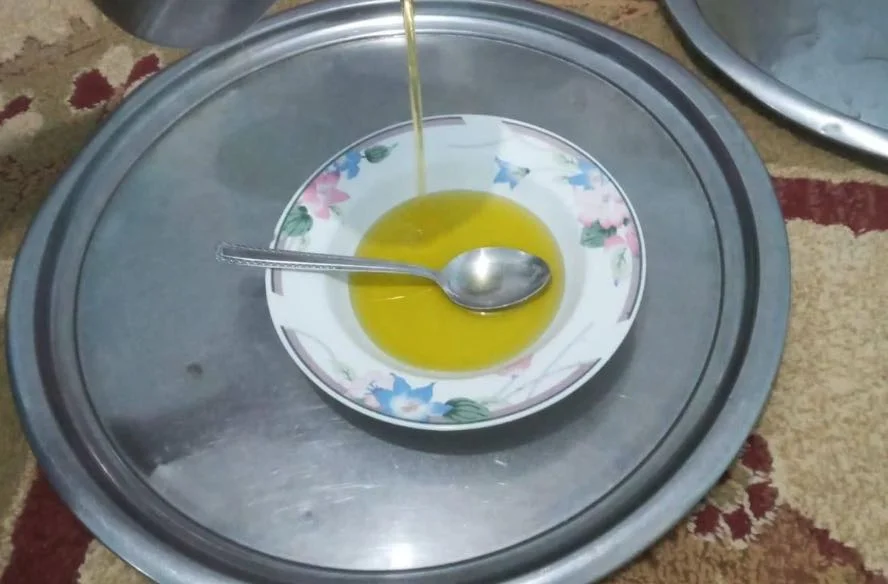
Named after the ancient administrative territory roughly corresponding to today’s province of Messina, Valdemone Extra Virgin Olive Oil PDO has a clear green colour with yellow reflections, and a flavour that lies midway between the almond-like fruitiness and the pleasant bitterness of thistle and tomato.
Millennia-old history
The olive tree arrived on the island as early as 1000 BC thanks to the Phoenicians, who transplanted to Sicily a tree that had first appeared in the Middle East. The Greeks then continued spreading this sacred tree, extending its cultivation beyond the Strait.
Later, under Roman rule, olive cultivation crossed the Alpine borders and spread throughout Europe.
It was the Romans who attributed greater value to olive oil, as evidenced by several historical records: commercial agreements in which olive oil was used as a form of exchange.
Between Church and art
Following the fall of the Roman Empire, olive oil lost prestige, replaced by animal fats.
It survived thanks to its liturgical and artistic uses, before regaining importance during the industrial revolution.
Across the island, remains of olive mills dating back to the 1500s still stand, and official documents from past centuries highlight the immense relevance of olive cultivation to Sicilian agriculture, including in the so-called Val Demone.
The Valli
When speaking of a Vallo in Sicily, we do not refer to a geographical valley.
A Vallo was the ancient territorial division of Sicily.
The term derives from the Arabic wilaya, referring to provinces and, more broadly, territories.
According to other hypotheses, it may be the Latin translation of the Arabic iqlim, meaning territory.
The Arabic origin of the term reflects the fact that the first territorial division, although not administrative, occurred under Muslim rule.
The Swabian dynasty later gave administrative significance to the Valli, which were three in number: the Vallo di Mazara, the Val di Noto and the Val Demone.
The Val Demone
This last one corresponds roughly to today’s province of Messina.
The origin of the name is uncertain, and many theories have emerged over the centuries.
Some believe it derives from Dimnsac, a name given to a gorge near Rometta, capital of the Thema of Sikelia (one of the two territorial units during Byzantine rule).
Others trace the name Demone to myth and religion: the Val Demone includes much of Mount Etna, believed in ancient lore to be guarded by demons protecting the entrance to the Underworld, represented by the Mungibeddu.
Secondary interpretations link the name to possible colonisation by the polis of Sparta (whose inhabitants were known as Lacedaemonians), a presence supported by archaeological findings.
The most plausible hypothesis, however, connects the term to the ancient settlement of Demenna, birthplace of Saint Philip, believed by some to correspond to Monforte San Giorgio.
The territory of the Val Demone
This ancient centre likely gave way to Messina, which became the administrative hub of the Val Demone.
Over time, the Vallo expanded up to the River Imera (bordering the Vallo di Mazara) and as far as Cefalù; it later absorbed the Vallo di Castrogiovanni-modern-day Enna-and included the entire Etna area.
The inclusion of Catania remains debated, as the city lies on the border with the Val di Noto.
This vast area embraces not only the province of Messina but also parts of Catania, Enna and a small portion of Palermo.
It is a region rich in highlands, where the steep slopes of Etna blend into the towering Nebrodi mountains.
The small towns are situated, by necessity, along the Tyrrhenian and Ionian coasts and in the scattered valleys of the Nebrodi Mountains, fed by small springs that nourish the land.
Valdemone Extra Virgin Olive Oil PDO
This very land gives life to the Valdemone PDO cultivar, widespread across almost the entire province of Messina except for a few small localities.
Here, four essential olive varieties grow and form the basis of the oil: Messinese, Minuta, Ogliarola and Sant’Agatese.
The percentage of these varieties (alone or combined) must amount to at least 70%, while the remaining part may include other local cultivars-provided no solvents are used, as this would no longer qualify as extra virgin olive oil.
The harvest
The journey towards producing Valdemone Extra Virgin Olive Oil PDO is long.
It begins immediately after the harvest with rimunnatura (the removal of excess branches), followed by fertilisation over the months, until the harvest begins in October and continues until January.
The olives may be harvested by hand or with “vibrating combs”, often with the aid of nets.
Pressing must take place in mills within two days of harvesting, after washing the olives, and the temperature must not exceed 30°C.
Characteristics of Valdemone Extra Virgin Olive Oil PDO
The result is an oil of clear green colour streaked with yellow reflections.
On the nose, distinctly fruity aromas appear, accompanied by herbal notes deriving from local cultivated and wild plants.
On tasting, beyond its unmistakable freshness, one immediately perceives a fruity flavour reminiscent of almond, followed by the characteristic bitter finish of tomato and thistle.
Uses of Valdemone Extra Virgin Olive Oil PDO
Due to its uniqueness, Valdemone Extra Virgin Olive Oil has obtained PDO certification, which must always be clearly displayed.
With its intense flavour-especially during the first six months after pressing-it is perfect for dressing salads and bruschette, but is also ideal for preparing a wide range of dishes.
Curiosities
Olive oil features in numerous myths and legends. According to Homer, it was with an olive trunk that Odysseus blinded the Cyclops Polyphemus.
Great Renaissance artists used olive oil in their paintings, giving rise to what became known as “oil on canvas”.