Our journey through Sicily’s food and wine excellences takes us today to the provinces of Palermo and Agrigento, where the olive trees grow that will give life to Val di Mazara Extra Virgin Olive Oil PDO.
No, it’s not a mistake: we are not referring to the plain of Mazara del Vallo on the western coast, but to the “Vallo di Mazara,” the ancient name of the entire western region of Sicily.
It is here that the miracle of Val di Mazara PDO occurs, an extra virgin olive oil with a golden color and a slightly sweet flavor reminiscent of almond.
Phoenicians and Greeks
Sicily can proudly claim to be the first region of Italy to know the olive tree, introduced first by the Phoenicians and later by the Greeks, and which in Roman times would become an important commercial good, as evidenced by the Pandette, ancient trading agreements.
Olive cultivation on the island therefore has a millennia-long history, dating back to 1000 BC, which evolved over the centuries and saw the flourishing of various specialties such as Nocellara del Belice, Monte Etna, and of course Val di Mazara Extra Virgin Olive Oil PDO.
We have already discussed the history of olive oil on other occasions; now we want to clarify the meaning of “Val di Mazara,” which often creates confusion.
The “Valli”
The production area of this specialty includes the province of Palermo and, to a lesser extent, part of Agrigento, excluding the province of Trapani, which is home to other excellences such as Nocellara del Belice and Valli Trapanesi-and where Mazara del Vallo is located.
The reason is simple: the city of Mazara was historically the central hub of the Vallo di Mazara, an ancient territorial division of Sicily.
This subdivision dates back to Islamic rule, from which the term “Vallo” also derives. Wilaya in Arabic indicated a territorial district-a functional equivalent of “territory.”
The Vallo di Mazara
Sicily (“the lands beyond the Strait”) was initially divided into three large Valli, corresponding roughly to the three corners of the Trinacria.
One of these was Lilibeo, today Marsala, but Mazara was preferred as an administrative center due to its established military structures.
During Norman rule, the Vallo di Mazara was formally defined as including all the territories east of the Salso and Imera rivers, stretching from Termini to the Trapani area, crossed by the Belice River, and eventually incorporating Girgenti (modern Agrigento).
The Vallo di Mazara survived until 1812, when the Bourbons divided it into smaller administrative entities.
The land of Val di Mazara Extra Virgin Olive Oil PDO
It is in this context that the olive tree thrives, benefiting from the characteristics of a wide and varied territory-yet always marked by one distinguishing feature: the presence of ancient calcarenite rocks.
These rocks give the soil of Val di Mazara an exceptionally high mineral content (enhanced by the contributions of the Belice River).
In this region grow the three essential cultivars of Val di Mazara Extra Virgin Olive Oil PDO, which must be present at 90% or more: Biancolilla, Cerasuola, and Nocellara del Belice.
Characteristics of Val di Mazara Extra Virgin Olive Oil PDO
Depending on which of these three varieties dominates, the resulting oil takes on its own unique characteristics.
Nocellara del Belice, which we have discussed before, gives the oil a bitter and spicy tone, strongly reminiscent of tomato.
Biancolilla, named after the whitish color of its blossoms, produces a delicate oil-one of the earliest olive varieties in Sicily.
Cerasuola, recognizable by the black color of its fully ripe olives, lends a tomato-like aftertaste softened by herbaceous notes reminiscent of thyme and rosemary.
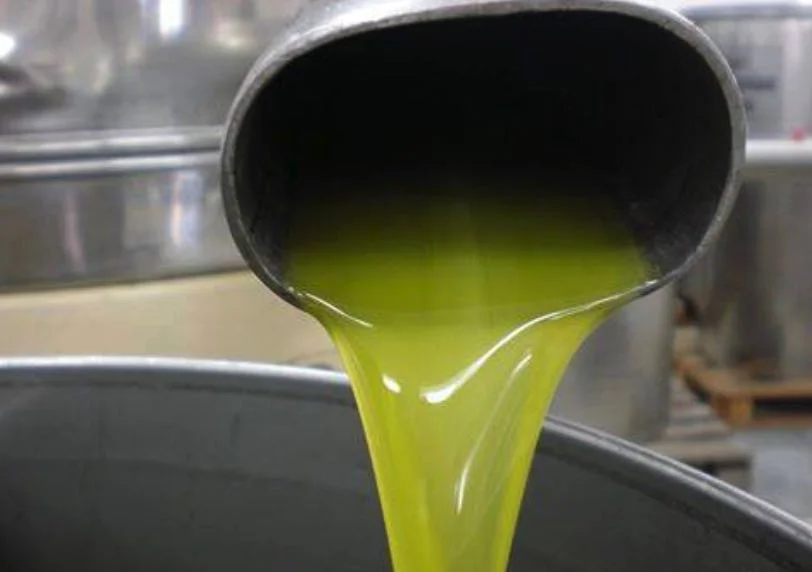
In every case, Val di Mazara PDO is an extra virgin olive oil (thus free of solvents), with a golden color streaked with bright green reflections and a fruity aroma and flavor with hints of almond.
The harvest
Growers in the provinces of Palermo and Agrigento begin harvesting in October, and the work may extend until the Christmas season.
Harvesting is done by hand or with mechanical tools, and olives are kept in ventilated containers until pressing, which must take place within two days.
During milling, temperatures do not exceed 20 °C, and no solvents are added.
Uses of Val di Mazara Extra Virgin Olive Oil PDO
At this point, Val di Mazara Extra Virgin Olive Oil is ready to grace tables across Italy. It is recognizable by the PDO label, safeguarded by the Consortium founded in 2002 to protect this excellence.
Thanks to its fruity flavor, Val di Mazara Extra Virgin Olive Oil PDO is ideal for dressing crisp bruschetta and fresh salads, as well as boiled vegetables and grilled fish.
Curiosities
The olive tree was considered sacred in ancient Greek religion and appears frequently in biblical stories and in the life of Jesus.
It was with an olive trunk that Odysseus blinded the Cyclops Polyphemus, who lived on the slopes of Mount Etna.
Olive oil, central to both sacred liturgy and the arts, also appears in numerous sayings and proverbs.
Spilling oil or salt brings bad luck.
Who wants all the olives will have little oil.
New oil and old wine.