
Overview
Tuna is classed as a bluefish, named for the deep blue hue of its back.
Tuna swim in large schools across the open ocean and spawn in warm seas such as the Mediterranean and the Gulf of Mexico.
It is in these waters that tuna fishing is most prevalent.
Sicily boasts a rich heritage in tuna fishing, with its famous tuna fisheries—especially around Syracuse and Trapani—standing out. Among these, Favignana is renowned for its iconic mattanza, the traditional and dramatic tuna harvest.
Tuna are known for their remarkable migratory habits.
After spawning, the tuna becomes solitary, roaming the seabed in search of food.
Varieties of Tuna
There are several varieties of this magnificent sea creature.
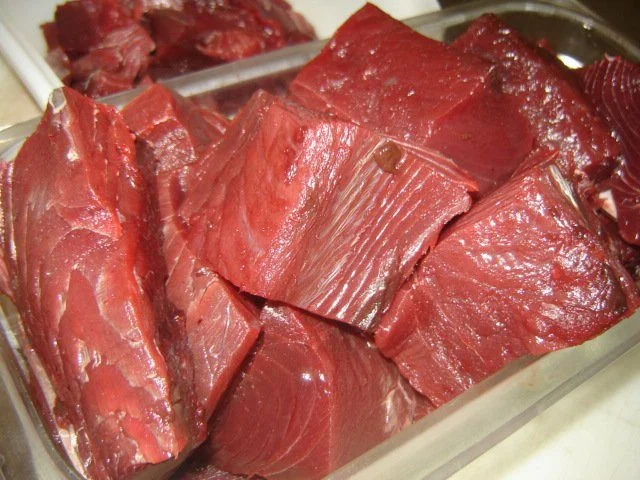
In the Mediterranean, the most common is the bluefin tuna, named for the rich red colour of its flesh.
This is a large fish, sometimes weighing up to 600 kilograms, and is an incredibly fast swimmer, capable of crossing the Atlantic Ocean in around four months.
The flesh of the bluefin tuna is highly prized and sought after, especially in Japan, where it features prominently in sushi and other raw fish dishes.
This variety is usually sold as steaks or fillets.
Another popular type is the so-called yellowfin tuna, named for the yellow colouring on the upper part of its fins.
This species, whose flesh is considered of slightly lower quality than bluefin, is mainly caught for canning.
Yellowfin tuna is smaller than bluefin and typically weighs around 40 kilograms, inhabiting mostly subtropical waters.
Another edible variety is Euthynnus, a smaller tuna averaging about 20 kilograms, with pinker, less prized flesh.
Lastly, there is the albacore tuna, also found in the Mediterranean and highly regarded.
Commercially, this fish is sold fresh—mainly as steaks and fillets for the larger specimens—or canned in oil or natural brine, meaning steamed.
Two special products come from tuna: the ventresca, the most delicate belly cut, and bottarga, made from salted and pressed roe.
Culinary Uses of Tuna
Tuna is considered a healthy food, sharing the nutritional benefits typical of bluefish.
It contains fats similar to those found in plants, which are not harmful to the body.
Fresh and sliced, it’s excellent grilled or pan-fried, often enhanced with red wine or lemon-based sauces.
Canned tuna is commonly used in salads and pasta sauces.
Many recipes call for canned tuna, a convenient staple in kitchens across the country.
Our blog features numerous recipes using both fresh and canned tuna, as well as its by-products.
Most of these dishes hail from the Trapani area, including classics like busiate pasta with tuna ragù and the mixed Trapani tuna platter.
Buying Tips
To ensure freshness, check the firmness and elasticity of the flesh.
When pressed, the meat should spring back to its original shape. The smell should be pleasant, and the colour vibrant, without any red streaks.
Storage
Fresh tuna can be kept in the fridge for up to two days, rinsed, patted dry, and wrapped in baking paper.
Due to its delicate nature, it’s best enjoyed as soon as possible.
If very fresh, it can also be frozen at -18°C and consumed within three months.