In this edition celebrating gastronomic gems, we journey to the Iblei Hills, specifically the quaint town of Giarratana nestled beneath Monte Lauro, to explore its celebrated onion.
This small community — second only to Pozzallo in its modest size within the Ragusa province — nurtures a true local marvel: the onion.
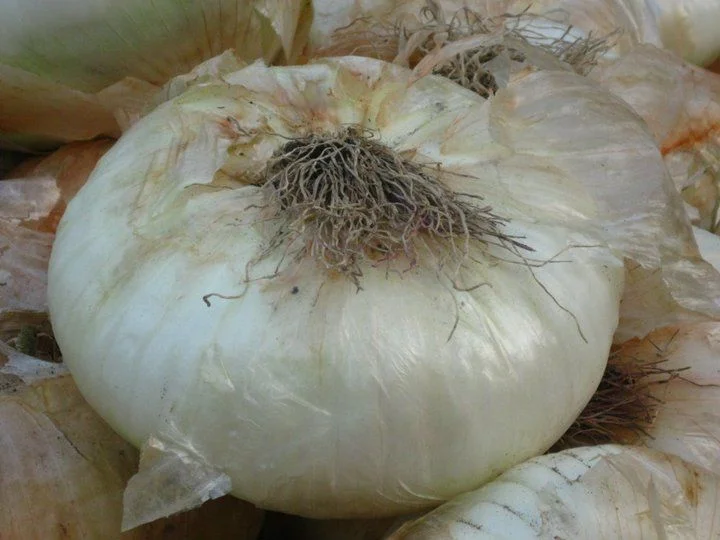
The Cipolla di Giarratana is a well-known variety distinguished by its generous size and, most notably, its sweet and incomparable flavour.
Owing to its distinct character, the Ministry of Agricultural Policies has honoured the Cipolla di Giarratana as one of Italy’s traditional agri-food products, the P.A.T.
Growing Beneath the Surface
The Giarratana onion is quite extraordinary.
It forms a bulb — the part we eat — that develops underground, while outwardly, thick green leaves sprout above the soil.
Onions come in myriad types, varying in colour — from golden yellow and white to deep red — as well as shape, size, origin, and taste.
A Vegetable of Ancient Reverence
Onion’s roots trace back to Central Asia, between ancient Persia and Afghanistan.
Here, the bulb first appeared, likely before our distant ancestors ventured from the Rift Valley. Archaeological finds dating to the Bronze Age (around 5,000 BCE) have uncovered onion remnants — though whether they were actively cultivated or wild remains uncertain.
It was the ancient Egyptians, however, who truly ushered the onion into cultivation alongside leeks and garlic.
Believed to be food for the pyramid builders, the onion held great esteem along the Nile, even revered as a divine symbol.
The bulb’s spherical shape and concentric rings symbolised eternal life. This symbolism, coupled with the belief that its pungent aroma could revive the breath of the dead, led to onion bulbs being found in the tombs of several pharaohs — and depicted in the intricate frescoes adorning their burial chambers.
A Natural Tonic
Through bustling trade between Egypt and Greece, the onion made its way to the Aegean shores, gaining widespread acclaim — particularly the onion from Megara in Attica.
Even Alexander the Great recognised its value, incorporating onions into his soldiers’ diet to boost their fighting spirit.
Ancient Olympians consumed it in large amounts, believing it purified the blood; Roman gladiators, meanwhile, used it to fortify their muscles.
This legacy endured through the ages: in the Middle Ages, onions were sometimes used as rent payment or given as gifts, and doctors frequently recommended them to treat headaches, hair loss, and even snake bites.
Spreading Across the Globe
Likely via colonial expeditions, onions crossed the Atlantic and flourished anew — notably, the Native American name for Chicago translates to "Onion Field".
Today, the United States rank as the world’s third-largest onion producer, following China and India.
Italy, too, boasts many onion varieties, with Sicilian favourites like the red onion of Partanna and, of course, the Cipolla di Giarratana.
The Cipolla di Giarratana: A Pearl of the Iblei
This particular variety is a true jewel of the Ragusan region and the wider Iblei area, often affectionately dubbed the “Pearl of the Iblei.”
It grows to remarkable sizes, sometimes tipping the scales at up to 3 kilograms, bearing a pale white hue tinged with bronze shades and offering a gentle sweetness.
Closely tied to its limestone-streaked landscape, these onions thrive in the rugged, dry soils of the hills — benefiting from the benevolent climate to achieve perfection.
A Patient and Careful Journey
The path from field to fork for the Cipolla di Giarratana is a careful and lengthy one.
Each summer, skilled growers select the finest bulbs to harvest seeds, which they plant come October.
By February, the strongest seedlings are transplanted into fertile ground, receiving tender care until the harvest begins in early July.
Post-harvest, the onions are left to dry for about a week, allowing lingering soil moisture to evaporate before they truly reach the market — ready to be enjoyed throughout Sicily and beyond.
How to Enjoy the Cipolla di Giarratana
Celebrated for its sweet flavour and lack of pungency, the Cipolla di Giarratana is a joy to eat raw, perhaps drizzled with a splash of olive oil — making it a star in refreshing salads.
It also features prominently in traditional recipes from the Iblei area, such as scacce — delightful stuffed flatbreads filled with tomato and onion.
Thanks to their imposing size, these onions can even serve as natural “spoons” for enjoying fave cottoie, another signature delicacy from the gentle Modica hills.
This variety is perfect for crafting classic Sicilian stuffed onions.
To preserve and celebrate this speciality, the Cipolla di Giarratana enjoys status both as a Traditional Agri-food Product and a Slow Food Presidium.
It also claims centre stage during the San Bartolo festival each August, when a lively village fête honours this remarkable onion.
Fascinating Tidbits
The health and medicinal virtues of the onion have been recognised since antiquity.
In fact, during the Renaissance, it was even believed to have aphrodisiac qualities, with its outer skin used traditionally to foretell the coming weather.
The onion’s notorious ability to bring tears is due to an enzyme called alliinase that transforms into a mild form of sulphuric acid on contact with eyes.
This association once linked the onion to the notion of sin. Yet, simply moistening a knife or soaking the onion for an hour can prevent the sting altogether.
Onions have inspired many proverbs and sayings in Italy, such as:
“Life is like an onion: you peel it layer by layer, and sometimes it brings tears.”
“Three things make the eyes weep: smoke, onion, and a bad woman.”
“Raw onion is good for the stomach.”
“Onions and garlic, cover your head.”