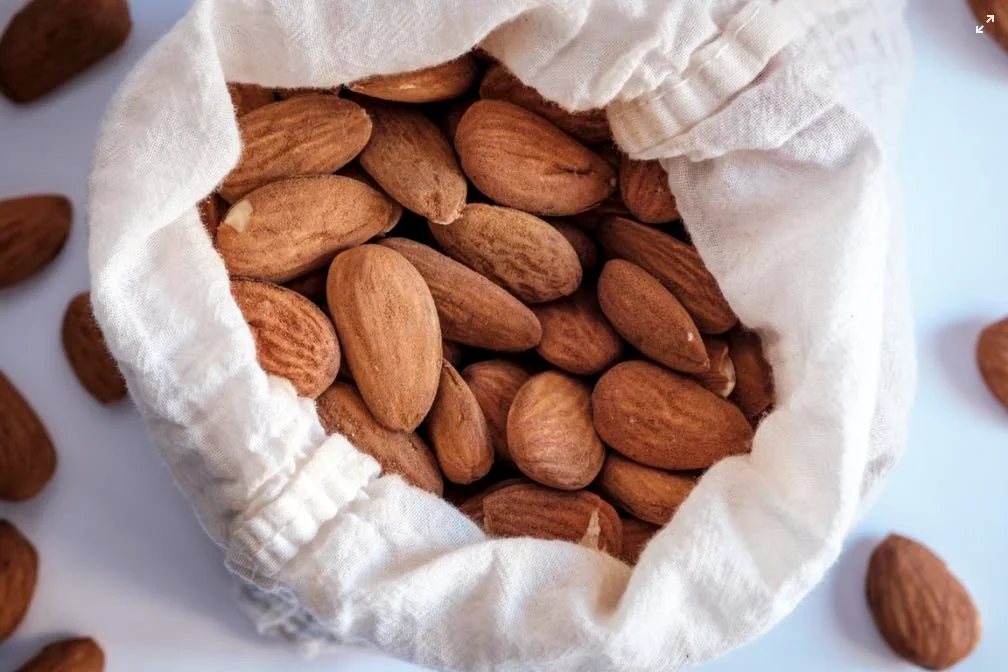
Almond cultivation is widespread across Sicily, particularly in the provinces of Agrigento, Ragusa, and notably around the town of Avola. This nut is among the most prized of all tree nuts.
Contents
- The Avola almond: a world-class delicacy
- Differences between the varieties
- Harvesting and cultivation of the Avola almond
- The Avola almond: star of traditional Sicilian patisserie
The Avola almond: a world-class delicacy
There are countless almond varieties across the globe, each differing in flavour and nutritional profile.
Among the most celebrated is the almond from Avola, a Sicilian speciality that stands as a proud emblem of the Siracusa region.
The term Avola almond generally refers to three main cultivars:
- Pizzuta;
- Fascionello;
- Romana, also known locally as “corrente d’Avola”.
All three originate from the Avola area and rank among the finest almond varieties on international markets.
Thanks to their early flowering period, which occurs in the depths of winter, these cultivars thrive only in coastal and low-hill zones where late frosts are rare.
This unique climate restricts their cultivation to the sun-drenched provinces of Siracusa and Ragusa, some of Italy’s brightest spots.
Differences between the varieties
Romana (also known as “corrente d’Avola”)
The Romana almond, often called corrente d’Avola by locals, is irregularly shaped and notable for its high tendency to produce twin kernels.
Because of this, the Romana almond is a favourite in Sicilian patisserie.
It’s typically used in recipes where whole nuts aren’t required, such as in sugared almonds (confetti).
Its pronounced sweetness makes it ideal for crafting pasta reale, the marzipan dough behind one of Sicily’s iconic treats, the frutta Martorana.
Pizzuta
The Pizzuta variety is distinguished by a smooth, hard shell dotted with tiny pores.
The kernel itself is a flattened ellipse, boasting a rich, reddish-brown hue.
This almond is prized in confectionery and baking for its exceptional quality.
Fascionello
The Fascionello almond is commonly used in patisserie.
Though it lacks the slender shape of the Pizzuta, it’s valued in the confectionery industry for its delicate fragrance and uniquely appealing aroma.
Harvesting and cultivation of the Avola almond
The Avola almond trees bloom between late December and early January, roughly two months ahead of other Sicilian almond trees.
This early flowering is thanks to the distinctive microclimate of their growing region.
The almonds’ prolonged maturation period enriches the nuts with exceptional nutritional properties rarely found elsewhere.
Meanwhile, their tough shells protect them from fungal infections and pests, preserving their potent natural goodness.
Once the almonds have ripened, harvesting begins.
This is a labour-intensive process, still carried out today with methods closely resembling those of traditional Sicilian farmers, honouring centuries of heritage.
Modern techniques have made the harvest easier, often using long poles to shake the nuts free.
This takes place between late July and early September.
The fallen almonds are collected on large tarpaulins spread beneath the trees.
After harvesting, the almonds are hulled and then dried in the sun for five days to reduce moisture.
Only then are they taken to processing facilities where they’re shelled, separated from their husks, and hand-selected for quality.
Natural almonds can also be peeled, a further step that removes the thin protective skin, which would otherwise be tricky for consumers to peel themselves.
The Avola almond: star of traditional Sicilian patisserie
Here’s a selection of Sicily’s most famous almond-based sweets.
These treats owe their existence to the abundance of top-quality almonds grown around Avola.
Pasta reale
This is essentially a marzipan made from finely ground sweet almonds, sugar, and water.
The ingredients blend into a smooth, fragrant paste that’s both pliable and richly flavoured.
Torrone
While many scholars trace torrone’s origins to the Middle East, the nougat we know today owes much to Sicilian confectionery traditions.
Its distinctive aroma and flavour come from the exceptionally tasty almonds used in its making.
Cubbaita
Another beloved Sicilian sweet, cubbaita is made by slowly cooking honey, almonds, and sesame seeds together to create a crunchy treat.
Cassata
Like torrone, cassata likely has Arab roots, its name derived from the Arabic qas’at, meaning “round bowl”.
Almond granita
Finally, the classic Sicilian almond granita is a uniquely refreshing dessert that gelaterias across Italy and beyond try to replicate, but rarely match, due to the absence of the legendary Avola almonds.
The list of almond delights in Sicilian patisserie could go on endlessly.
What’s certain is that the Avola almond remains one of Sicily’s most treasured culinary gems.