A true gastronomic gem of the Sicilian summer has to be the Siracusa watermelon.
Summer is just around the corner, bringing bustling beaches filled with visitors from all over the globe, as well as lively towns and the hidden treasures of quaint villages.
Yet summer in Sicily also means the heavy, humid heat, prompting locals and tourists alike to seek relief in any way possible — be it a refreshing dip, an ice cream, or a luscious piece of fruit.
Sicilian fields come alive from June onwards with a vibrant array of fruit and veg, from juicy peaches to prickly pears.
But the undisputed champion in fighting the scorching heat is none other than lu muluni: the watermelon, also lovingly known as the ‘melone d’acqua’ or ‘cocomero’. A fruit bursting with water, sweet and utterly refreshing — perfect on its own or as part of delicious recipes.
In Siracusa, a rather special variety of watermelon thrives in the unusual environment of sandy, moist soils.
This local treasure is famed for its crisp flesh and exceptional sweetness — so much so that the Siracusa watermelon is affectionately nicknamed “zuccherino”, meaning ‘little sugar’.
A Climbing Vine
Let’s first explore the traits and story behind this remarkable plant.
Watermelon is scientifically named Citrullus lanatus — not as a nod to any foolishness, but because ‘citrullus’ is a diminutive of cedrus, meaning “orange-yellow”, while ‘lanatus’ refers to the woolly texture found on young parts of the plant.
It belongs to the Cucurbitaceae family, a name derived from the Sanskrit corb, meaning to twist or creep — a perfect description of the sprawling, climbing habit common to watermelon, pumpkin, cucumber, and melon plants.
A perennial, this vine boasts large, softly hairy leaves.
Its fruits grow large, wrapped in thick rinds, packed with seeds and, above all, a high water content.
Many Names, One Fruit
Thanks to its juicy nature, in Sicily and southern Italy this fruit is known as ‘melone d’acqua’ (watermelon), distinguishing it from other melons like the cantaloupe. This term comes originally from French, melon d’eau.
Yet across Italy, it goes by many names.
In central Italy, it’s called ‘cocomero’, stemming from the Latin cucumis, a word originally referring to cucumber — watermelon’s botanical cousin.
In the north and on Sardinia, it’s known as ‘anguria’, a term rooted in the ancient Greek angoúrion, meaning cucumber.
Sardinians sometimes use ‘pateca’ to describe the watermelon, a word tracing back to the Arabic baṭīḫa, also meaning watermelon.
Found in Pharaohs’ Tombs
Interestingly, it was the Arabs who first introduced the watermelon to Europe, having brought it from regions south of the Sahara.
Its true origins lie even further south, in the Kalahari Desert (spanning Botswana, Namibia, and South Africa).
This is an exceedingly arid land where water can be scarce.
Fortunately for the San people — or Bushmen — a nomadic tribe native to the region, Citrullus lanatus flourishes here. It’s both a vital source of nourishment, packed with sugars for energy, and a crucial reservoir of water.
Following a long and mysterious journey, the watermelon eventually made its way to the foot of the pyramids. Here, it was first documented in writing as a harvest.
Revered as a sacred fruit believed to have sprung from the seed of the god Seth, it was placed in pharaohs’ tombs to sustain them on their journey to the afterlife.
It’s also mentioned in the Bible, underscoring its abundance in Ancient Egypt.
From there, watermelon reached China and Europe, likely via the Arab conquests, quickly becoming a beloved fruit.
The Siracusa Watermelon
Citrullus lanatus favours warm, temperate climates.
Its ideal home is on Sicily’s sun-warmed, breezy shores — especially in the Siracusa area.
The local soils here are not only infused with sea moisture but are notably sandy in texture.
Such ground is challenging for many crops, yet for centuries it has nurtured thriving watermelon vines.
Growers in Siracusa devote great care to their plants, which require consistent watering to fully express the unique qualities of their deep, well-drained soils.
Harvesting the Siracusa Watermelon
Seeds can be sown as early as February under cover, or from May when planted outdoors.
During the growing season, experienced cultivators vigilantly watch for any imperfect fruit developing.
Given the plant’s high water uptake, it’s crucial to thin the fruits while they’re still small — a delicate and demanding task.
The harvest occurs in summer once the fruit is ripe — signalled by the drying or detaching of tendrils.
Though classed as a mid-early variety, it holds up well to disease and transport, appearing on markets from May through September.
Distinctive Features of the Siracusa Watermelon
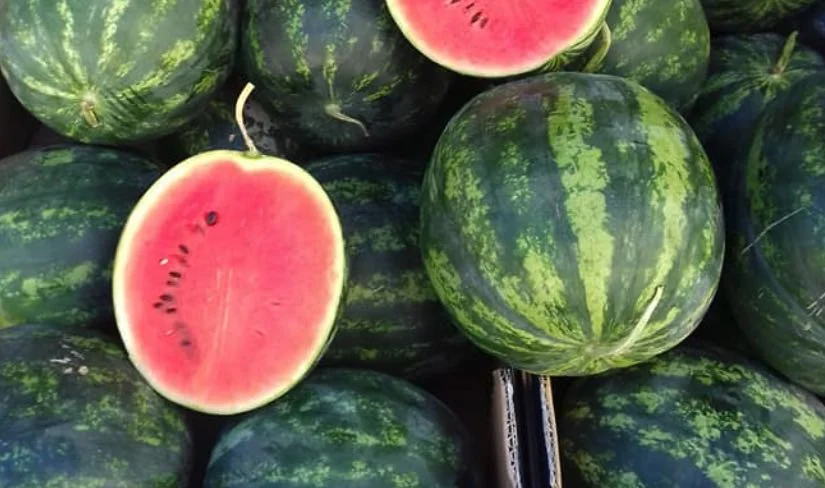
The Siracusa watermelon can tip the scales at up to 10 kilos, boasting a typically elongated shape streaked along its length with pale green stripes cutting through a deeper green background.
Slicing through reveals a stunning palette: the dark green rind, then a white layer of flesh, culminating in the watermelon’s signature bright red interior speckled with tiny black and occasionally brown seeds.
On the palate, the flesh is crisp and firm, bursting with an incredible natural sweetness — which earned it the nickname “zuccherino”.
This sweetness arises not from sugar alone (though present), but from complex aromas and an abundance of vitamins and potassium.
Extremely hydrating, this fruit’s high water content perhaps surpasses that of other watermelons, earning it a place on the list of Traditional Agricultural Food Products of Italy.
In the Kitchen
The Siracusa watermelon is the perfect thirst quencher and energy booster on warm summer days, a staple in refreshing fruit salads.
To celebrate its cooling properties, it’s also made into sorbets, ice creams, and the classic Sicilian granita, not to mention some delightful jams.
But it truly shines in Ferragosto’s traditional sweet: gelo di melone, a delicately prepared, seed-free jelly-like dessert made by freezing the pureed fruit with additional ingredients.
A Few Fascinating Tidbits
The Tswara people, neighbours of the San in the Kalahari, hold the watermelon sacred, incorporating it into purification ceremonies before harvest celebrations.
Remarkably, the watermelon even sparked a conflict: the 1856 ‘Watermelon War’ between Panama and the United States began after an American stole a slice from a Panamanian street vendor, leading to an altercation that escalated tensions.
In Japan, a unique square-shaped watermelon is grown by shaping the fruit inside special moulds — a testament to this fruit’s enduring global appeal.
Finally, the watermelon features in several regional proverbs:
“Frozen watermelon and boiling coffee.”
“When the watermelon grows, the tendril withers.”
“If you want watermelons as big as barrels, plant them on the first Thursday of April.”