Overview
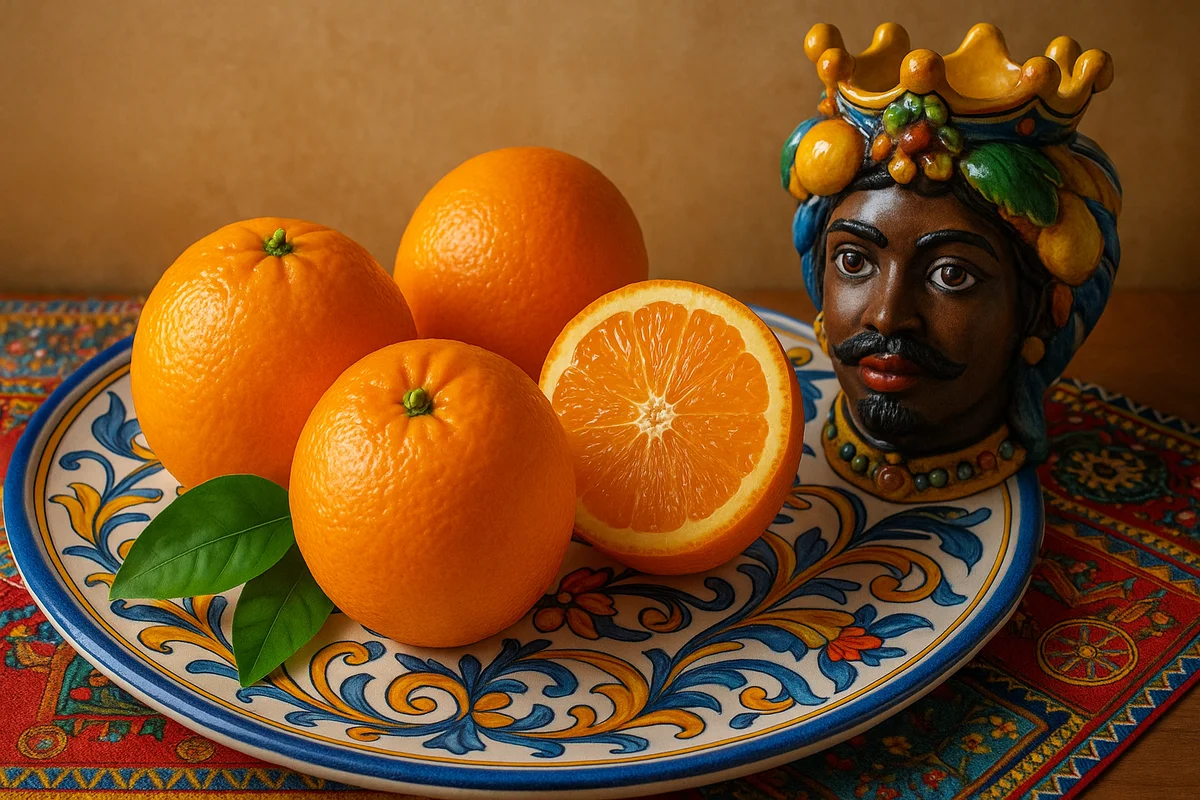
Oranges stand as one of Sicily’s most heartfelt symbols, where the cultivation of citrus fruits traces back centuries and plays an integral role in the island’s economy and culinary heritage. With their unmistakable fragrance and a flavour spectrum ranging from sweet to tangy, Sicilian oranges are celebrated worldwide for their exceptional quality.
Sicily is home to some of the Mediterranean’s finest orange varieties, grown in the fertile plains beneath Mount Etna, across the Catania region, Syracuse area, and around Ribera. The island’s unique microclimate — warm summers balanced by gentle winters, combined with its volcanic soils — imparts on these oranges their distinct and captivating character.
Varieties
Sicily cultivates a variety of oranges, each boasting its own unique traits:
Blood Oranges
The protected Sicilian IGP blood oranges encompass three main varieties: Tarocco, Moro, and Sanguinello. Their striking red flesh, coloured by anthocyanins, offers a luscious sweetness paired with a subtle tang. Among these, the Tarocco is most prevalent, admired for its harmonious balance of sweet and tart flavours.
Blond Oranges
Among the blond varieties, the Ribera Orange DOP holds a prestigious reputation, known for its pale flesh, sweet taste and seedless nature. Other blond types cultivated with success include the Navelina and Washington Navel, both distinguished by the characteristic navel on their peel.
Juicing Oranges
Varieties such as Tarocco and Moro lend themselves beautifully to fresh juices, boasting a high juice content and an ideal balance of sugars and acids. Sicilian blood orange juice is particularly prized for its antioxidant properties.
Seasonality
Sicilian oranges make their appearance across the calendar year with a sequence of varieties. The earliest, like the Navelina, reach maturity in November. December through March is the prime season for blood oranges, kicking off with Moro, followed by Tarocco. The late Tarocco and Sanguinello continue to be harvested into May.
This staggered harvest means fresh Sicilian oranges are available for much of the year, with peak production and quality spanning from January to April.
Nutritional Profile
Oranges are outstanding sources of vitamin C, with a medium fruit providing over 100% of the recommended daily intake. They’re also packed with fibre—particularly pectin—which aids digestion and helps regulate cholesterol levels.
Rich in antioxidants like flavonoids and carotenoids, blood oranges stand out for their anthocyanins, powerful antioxidants responsible for their vivid colour and added heart-health benefits.
Relatively low in calories, at around 45 to 50 per 100 grams, they’re perfect even for calorie-conscious diets. Their natural sugars, primarily fructose, release slowly thanks to the fibre content.
Culinary Uses
In Sicilian cookery, oranges feature prominently in a multitude of dishes, both sweet and savoury.
Fresh Eating and Juices
The simplest way to enjoy Sicilian oranges is fresh, or as freshly squeezed juice. It’s a cherished Sicilian tradition to drink orange juice at breakfast or as a refreshing afternoon pick-me-up.
Orange Salad
This classic Sicilian side dish is made with thinly sliced oranges dressed in extra-virgin olive oil, salt, pepper and red onions. More elaborate versions add black olives, wild fennel, or anchovies, layering flavours beautifully.
Traditional Sweets
Oranges are star ingredients in many Sicilian desserts: cassata includes candied orange peel, orange biscuits are a staple in the pastry repertoire, and marmalade made from bitter oranges fills tartlets and cookies.
First and Main Courses
Orange juice and zest enliven numerous savoury dishes, from pasta with sardines—where the juice cuts through the strong fish flavours—to sardines 'a beccafico', which benefit from the zest’s aromatic lift. Though not originally Sicilian, duck à l’orange has been embraced and reimagined within the island’s cuisine.
Preserves
Sicilian tradition extends to many orange-based preserves: marmalades, candied peels, syrups, and liqueurs such as Mandarinetto, which sometimes incorporates oranges.
Choosing the Best
When selecting oranges, look for ones that feel heavy for their size, indicating a juicy interior. The skin should be taut, glossy and free from bruises or soft spots.
Bear in mind that peel colour doesn’t always reflect ripeness — some oranges may show green hues even when perfectly ripe, due to a natural re-greening process in mild night temperatures.
Whenever possible, opt for Sicilian oranges with IGP or DOP certification to ensure provenance and adherence to strict production methods.
Storage
Oranges keep well for about a week at room temperature if stored in a cool, dry spot. For longer life, store them in the fridge’s fruit drawer for up to two or three weeks.
Avoid sealing oranges in plastic bags, as this promotes mould growth. It’s best to use an open container or fruit bowl, spacing the fruit to encourage airflow.
Freshly squeezed juice should be consumed immediately to preserve its vitamin C content, which diminishes quickly when exposed to air and light.
Did You Know?
Orange cultivation in Sicily was introduced by the Arabs around the year 1000, who brought with them early citrus varieties and irrigation techniques essential to their growth. The word “orange” derives from the Arabic “narandj” via Persian “narang.”
The island’s orange groves, known locally as “giardini,” rank among its most iconic landscapes. During spring blossom, the air becomes perfumed with the heady scent of orange blossoms, creating an unforgettable sensory experience.
Sicilian blood oranges owe their distinctive deep red colour to the dramatic temperature swings between day and night typical of the regions around Mount Etna. This climatic stress stimulates anthocyanin production, bestowing the flesh with its intense red hue.