Overview
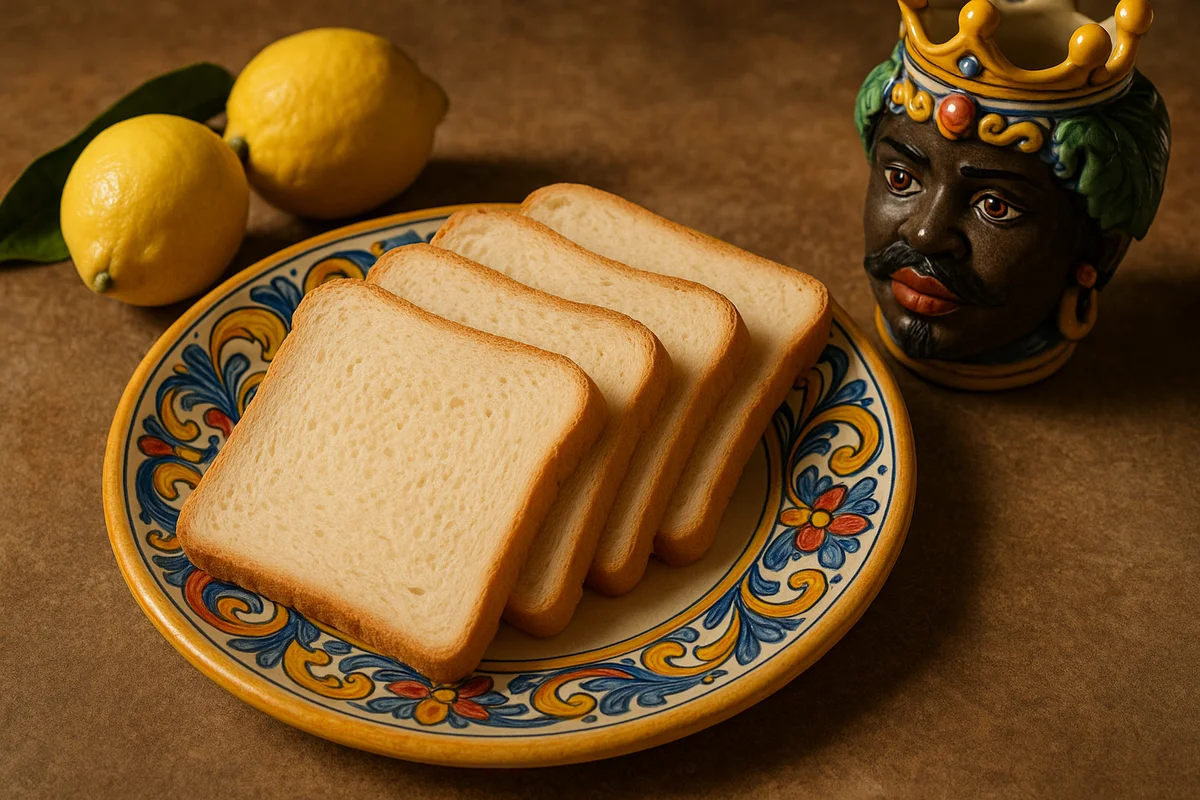
Sandwich bread is a type of sliced, tin-baked loaf with a soft, fine, compact crumb and a thin crust—or no crust at all in the crustless versions. Of French origin (pain de mie), it became popular in Italy during the twentieth century as a practical, versatile bread ideal for toast, tea sandwiches, canapés and preparations requiring a neutral, soft base. It differs from traditional bread through its uniformly soft texture, perfectly rectangular slices, long shelf life and the addition of fats and sugar to the dough.
In Sicily, where traditional bread is crusty with a fragrant, open crumb, sandwich bread became common from the 1960s–70s as a modern, convenient product. It is not part of the historic Sicilian bread tradition but is used for specific preparations: filled toast, sandwiches for buffets and receptions, fried or grilled slices served with soups, and bases for canapés and finger food. It is valued for its convenience (pre-sliced, long-lasting, easy to toast), though many purists of traditional Sicilian cuisine still regard it as an industrial product far removed from true artisanal bread.
Characteristics
Sandwich bread comes in a rectangular tin loaf, sliced into thin, uniformly cut slices (about 1–1.5 cm thick). The crumb is white or cream-coloured, soft, fine and elastic, with very few air pockets and a compact texture. The crust may be thin and golden (standard sandwich bread) or entirely absent (crustless bread, baked in closed tins).
The flavour is delicate, slightly sweet and neutral. It lacks the pronounced character of traditional bread but is deliberately understated so as not to overpower the fillings. The texture is soft and moist, easily compressed, and perfect for spreading, filling or toasting.
Ingredients
Sandwich bread typically contains wheat flour, water, yeast, salt, sugar (to encourage rising and provide sweetness), fats (oil, butter or margarine for softness), and often milk or milk powder. Industrial versions may also include emulsifiers, preservatives and dough conditioners to prolong shelf life and improve texture.
Sandwich bread with crust vs crustless
With crust: Baked in open tins, it develops a thin, golden crust on all sides. This is the most common version. It may be eaten with or without the crust, which is easily removed.
Crustless: Baked in closed tins, it does not develop a crust. All sides are soft white crumb. Preferred for tea sandwiches and preparations where crust is undesirable. More expensive due to the specialised production process.
Use in cooking
Toast
The classic use. Slices are toasted (in a toaster, on a griddle, or in a pan) and filled with cheese, ham, tuna or vegetables. The classic Italian toast features ham and melted cheese. In Sicily, variants include local ingredients.
Tea sandwiches
Soft slices (often crustless) filled with various mixtures (tuna, eggs, vegetables, cold cuts), cut into triangles. They are convenient finger food for buffets, aperitifs and picnics.
Canapés
Slices cut into various shapes (squares, circles, triangles), toasted or not, spread with creams or pâtés and topped with assorted ingredients. They make elegant starters for receptions.
Fried sandwich bread
Slices fried in oil or butter until golden, served with soups or purées, or sprinkled with sugar as a dessert (similar to French toast). In Sicily, fried sandwich bread accompanies certain soups.
Croutons
Toasted slices cut into cubes and used as croutons for soups or salads, as a substitute for traditional stale bread.
Breadcrumbs
Dried sandwich bread can be grated to obtain fine breadcrumbs for delicate coatings.
Sandwich bread vs traditional bread
Traditional Sicilian bread: Thick, crunchy crust; open, fragrant crumb; intense flavour of fermented wheat; best eaten fresh and becomes stale quickly; made with few simple ingredients (flour, water, yeast, salt); usually artisanal.
Sandwich bread: Thin or absent crust; compact, soft crumb; delicate, neutral flavour; remains soft for several days; contains fats and sugar; mainly industrial.
They are different products for different uses. Traditional bread is for everyday meals; sandwich bread is for preparations where softness, uniformity and practicality are priorities.
Storage
Packaged sandwich bread keeps at room temperature, sealed, for 4–7 days (check the date). Once opened, seal the bag well or transfer to an airtight container to prevent drying.
In the refrigerator it keeps longer (up to 2 weeks) but becomes firmer and drier. It can be frozen: when well wrapped, it keeps for 1–2 months. Slices can be toasted directly from frozen.
Stale sandwich bread can be used for French toast, breadcrumbs or softened for cooked preparations.
Buying tips
Check the expiration date (the further away, the better), read the ingredients (prefer versions with fewer additives), choose with or without crust according to use, and favour reputable brands for consistent quality. Artisanal sandwich bread (from some bakeries) is higher in quality but pricier and keeps for a shorter time.
Homemade sandwich bread
It can be made at home with flour, yeast, milk, butter, sugar and salt. It requires a risen dough and baking in a loaf tin. The result is more flavourful than commercial versions but keeps for less time and must be sliced by hand. It is an option for those seeking controlled ingredients and better flavour.
Nutritional properties
Sandwich bread is moderately caloric: 100 g provide around 260–280 calories. It contains about 50–55 g of carbohydrates, 8–9 g of protein, 3–5 g of fats (from added oil or butter), and 2–3 g of fibre (less than wholemeal bread). It also contains added sugars (2–4 g per 100 g).
It is less nutritious than traditional wholemeal bread (lower fibre, more added sugars and fats). It should be eaten in moderation as part of a balanced diet. Wholemeal versions are more nutritious.
Curiosities
The name “pancarrè” derives from the French “pain de mie” or “pain carré” (square bread), introduced in Italy and adapted phonetically. In France, pain de mie is a soft tin loaf used for croque-monsieur, tartines and toast.
Sandwich bread became popular in Italy in the years of the economic boom (1960s–70s) as a symbol of modernity and convenience, contrasting with traditional bread. It was promoted as a “modern” bread for urban families.
In Sicily, the arrival of sandwich bread was met with diffidence by those who loved fragrant traditional bread. Old bakers viewed it as “not real bread” due to its soft consistency and neutral flavour. Over time it became accepted for specific uses, though it remains secondary to traditional bread.
Sandwich bread is the base of one of the most famous sandwiches in the world: the American club sandwich, made with three layers of toasted bread filled with chicken, bacon, lettuce, tomato and mayonnaise. It has been adopted internationally.
During the 1980s–90s in Italy, the tramezzino made with sandwich bread became the aperitif staple in bars, partly replacing traditional regional preparations. In Sicily, tea sandwiches spread particularly for events and buffets.