Overview
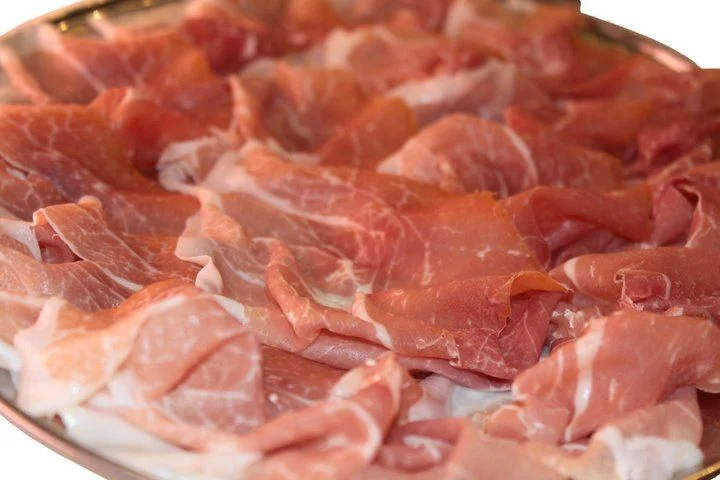
Prosciutto crudo is a traditional Italian cured ham made from the hind leg of the pig.
The meat is first salted and then left to mature over an extended period, during which it undergoes a process known as “sugnatura”: a blend of fat, herbs, salt, and pepper is rubbed onto the ham.
This technique prevents the ham from drying out too much and also inhibits the growth of unwanted microbes, imparting the distinctive flavour that makes this cured meat so beloved.
Among cured meats, prosciutto crudo is considered the finest, with its character ranging from sweet to salty or peppery, depending on the quality and style.
Varieties of Prosciutto Crudo
Italy boasts a wealth of prosciutto crudo varieties, many of which carry the prestigious DOP (Protected Designation of Origin) status or are recognised as regional specialties.
The most famous include Prosciutto di Parma and Prosciutto di San Daniele.
However, arguably the most exquisite and prized (not to mention costly) is the renowned Jamón ibérico, also known as Pata Negra, a top-tier cured ham from Spain.
This exceptional delicacy hails from western Spain, crafted from the legs of black Iberian pigs (originally Alentejana breed, now commonly called Pata Negra), which are cured for up to three years.
The pigs are raised on a diet of cereals and acorns that fall naturally from oak trees, ensuring a unique flavour profile.
Farming practices are designed to keep the pigs’ lifestyle as natural as possible, with no more than two pigs per hectare.
Each pig consumes between six and seven kilograms of acorns daily; it’s the oleic acid in these acorns that lends the meat its distinctive taste, earning the ham the affectionate nickname “the olive with legs.”
Slaughter is carried out with great care to minimise stress, and every detail of rearing and curing is meticulously managed to guarantee the highest quality, which explains the premium price.
How to Prepare Prosciutto Crudo
Prosciutto crudo is usually sold ready to eat, either at delicatessens or supermarkets, where you can also find pre-sliced portions with the fattier parts removed.
Using Prosciutto Crudo in the Kitchen
Prosciutto crudo is treasured both on its own and as a key ingredient in a variety of dishes, from simple to sophisticated.
Top-quality hams, like the aforementioned Pata Negra, are best enjoyed simply, paired with excellent bread to truly appreciate their flavour.
Classic starters often combine prosciutto crudo with melon, but it also features in many pasta dishes (such as tagliatelle with ricotta, prosciutto and orange), pizzas, rustic pies, roulades, and to enhance the richness of roasts.
Tips for Buying
When purchasing, the main advice is to look out for recognised quality marks, which many of the well-known varieties proudly display.
Storage
Sliced prosciutto crudo should be kept in the fridge, wrapped in butcher’s paper, and consumed within a couple of days.
Whole legs should be stored in a cool place and can keep for up to a year. Once cut, they must be refrigerated (or kept somewhere cool), covered with cling film, and eaten within a month.