Ricette di Sicilia
Cibo, cultura e tradizioni siciliane
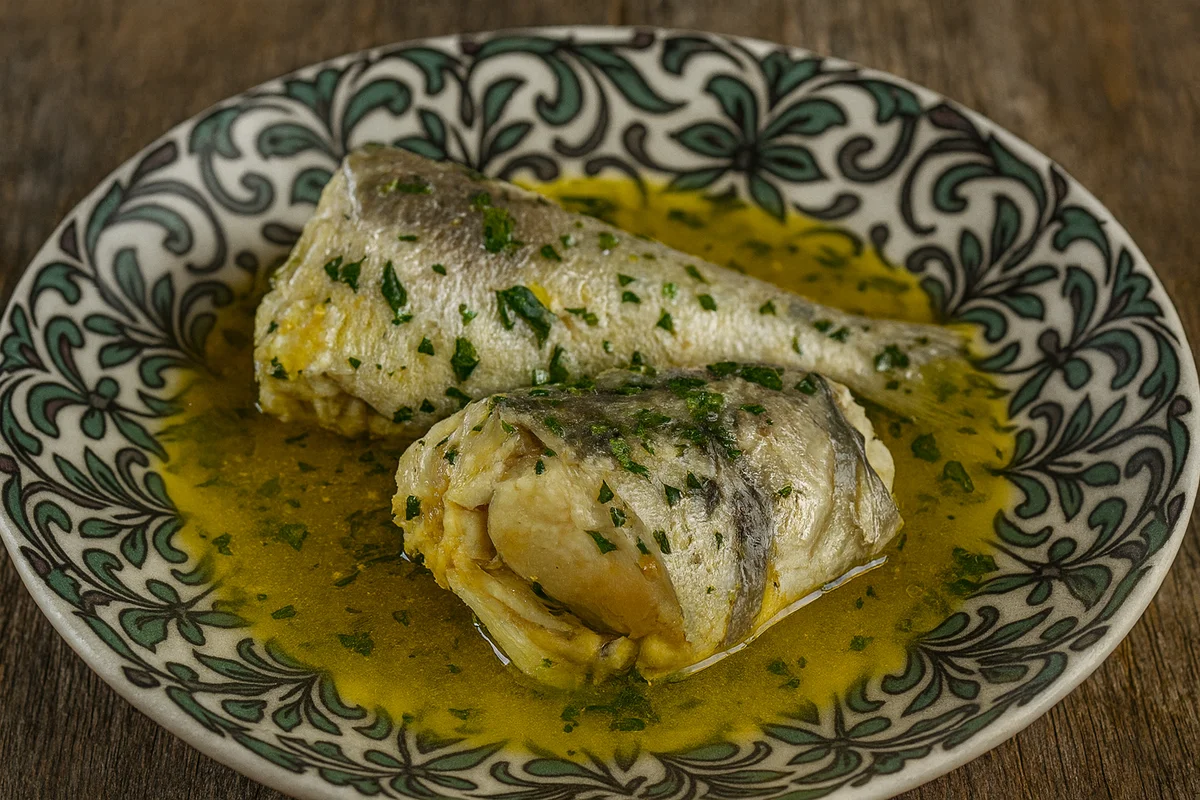
Poached Hake in a Fragrant Saffron Broth
A delicate and flavoursome Sicilian classic, where tender hake is gently cooked in a spiced saffron broth, enriched with salted sardines and fresh parsley.
📖 What is it
A delicate and flavoursome Sicilian classic, where tender hake is gently cooked in a spiced saffron broth, enriched with salted sardines and fresh parsley.
🛒 Ingredients
- ✓ 3 large hake steaks
- ✓ 1 medium onion
- ✓ 1 sachet of saffron
- ✓ 2 garlic cloves
- ✓ 3 salted sardines
- ✓ A small bunch of fresh parsley
- ✓ Sicilian extra virgin olive oil, to taste
- ✓ Trapani sea salt, to taste
- ✓ Black pepper, to taste
- ✓ Hot water, as needed
📊 Nutritional Information
Dive into the authentic tastes of Sicily with this gently poached hake, simmered in a subtle broth infused with saffron. This dish conjures the warmth of home cooking, where the salty aroma of cured sardines blends beautifully with sweet onion and the rich fragrance of saffron, creating a simple yet comforting experience. It’s perfect for anyone seeking a light, traditional main course brimming with character.
👨🍳 Preparation
- 1
Rinse the hake steaks thoroughly after cleaning and gutting them.
- 2
In a large pan, warm a drizzle of Sicilian extra virgin olive oil and gently soften the finely chopped onion and garlic.
- 3
Add the deboned and rinsed salted sardines, stirring to help them dissolve. Pour in a little hot water to aid this process and let the flavours meld slowly.
- 4
Once the onion and garlic are soft, add enough hot water to cover the fish halfway.
- 5
Dissolve the saffron in a small amount of hot water and stir it into the pan. Season with salt and black pepper to taste.
- 6
Carefully lay the hake steaks into the broth and sprinkle over the chopped parsley.
- 7
Cover and cook gently for 7–8 minutes, until the fish eyes turn white—a sign it’s perfectly cooked.
- 8
Serve the hake with a few ladles of the saffron broth, a sprinkle of fresh parsley, and a drizzle of extra virgin olive oil.
- 9
Keep any leftover broth—it’s wonderful for dressing a pasta dish.
💡 Tips and Variations
- •
For the best results, choose generously sized hake steaks; they’ll hold their shape nicely without falling apart in the broth.
- •
Salted sardines are quite strong in flavour, so rinse them well and remove any bones to avoid overpowering the dish. Adjust the seasoning at the end, tasting as you go.
- •
To make the dish heartier, add a few thin slices of potato to the broth or serve with toasted bread croutons that soak up the saffron-infused liquid.
- •
You can swap hake for other mild white fish like fresh cod or monkfish, keeping the aromatic base unchanged.
- •
For a richer aroma, include parsley stalks in the soffritto and deglaze with a splash of dry white wine before adding the water and saffron.
- •
The secret to this dish lies in slow, gentle cooking, allowing the flavours to meld while preserving the freshness of the ingredients.
📦 Storage
- • Store the poached hake in an airtight container in the fridge and consume within 24 hours to keep the flavours and freshness intact.
- • If preparing ahead, gently reheat the broth without bringing it to the boil to preserve the fish’s texture.
- • Avoid freezing the cooked dish, as the fish’s texture may suffer. Instead, freeze the raw hake and prepare the broth fresh when ready.
🍷 Pairing
To complement this delicately aromatic dish, opt for fresh, crisp Sicilian white wines that highlight the lightness of the hake and the subtle spice of saffron. Excellent choices include a young Grillo, Inzolia, or Catarratto, served well chilled for a harmonious match. If you prefer a wine with more minerality, an Etna Bianco made from Carricante grapes beautifully enhances the fish’s maritime notes. Alternatively, a Ligurian Vermentino or a Friulian Sauvignon Blanc offers a delightful aromatic contrast.
Bringing this poached hake in saffron broth to your table is like sharing a little piece of Sicily’s heart and soul. It’s a wonderfully light yet characterful dish, perfect for gathering friends and family around. I warmly encourage you to give it a go at home—there’s something truly special about creating and sharing these authentic flavours. Do let me know how you get on, and pass this recipe along to keep the spirit of Sicilian cooking alive in your kitchen.
Rate this recipe
Click or tap the stars to rate