Ricette di Sicilia
Cibo, cultura e tradizioni siciliane
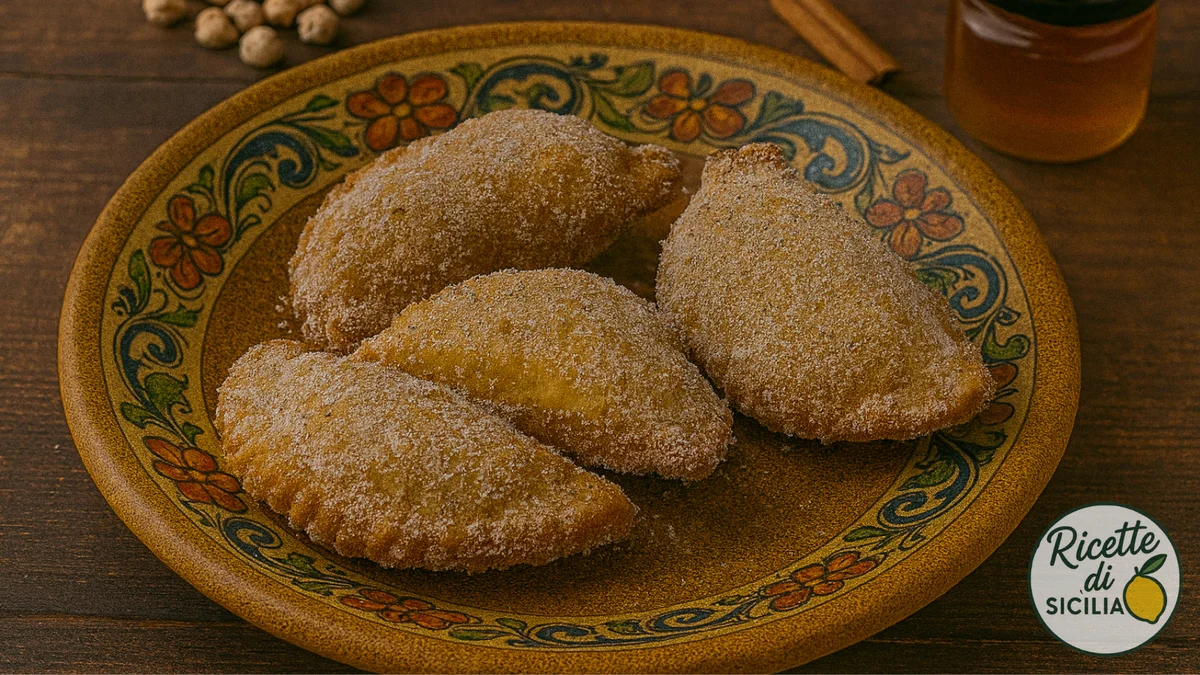
Cassatelle di Ceci for Saint Joseph’s Day (Sicilian Recipe)
Authentic Cassatelle di Ceci from Partinico – golden Sicilian fried pastries with chickpeas, honey and chocolate, traditional for Saint Joseph’s Day.
📖 What is it
Authentic Cassatelle di Ceci from Partinico – golden Sicilian fried pastries with chickpeas, honey and chocolate, traditional for Saint Joseph’s Day.
🛒 Ingredients
▸ For the pastry
- ✓ 1 kg semolina flour
- ✓ 300 g lard
- ✓ 150 ml white wine
- ✓ 100 g caster sugar
- ✓ water as needed
- ✓ ground cinnamon
- ✓ half a sachet of vanilla powder
▸ For the filling
- ✓ 1 kg cooked chickpeas
- ✓ 150 g dark chocolate chips
- ✓ 150 g honey
- ✓ 200 g candied pumpkin (zuccata)
- ✓ cinnamon to taste
▸ To garnish
- ✓ caster sugar
▸ For frying
- ✓ extra virgin olive oil
📊 Nutritional Information
Cassatelle di Ceci are traditional Sicilian fried pastries filled with a sweet chickpea, honey and chocolate mixture, prepared especially for Saint Joseph’s Day on 19 March. Originating in Partinico, near Palermo, they combine humble legumes with festive sweetness, embodying Southern Italian religious tradition and springtime celebration.
👨🍳 Preparation
- 1
Tip the flour onto a clean work surface, add the lard in small pieces and begin to mix, gradually pouring in the white wine.
- 2
Stir in the sugar, vanilla powder and cinnamon, kneading until you have a soft, elastic dough. Add a little water if needed.
- 3
Wrap the dough in cling film and pop it in the fridge to rest for about an hour.
- 4
Meanwhile, prepare the filling: once the chickpeas are cooked and drained, sieve or blitz them into a smooth purée.
- 5
Mix in the chopped candied pumpkin, honey, cinnamon and dark chocolate chips. Combine well and let it rest.
- 6
Roll out the pastry with a rolling pin until it’s thin (about 2–3 mm), then cut out discs roughly 10–12 cm across.
- 7
Place a spoonful of filling in the centre of each disc, fold over into a half-moon shape and press the edges firmly with a fork to seal. Trim the edges with a fluted pastry wheel.
- 8
Fry the cassatelle in hot oil until golden, then drain on kitchen paper to remove excess oil.
- 9
Toss them in cinnamon-scented caster sugar and serve warm or cold.
🧠 Why It Works
This recipe works because it balances structure, fat and sweetness with technical precision. The semolina-based dough, enriched with lard and white wine, develops elasticity while remaining thin enough to fry crisp without absorbing excess oil. The wine weakens gluten just enough to create blistered, airy pockets during frying. The filling relies on chickpeas for natural starch and body, producing a dense yet creamy texture without added thickeners. Honey delivers floral sweetness, dark chocolate introduces bitterness and depth, and candied pumpkin contributes aromatic fruit notes typical of Sicilian pastry-making. Frying at stable temperature seals the surface quickly, preserving a dry interior and crisp shell. The result is texturally coherent, aromatically layered and territorially authentic.
🛠️ Troubleshooting
Why are my cassatelle greasy?
The oil temperature was too low. Maintain 170–175°C (340–350°F) to seal the pastry quickly and prevent excess absorption.
The filling is too dry or crumbly. What happened?
The chickpea purée may have been overcooked or insufficient honey was added. Adjust with a small amount of honey to restore creaminess.
They burst open while frying. Why?
The edges were not sealed properly or the filling was excessive. Press firmly and avoid overfilling.
The pastry is tough instead of crisp. What went wrong?
The dough may have been overworked or not rested long enough. Allow at least one hour of resting time to relax gluten.
💡 Tips and Variations
- •
For a lighter option, try baking the cassatelle: brush with beaten egg and bake at 180°C for about 20 minutes until golden.
- •
Add a twist to the filling by stirring in some candied orange peel for a fresh, zesty note that complements the natural sweetness.
- •
Use a thin, well-kneaded pastry to achieve a crispier, less greasy fry, highlighting the delicate filling.
- •
For a vegan version, swap honey for agave syrup and fry in sunflower oil for an equally delicious result.
- •
Enhance the savoury depth by adding a pinch of cinnamon or nutmeg to the filling – these spices bring warmth and complexity.
- •
The secret to this recipe lies in the perfect balance between the honey’s sweetness and the chickpeas’ velvety texture, a true taste of Sicily’s soul.
📦 Storage
- • Store the cassatelle in an airtight container at room temperature and enjoy within 2-3 days to keep their fresh crunch.
- • For longer storage, freeze them raw and fry straight from frozen to preserve their crispness.
- • Avoid refrigerating once fried, as moisture can spoil their crisp texture.
🍷 Pairing
A Sicilian Passito di Pantelleria offers concentrated dried fruit notes and vibrant acidity that balance honey and chocolate richness. A Moscato di Noto brings aromatic lift and floral sweetness, enhancing the candied pumpkin and cinnamon. As a refined alternative from Southern Italy, a Vin Santo del Cilento provides oxidative depth and structured sweetness that complements the nutty chickpea base.
❓ F.A.Q.
What are Cassatelle di Ceci?
Cassatelle di Ceci are Sicilian half-moon pastries filled with sweet chickpea cream, honey, chocolate and candied pumpkin, traditionally prepared for St Joseph’s Day.
Why are chickpeas used in St Joseph’s Day desserts?
In Southern Italian tradition, chickpeas symbolise nourishment and gratitude. They are commonly used in savoury and sweet preparations during St Joseph’s Day celebrations.
Can Cassatelle di Ceci be baked instead of fried?
Yes, they can be baked at 180°C (350°F) for about 20 minutes, but frying provides the characteristic blistered texture and deeper flavour.
How thin should the pastry be rolled?
Ideally 2–3 mm. A thin, well-rested dough ensures crispness without becoming heavy or greasy.
Can they be made in advance?
Yes. They can be assembled and frozen raw, then fried directly from frozen for best texture and freshness.
🏛️ History and Tradition
The Origins of Cassatelle di Ceci from Partinico
Cassatelle di ceci from Partinico are one of the most distinctive sweets of western Sicily. Typical of the Palermo area and particularly associated with the town of Partinico, these pastries are remarkable for their chickpea filling. While legumes may seem unusual in a dessert, they reflect a long-standing rural tradition in which resourcefulness shaped culinary creativity. Their preparation is closely linked to Easter and to the rituals of Holy Week.
A Sweet Linked to the Lenten Period
The origins of cassatelle di ceci are connected to the dietary restrictions observed during Lent, when meat consumption was limited and families relied on legumes and simple ingredients. Chickpeas, nourishing and easy to store, were transformed into a sweet purée enriched with sugar and often flavoured with cocoa or cinnamon. This inventive solution allowed households to prepare a substantial dessert while respecting the spirit of the season.
Cultural Influences and Historical Roots
The widespread use of chickpeas in Sicilian cuisine reflects both the island’s agricultural heritage and the historical influence of Arab rule, which encouraged the cultivation and culinary use of legumes. Over time, the pairing of chickpeas with sugar became established in certain areas of western Sicily, resulting in sweets that combine humble ingredients with unexpected depth of flavour.
Preparation and Family Ritual
Cassatelle di ceci are traditionally made with a shortcrust pastry or a simple dough that encloses the sweet chickpea filling. Their preparation once took place within the family home, with several generations contributing in the days leading up to Easter. After baking, they are often dusted with icing sugar, maintaining an understated yet elegant appearance.
A Symbol of Partinico’s Identity
Today, cassatelle di ceci continue to be prepared in Partinico and surrounding communities, especially during the Easter season. More than a regional delicacy, they embody the ingenuity of Sicilian cooking, where modest ingredients are transformed into meaningful festive treats. They remain a living expression of local devotion, memory and territorial identity.
Making these Partinico chickpea cassatelle is more than just baking – it’s embracing a beautiful Sicilian ritual filled with flavour, history and heart. I warmly encourage you to try this recipe at home; it’s a wonderful way to bring a little slice of Sicily to your table. Share these golden delights with your loved ones and watch how this special sweet brings everyone together in joy.
Rate this recipe
Click or tap the stars to rate