Overview
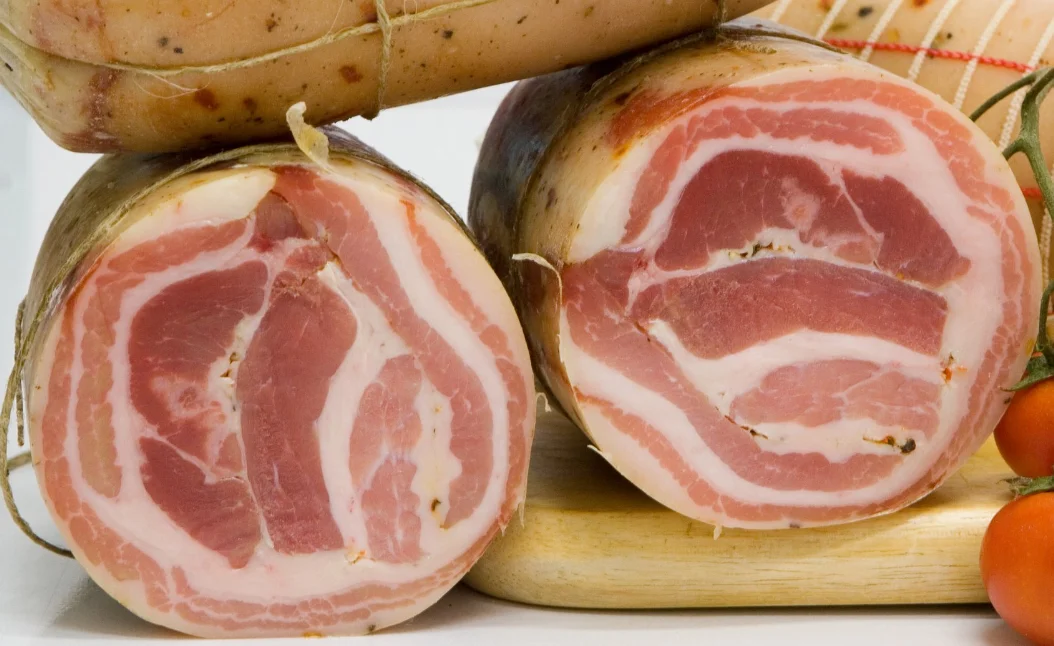
Pancetta is a cut of pork taken from the underside of the pig’s belly.
It’s a richly flavoured, fatty cut, typically sold sliced or diced.
Pancetta can star as the main ingredient or lend its distinctive taste as a seasoning, enhancing a wide variety of dishes.
It’s a traditional staple across Italy, especially beloved in the heart of the country.
Types of Pancetta
There are several varieties of pancetta, distinguished by their origin and preparation methods:
- Flat pancetta: the most common style, made from the lower belly of the pig. It’s cured with salt and spices, then aged for several weeks until tender and flavourful. Sold in slices or cubes, it’s incredibly versatile in countless recipes.
- Rolled pancetta: this type is rolled into a tight cylinder before curing. It undergoes the same salting, spicing, and ageing as flat pancetta but boasts a distinctive shape. It’s often used for meat rolls or as a filling for sandwiches and snacks.
- Smoked pancetta: this variety is smoked to impart a deep, intense flavour. It’s perfect for adding a smoky note to salads, soups, and meat dishes.
- Sweet pancetta: prepared without added spices or salt, this milder version offers a delicate flavour. It’s ideal for seasoning pulses or crafting lighter, wholesome meals.
Nutritional Profile of Pancetta
Here’s a snapshot of the nutritional content per 100 grams of pancetta:
- Calories: 548 kcal
- Protein: 37 g
- Fat: 44 g
- Carbohydrates: 0 g
- Fibre: 0 g
- Cholesterol: 110 mg
- Sodium: 1,500 mg
As you can see, this cured meat is high in saturated fat and cholesterol, which, if eaten excessively, may increase the risk of heart disease.
That said, pancetta is also a rich source of protein and provides important minerals like sodium and phosphorus.
Enjoy it in moderation, balancing your diet with a variety of nutritious foods to ensure you get all the nutrients you need.
How to Prepare Pancetta
Before cooking with pancetta, it’s important to prepare it properly.
Usually, it’s sold without skin, but if any remains, carefully remove it with a sharp knife.
Also, trim away any excess fat, leaving just the lean parts.
Cooking with Pancetta
As a Base for Sofrito
Pancetta makes a fantastic base for sofrito.
Its rich, salty flavour spreads through the pan, infusing dishes with depth and warmth.
Simply dice or slice it and gently fry in a little olive oil.
Once crisp, add onions, garlic, carrots, and celery to create a perfect flavour foundation for sauces, soups, and stews.
Adding to Pasta Dishes
This cured meat is a brilliant addition to pasta.
Fry diced pancetta until crisp, then toss in cooked pasta to marry the flavours.
You can also add sun-dried tomatoes, mushrooms, courgettes, spinach, or grated cheese to create a rich, satisfying pasta dish.
For example, pancetta features in traditional Sicilian recipes like pasta all’uminina or pasta with pumpkin.
As a Filling for Meat
Pancetta works beautifully as a stuffing for meats, especially chicken and turkey.
Wrap slices around the breast to keep it moist and infuse it with flavour during cooking.
This adds a lovely crispness and depth, perfect for a special lunch or dinner.
Enhancing Vegetable Dishes
Pancetta can also lift vegetable dishes.
Cook it in a pan, then add vegetables like cabbage, broccoli, green beans, asparagus, or courgettes.
The pancetta imparts a rich, savoury note, turning simple veggies into a delicious side.
As a Garnish
Pancetta can be crisped in the oven until crunchy, then broken into pieces to garnish dishes.
It’s wonderful sprinkled over soups, salads, roast potatoes, and many other recipes.
Tips for Buying Pancetta
When choosing this cured meat, keep these points in mind:
Freshness
Always check the sell-by date to ensure freshness.
Pick the freshest product possible to guarantee top quality and safety.
Colour
The pancetta should have a consistent pink hue without dark spots or discolouration.
Any unusual colouring might indicate poor storage or preparation.
Texture
The meat should feel soft and pliable to the touch.
If it’s hard or dry, it may have been improperly prepared or stored.
Soft, flexible pancetta is easier to slice and cook with.
Cut
If buying diced or sliced pancetta, ensure the pieces are uniform and suited to your recipe.
For whole pancetta, look for a consistent shape and make sure it’s skinless.
Storage
Consider how the pancetta has been stored.
It should be kept chilled to prevent bacterial growth and contamination.
Always choose products that have been properly refrigerated and check the expiry date.
Storage at Home
As mentioned, buying fresh pancetta and checking the expiry date is key to quality.
Once home, store it immediately in the fridge, even if unopened.
If the pack is opened, keep it in an airtight container or tightly wrapped in cling film to prevent odours escaping and air drying it out.
Keep it in the coolest part of the fridge, ideally below 5°C, and avoid the door where temperatures fluctuate.
You can also freeze pancetta to extend its shelf life. Wrap it well in cling film and place it in a freezer bag. It will keep for up to six months.
When defrosting, do so in the fridge to avoid bacterial growth, or use the microwave or cold water method.
Always check the pancetta before use. If it smells off, looks discoloured, or shows signs of mould, it’s best to discard it for safety.