The First Glimpse of Modica
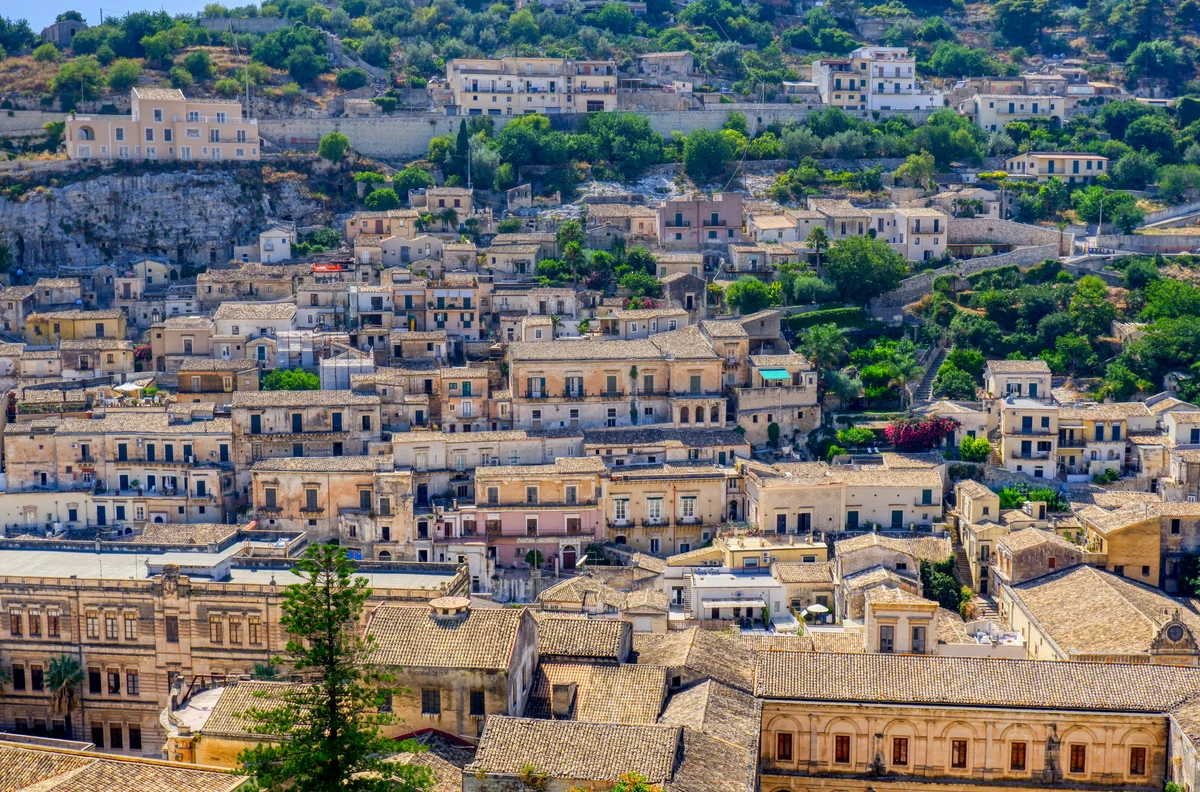
Arriving in Modica, nestled dramatically between two deep valleys, feels rather like stepping directly into a hand-painted postcard. The town’s honeyed Baroque facades spill down the hillsides in warm, cascading layers, the grand Duomo di San Giorgio reigning proudly from above like a benevolent guardian. From its sweeping staircase the views stretch across the tangle of golden lanes, tiled rooftops and distant hills—a tableau that seems almost too perfect to be real.
Venture beyond the town, and Modica’s countryside offers an entirely different kind of beauty. Ancient olive groves shimmer in the sunlight, their silver leaves whispering in the breeze. Dry stone walls trace the landscape in pale, irregular lines, and wide canopies of carob trees cast shifting shadows over fields that roll gently towards the Mediterranean. It is a land steeped in history, where the pace of life slows just enough for you to breathe deeply and let Sicily unspool before you.
And then, of course, there is the chocolate—dark, grainy, utterly unapologetic in its rustic texture, and unquestionably Modica’s most famous export. But it is far from the only culinary treasure the town guards with pride.
A Family Home Filled With Aromas
I found myself in Modica as a guest of the Occhipinti family, whose warmth wrapped around me as readily as the Sicilian sun. Michelangelo, my host, spoke often of his childhood—carefree days spent wandering between the kitchen and the courtyard of his grandparents’ home. As he shared these memories, his voice softened, as though stepping back in time.
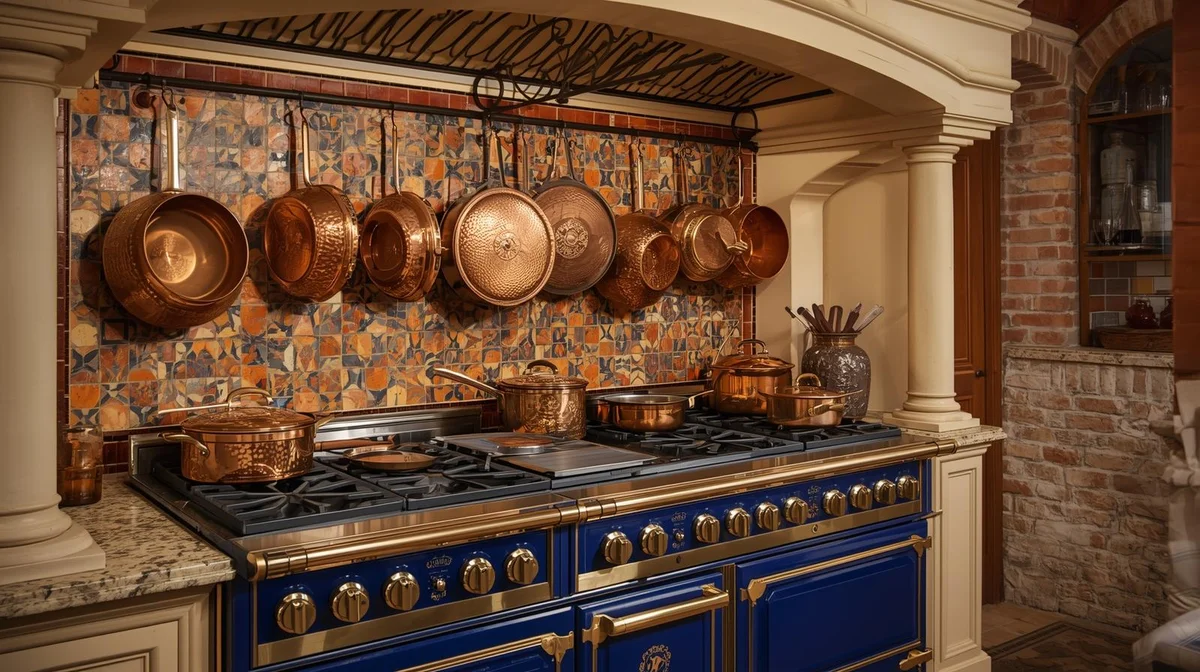
His grandmother, he told me, always had a great pot simmering gently on the old brazier. One of those heavy, darkened vessels marked by years of service—so seasoned by time that it seemed almost to breathe when it touched the heat. Inside went chickpeas, soaked overnight until they swelled and shone like polished stones. “They have a long memory, these things,” she would say. “Before us, they were already here on the earth.” It was the sort of wisdom that lingers in the air long after the words themselves have faded.
The Ritual of a Modican Pot
While the water began its slow climb towards a boil, she would slip out to the garden to gather a bundle of wild Swiss chard—deep green leaves with the briny scent of wind and soil. She would shake them vigorously, half-laughing as she did. “You don’t wash chard,” she would insist. “You persuade it.”
On the table sat two or three small pork ribs—gifts from a neighbour repaying a favour. She treated them with a quiet reverence, as though these modest pieces held the promise of something important. Into the pot they went first, to brown gently, releasing a slow, melodic aroma that curled through the house. It was a fragrance that carried an unspoken message: today, no one eats alone.
Then came the chickpeas—tumbling in with a soft, satisfying thud—along with bay leaf, rosemary, and sage. In that moment, the kitchen would begin to transform. The air thickened with steam, not delicate or refined, but generous and enveloping, the sort that clings to your clothes and settles deep into your memory. It was the scent of winter afternoons, of cracked hands warmed around bowls, of stories whispered rather than told.
Halfway through the cooking, the chard was added in great, unmeasured handfuls. The leaves floated on the surface like little green islands until she gently coaxed them down with a wooden spoon—much like encouraging reluctant children into the bath. Only at the end came the salt. “Everything needs time to say who it is,” she would remind him. “Only then should you correct it.”
And after the heat was switched off, the ritual was not yet complete. The pot was left to rest—covered as tenderly as a sleeping child—allowing all the flavours to settle into one another.
A Bowl That Stops Time
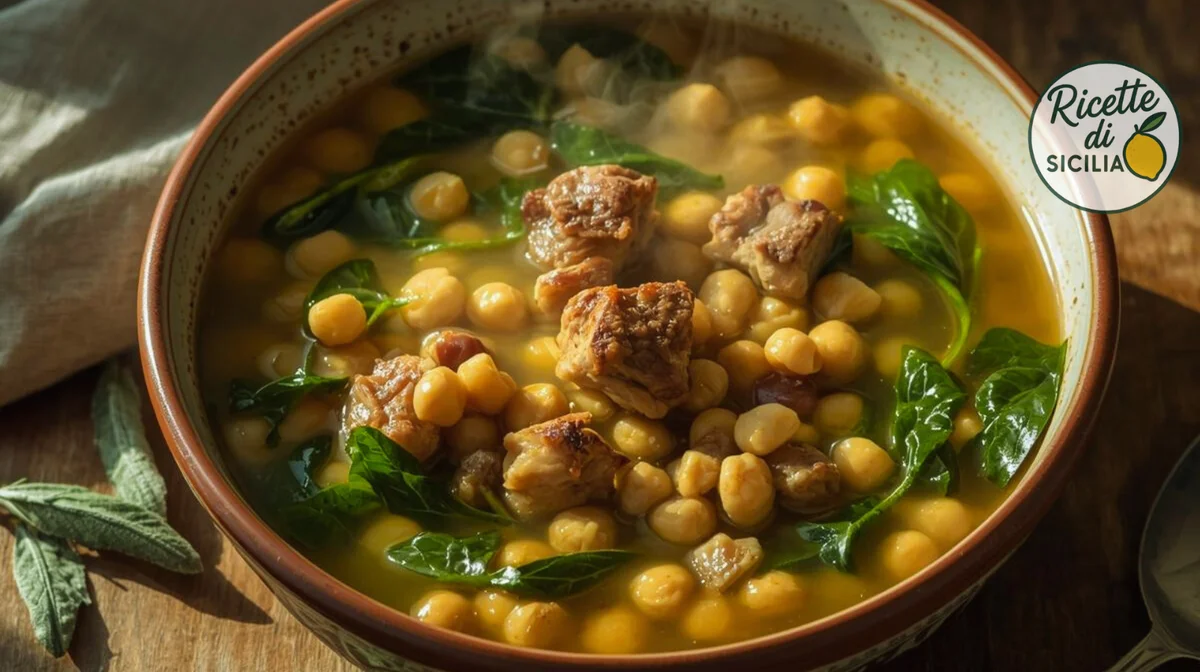
When the soup was finally ladled into bowls, Michelangelo said, a small miracle occurred. Time seemed to pause. The chickpeas, the chard, the savoury ribs—all of it spoke silently of where they came from, of the generations who had stirred pots, shared meals, and built lives marked by honest simplicity.
Every spoonful tasted of earth and seasons, of labour and love, of the kind of poverty that carried no shame because it was softened by community and care. There was a clarity in each bite, an uncomplicated truth: the simplest things may not draw attention, but they endure.
The Continuity of Tradition
Today, Michelangelo has a joyful household of his own—a lively wife and three children bright as Sicilian sunshine. During my stay, as he guided me through Modica’s wonders, he prepared that same cherished dish for me. Standing at the stove, he mirrored the gestures of his grandmother: the careful browning, the unhurried simmering, the final, thoughtful seasoning.
And as we sat together at the table, dipping bread into the golden broth, I realised just how powerful these traditions are. They bind families, bridge distances, and welcome strangers from faraway countries into the warm circle of friendship. In every bowl, a story continues—quiet, steady, unforgettable.
Main photo by Antonio Sessa on Unsplash