Ricette di Sicilia
Cibo, cultura e tradizioni siciliane
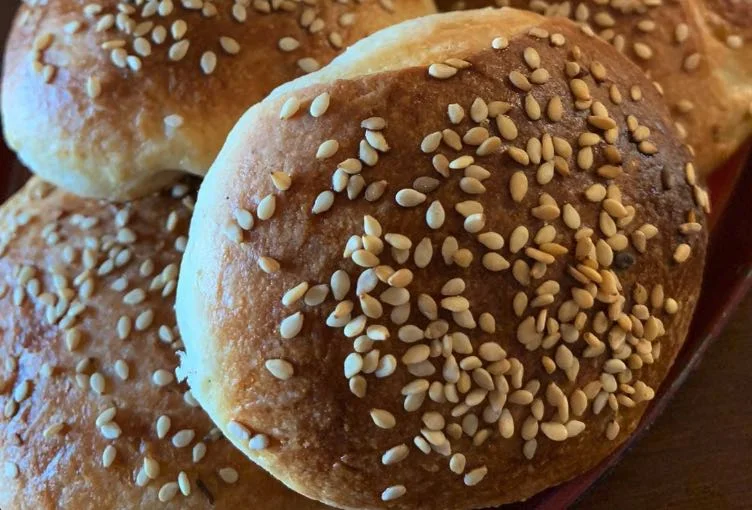
Messina Dinner Rolls: Authentic Sicilian Easter Bread from Messina
Discover Messina dinner rolls (panini di cena), a traditional Sicilian Easter bread with aromatic spices and sesame crust. Perfect for festive tables and authentic Sicilian flavour.
📖 What is it
Discover Messina dinner rolls (panini di cena), a traditional Sicilian Easter bread with aromatic spices and sesame crust. Perfect for festive tables and authentic Sicilian flavour.
🛒 Ingredients
- ✓ 250g plain flour
- ✓ 250g strong white bread flour
- ✓ 50g caster sugar
- ✓ 100g lard
- ✓ 250ml lukewarm water
- ✓ 2 eggs
- ✓ 25g fresh yeast
- ✓ 4 drops clove essence
- ✓ a pinch of ground cinnamon
- ✓ 10g salt
- ✓ 2 tablespoons milk
- ✓ 50g sesame seeds (giuggiulena)
📊 Nutritional Information
Messina dinner rolls (panini di cena) are a cherished Easter bread from Eastern Sicily, especially Messina, celebrated for their aromatic spice blend and sesame seed topping. These soft, fragrant rolls embody the vibrant springtime traditions of Sicilian Easter festivities, offering a genuine taste of regional heritage.
👨🍳 Preparation
- 1
Sift the flours together and pile them into a mound on your work surface, making a well in the centre.
- 2
Dissolve the fresh yeast and a spoonful of sugar in a little lukewarm water, then pour into the middle of the flour well.
- 3
Add the softened lard, clove essence, cinnamon, salt, and one egg.
- 4
Begin to mix, gradually incorporating the water, until you have a soft, smooth dough.
- 5
Shape into a ball, cover with a clean tea towel, and leave to prove in a warm spot for about an hour.
- 6
Once risen, roll the dough into a log and divide into portions of roughly 80g each. Shape each into a round roll and leave to prove again for another 30 minutes.
- 7
Beat the remaining egg with the milk and brush over the rolls. Generously scatter the sesame seeds on top.
- 8
Place the rolls on a baking tray lined with baking parchment and bake in a preheated oven at 220°C (fan 200°C) for about 15 minutes until golden brown.
- 9
Remove from the oven and transfer to a cooling rack before serving.
🧠 Why It Works
The success of Messina dinner rolls lies in the harmonious balance of ingredients and traditional techniques. The combination of plain and strong bread flours creates a supple yet structured dough, while lard enriches the crumb with subtle softness. Clove essence and cinnamon introduce warm, distinctive aromatic notes that evoke Sicilian Easter customs. The proving stages develop the dough’s elasticity and flavour depth, and the high-temperature bake ensures a golden crust adorned with crunchy sesame seeds, providing a pleasing contrast to the tender interior. This interplay of mild sweetness, spice, and fat reflects the culinary identity of Messina, marrying local ingredients with time-honoured methods.
🛠️ Troubleshooting
Why is my dough too sticky or too dry?
Dough stickiness can result from excess water or insufficient flour; adjust by adding flour gradually during mixing. Conversely, if too dry, add small amounts of lukewarm water to achieve a soft, smooth dough.
What if the rolls don’t rise properly during proving?
Ensure the yeast is fresh and dissolved in lukewarm water, and that the proving environment is warm and draft-free. Slow proving in the fridge can also improve rise and flavour.
How can I fix a lack of flavour or aroma in the rolls?
Incorporate the clove essence and cinnamon carefully, and consider adding a hint of Sicilian orange zest or honey to enhance aromatic complexity and sweetness.
Can I substitute lard with olive oil without affecting the result?
Yes, extra virgin olive oil can replace lard for a Mediterranean twist, though it will slightly alter the crumb’s softness and flavour profile.
What is the best method to reheat frozen Messina dinner rolls?
Thaw rolls at room temperature and refresh them in a preheated oven to regain their characteristic soft crumb and crisp sesame crust.
💡 Tips and Variations
- •
For added richness, try grating the zest of a Sicilian orange into the dough for a fresh, citrusy lift.
- •
If you prefer a sweeter touch, stir in a teaspoon of honey to make the rolls softer and more aromatic.
- •
To enhance the glossy crust, brush the rolls with a mixture of egg yolk and a pinch of sugar just before baking.
- •
The defining feature is the spice blend—clove essence and cinnamon create a warm, comforting flavour unique to these rolls.
- •
For a lighter version, reduce the sugar or swap the lard for extra virgin olive oil to give it a Mediterranean twist.
- •
Make sure to mix all the dry ingredients thoroughly before adding liquids for even proving and a supple dough.
- •
For deeper flavour, allow the dough to prove slowly in the fridge for 8–10 hours.
- •
To make a vegan version, replace eggs with a flaxseed 'egg' (ground flaxseed mixed with water) and use sunflower oil instead of lard.
- •
The magic lies in proving well and baking at a high temperature, which creates the characteristic soft crumb and fragrant crust true to tradition.
📦 Storage
- • Keep the rolls in an airtight container at room temperature to preserve their freshness for 2–3 days.
- • To extend their life, wrap each roll individually in cling film and chill for up to a week.
- • For longer storage, freeze the rolls individually; thaw at room temperature and refresh in a hot oven to restore their crispness.
🍷 Pairing
A Grillo Sicilia DOC, with its fresh acidity and mineral clarity, perfectly balances the aromatic spices and richness of Messina dinner rolls. Complementing this, an Etna Bianco DOC offers volcanic minerality and subtle salinity that enhance the sesame seed crust’s complexity without overwhelming the palate. For an international contrast, a German Riesling with its delicate aromatic profile and vibrant acidity provides a refreshing counterpoint, harmonising beautifully with the warm spice notes and soft crumb of the rolls.
❓ F.A.Q.
What makes Messina dinner rolls unique compared to other Sicilian breads?
Messina dinner rolls are distinguished by their aromatic blend of clove essence and cinnamon, combined with a sesame seed crust, reflecting the specific Easter traditions of Messina in Eastern Sicily.
Can I prepare the dough in advance for Messina dinner rolls?
Yes, for deeper flavour, the dough can be proved slowly in the refrigerator for 8–10 hours before shaping and baking, enhancing the aromatic profile and softness.
How should I store Messina dinner rolls to maintain freshness?
Store the rolls in an airtight container at room temperature for 2–3 days, or wrap individually and refrigerate up to a week. For longer storage, freeze and reheat in a hot oven to restore crispness.
Are there vegan alternatives for making Messina dinner rolls?
Yes, replace eggs with a flaxseed 'egg' (ground flaxseed mixed with water) and substitute lard with sunflower oil to create a vegan-friendly version while preserving flavour and structure.
What is the best oven temperature and baking time for these rolls?
Bake the rolls at 220°C (fan 200°C) for about 15 minutes until golden brown, which ensures a well-cooked interior and a fragrant, sesame-crusted exterior.
🏛️ History and Tradition
The panini di cena originated in the Messina area as a special Holy Week bread and are now one of the city’s most recognisable Easter symbols.
Origins and religious meaning
Their origins lie in the rural traditions of the Messina area, when everyday bread was enriched for important liturgical days with eggs, lard or butter, sugar and precious spices to mark the solemnity of Holy Week.
The name “panini di cena” refers directly to the Last Supper and recalls the bread shared by Jesus and the Apostles on Maundy Thursday. For this reason they were originally baked and eaten precisely on that day, as a “blessed” bread marking the passage from Lent to Easter.
The richness of the dough – eggs, fats, sugar and spices – transforms a humble staple into a festive food, almost an offering that links domestic baking to the Eucharistic rite.
Family tradition and place at the table
Until a few decades ago the dough was almost exclusively homemade: families would gather on the Wednesday to knead, then take the shaped buns to the neighbourhood baker, whose ovens worked non-stop in those days. It was a strongly communal moment, full of social interaction and sharing.
Traditionally panini di cena were eaten during Lent and especially between Maundy Thursday and Easter Sunday, on their own or with cheeses, cured meats, hard-boiled eggs or sweet spreads. Their gently sweet character makes them very versatile: they work both as bread for savoury foods and as a base for sweet snacks.
Many people from Messina associate them with childhood memories: in the early morning the aroma of freshly baked panini di cena would fill the streets, signalling in a very tangible way that Easter was approaching.
Evolution and spread
Today panini di cena are sold in bakeries and pastry shops in Messina – and increasingly in the rest of Sicily – throughout the year, no longer only around Maundy Thursday. They have become a distinctive Messina snack, enjoyed at breakfast or in the afternoon.
In many households they are also seen as an alternative to the classic brioche col tuppo to accompany granita: the subtle sweetness and warm spices pair beautifully with creams, ice creams and ices.
Modern recipes often use a blend of strong and soft flours, baker’s yeast, sugar, honey and lard and/or butter, with a long rise that gives a very soft crumb and a thin crust covered in well-toasted sesame seeds.
Symbolic and cultural value
Panini di cena bring together three layers of meaning: everyday bread, festive bread and “sacred” bread linked to the Gospel story of the Last Supper. Even though they are now available all year round, they remain strongly associated with Easter.
For Messina they are a true marker of identity: like pitoni, focaccia messinese or the city’s arancini, they immediately evoke family memory, popular devotion and the local talent for turning simple ingredients into a shared ritual.
These warm, spiced Messina dinner rolls bring a slice of Sicilian Easter right to your kitchen. They’re perfect for sharing with loved ones, whether at a springtime gathering or a cosy weekend brunch. Give them a go—you’ll soon see why they’re a cherished family favourite, full of soul and tradition. Don’t forget to pass them around and enjoy the smiles they inspire!
Rate this recipe
Click or tap the stars to rate