Ricette di Sicilia
Cibo, cultura e tradizioni siciliane
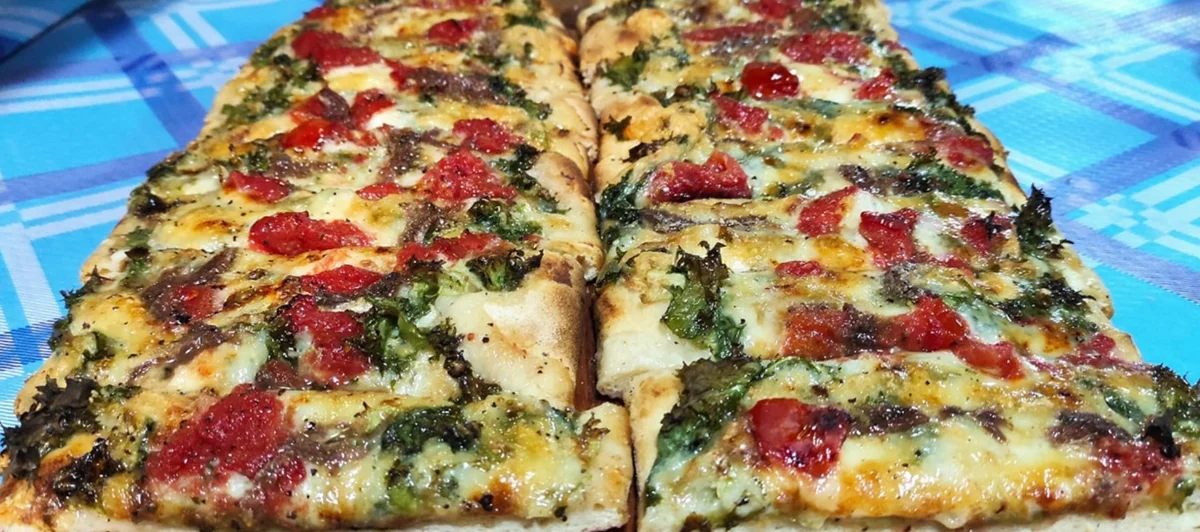
Messinese Focaccia with Tuma Cheese: Authentic Sicilian Street Food Classic
Discover Messinese focaccia with tuma cheese, tomatoes & escarole—a traditional Sicilian bread bursting with authentic flavours and heritage.
📖 What is it
Discover Messinese focaccia with tuma cheese, tomatoes & escarole—a traditional Sicilian bread bursting with authentic flavours and heritage.
🛒 Ingredients
- ✓ 300g plain flour
- ✓ 200g semolina flour
- ✓ 300ml water
- ✓ 3g fresh yeast
- ✓ 5g caster sugar
- ✓ 20g lard
- ✓ 250g escarole
- ✓ 300g tuma cheese
- ✓ 6 salted anchovy fillets
- ✓ 200g tomatoes
- ✓ Dried oregano
- ✓ Extra virgin olive oil
- ✓ Salt
- ✓ Freshly ground black pepper
📊 Nutritional Information
Messinese focaccia with tuma cheese is a traditional Sicilian bread originating from Messina, celebrated for its harmonious blend of fresh local ingredients. This iconic street food combines the mild creaminess of tuma cheese, the vibrant acidity of tomatoes, and the slightly bitter escarole, reflecting Sicily’s rich culinary heritage and convivial spirit.
👨🍳 Preparation
- 1
Combine the flours with the fresh yeast, sugar and softened lard.
- 2
Gradually add the water, kneading until you achieve a smooth, even dough.
- 3
Add the salt and continue kneading until the dough is silky and elastic.
- 4
Leave the dough to rise for about an hour in a lightly oiled bowl.
- 5
Roll out the dough into a greased baking tray and let it rest for 20 minutes.
- 6
Wash and dry the escarole, then roughly chop it.
- 7
Prepare the anchovies by cleaning and chopping them into small pieces.
- 8
Slice the tomatoes, removing the seeds.
- 9
Cut the tuma cheese into small cubes.
- 10
Evenly scatter the anchovies over the dough.
- 11
Add the tuma cubes and escarole on top.
- 12
Cover with tomato slices, then season with salt and a drizzle of olive oil.
- 13
Bake in a preheated oven at 250°C on the lower shelf for 15 minutes.
- 14
Move the tray to the middle shelf and bake for another 10 minutes.
- 15
Finish with a drizzle of olive oil and a sprinkle of freshly ground black pepper before serving warm.
🧠 Why It Works
The success of Messinese focaccia lies in the precise balance of ingredients and cooking technique. The combination of plain and semolina flours creates a dough with ideal elasticity and structure, while the slow yeast fermentation enhances flavour depth. The mild, creamy tuma cheese contrasts beautifully with the bright acidity of fresh tomatoes and the slight bitterness of escarole, all elevated by the umami of salted anchovies and aromatic oregano. Baking at high temperature ensures a golden crust with a tender crumb, embodying the rustic yet refined character of Sicilian street food.
🛠️ Troubleshooting
Why is my focaccia dough too dense or heavy?
Insufficient kneading or inadequate yeast activity can cause dense dough. Ensure thorough kneading to develop gluten and use fresh yeast. Allow the dough to rise fully in a warm environment.
How to prevent the focaccia from becoming soggy after baking?
Bake on a preheated tray or stone to ensure a crisp base. Avoid excessive olive oil on the surface before baking and serve warm to maintain ideal consistency.
What can I do if the focaccia tastes bland or lacks depth?
Incorporate quality ingredients like fresh anchovies and aromatic oregano. Allow the dough to ferment slowly to develop flavour complexity and balance acidity with the sweetness of tomatoes.
Can I prepare the dough the night before?
Yes, a slow proof in the fridge for at least 12 hours enhances flavour and results in a lighter crumb. Bring the dough to room temperature before shaping and baking.
How should I reheat leftover focaccia without drying it out?
Warm the focaccia in a preheated oven at 160°C for about 10 minutes, optionally covering with foil to retain moisture while restoring crispness.
💡 Tips and Variations
- •
For an extra flavour boost, try adding pitted black olives or a few well-rinsed capers.
- •
If you prefer a lighter, airier crumb, let the dough prove slowly in the fridge for at least 12 hours.
- •
Use an aluminium tray for even baking and a crisp base, or experiment with a baking stone for a more rustic finish.
- •
The key to this focaccia’s texture lies in the gluten development, which gives it its characteristic elasticity and structure.
- •
For a vegetarian twist, swap the tuma for fresh goat’s cheese or ricotta to keep that Mediterranean charm.
- •
To enhance the umami notes, add a pinch of nutritional yeast or a splash of soy sauce to the dough.
- •
For a gluten-free version, try rice or chickpea flour, adjusting the liquid quantities to get the right consistency.
- •
The secret to this focaccia is a slow rise and using simple, quality ingredients that come together in perfect harmony.
📦 Storage
- • Store the focaccia in an airtight container or wrap it well in cling film and keep in the fridge for up to 2 days to maintain freshness and softness.
- • For longer storage, freeze the cooked focaccia wrapped tightly in cling film and foil; it keeps well for up to a month.
- • To enjoy it again, warm the focaccia in the oven at 160°C for about 10 minutes to revive its fresh-baked crispness.
🍷 Pairing
A Cerasuolo di Vittoria DOCG, Sicily’s celebrated red, offers balanced tannins and vibrant fruity notes that harmonise with the focaccia’s creamy tuma and fresh tomato acidity. Complementing this, a young Nero d’Avola DOC presents a fuller body and subtle spice, enhancing the anchovy’s umami and escarole’s bitterness. For an international touch, a Chianti Classico DOCG from Tuscany brings bright acidity and cherry aromas, providing a refined contrast that elevates the dish’s rustic charm.
❓ F.A.Q.
What is tuma cheese and can I substitute it?
Tuma is a fresh Sicilian cheese with a mild, creamy flavour and soft consistency, essential for authentic Messinese focaccia. If unavailable, fresh goat’s cheese or ricotta can be used as alternatives, preserving the dish’s Mediterranean character.
How do I achieve the perfect dough elasticity for Messinese focaccia?
Combining plain and semolina flours with fresh yeast and allowing a slow rise develops gluten, resulting in a dough that is elastic and structured. Kneading until smooth and letting it rest adequately are key steps.
Can I prepare Messinese focaccia in advance and how should I store it?
Yes, once baked, store the focaccia in an airtight container in the fridge for up to two days or freeze it wrapped tightly for up to a month. Reheat in the oven at 160°C for about 10 minutes to restore freshness.
What seasonal occasions is Messinese focaccia traditionally enjoyed?
While enjoyed year-round as street food, Messinese focaccia is especially popular during local festivals and family gatherings in Sicily, reflecting its role as a convivial, accessible dish.
How can I modify the recipe for a gluten-free diet?
Substitute the flours with rice or chickpea flour, adjusting water quantities to maintain dough consistency. Note that the structure will differ, but the focaccia will retain its characteristic flavours.
🏛️ History and Tradition
Messinese focaccia is a historic Sicilian bread dating back to the early 20th century, rooted in Messina’s street food culture. Traditionally prepared with local ingredients like tuma cheese and escarole, it reflects the island’s agricultural bounty and culinary ingenuity. Often enjoyed during festivals and communal gatherings, this focaccia embodies Sicilian values of simplicity, conviviality, and respect for seasonal produce, reinforcing its status as a cultural and gastronomic icon of the region.
Making Messinese focaccia is like inviting a slice of Sicily into your kitchen — rich in history, flavour and heart. I warmly encourage you to give this recipe a go, make it your own, and share it with your nearest and dearest. There’s something truly special about gathering around good food, and this focaccia is sure to bring a little Sicilian sunshine to your table. Happy baking and buon appetito!
Rate this recipe
4.7/5 (155)
Click or tap the stars to rate