Sicily’s food and wine culture proudly boasts a wealth of grape varieties, many of which have earned national quality marks.
This is certainly true of the island’s vineyards, which not only produce outstanding wines but also exceptionally sweet and wholesome table grapes.
One shining example is the Mazzarrone table grape, which was awarded Protected Geographical Indication (PGI) status in 2003.
This gem hails from Mazzarrone and the wider Calatino area, often hailed as the grape capital of Sicily.
All varieties from Mazzarrone share a delightfully crisp flesh and a sweetness that’s never cloying.
The Vine
The fruit comes from Vitis vinifera, the familiar European grapevine.
Belonging to the Vitaceae family—climbing plants that have been around for some 300,000 years, as archaeological finds reveal.
The earliest evidence traces back to Anatolia and the Caspian Sea shores, from where the vine’s story likely began before being introduced to Sicily by Dionysius, the tyrant of Syracuse.
Its name echoes Dionysus, the Greek god of wine, later known as Bacchus to the Romans—immortalised over a millennium later by Caravaggio, who famously painted him crowned with grapevines.
Interestingly, vine remains over two million years old have been discovered in Tuscany, challenging the idea of a solely Mesopotamian origin.
Today, the world’s oldest vine thrives in South Tyrol. Known as Versoaln, it has flourished in harmony with its surroundings since the 15th century.
A Fortunate Discovery
The vine’s success owes much to a happy accident. Neolithic people, enchanted by the grape’s sweetness, stored large quantities in containers.
On one occasion, grapes left too long began to ferment, giving birth to wine.
This alcoholic beverage then spread widely, boosted by the Romans’ early form of globalisation.
An Italian Pride
Meanwhile, table grapes continued to be enjoyed, as evidenced by numerous frescoes and artworks.
What table grapes lacked was legal protection distinguishing them from wine grapes—a gap filled in Italy in 1887.
Italian farmers petitioned the fledgling government for legislation to separate table grape production from winemaking.
This law paved the way for genetic work to safeguard grapes from epidemics and to develop increasingly resilient varieties.
The Mazzarrone PGI Table Grape Varieties
The story of table grapes is beautifully embodied in Mazzarrone’s produce, which, unlike Canicattì’s focus on the Italia variety, includes five others: Palieri, Victoria, Red Globe, Black Pearl, and Black Magic.
The Italia grape was bred by Lombard agronomist Alberto Pirovano, who crossed Bicane and Muscat varieties.
He named it after the Kingdom of Italy, the first to legally recognise table grapes.
Palieri, another Italian creation, was developed by Michele Palieri in Velletri in 1958 and is known for its striking purple hue.
Victoria and Black Magic hail from Eastern Europe—the former from Romania, the latter from Moldova’s capital, Chisinau.
Victoria shines with a golden colour like Italia, while Black Magic lives up to its name with a deep, dark shade reminiscent of Transylvania’s mysterious nights.
Across the Atlantic, California gave us Black Pearl and Red Globe. Black Pearl shares Black Magic’s dark tones, whereas Red Globe dazzles with a vivid red.
The Calatino Region
All these varieties flourish in Mazzarrone and the broader Calatino area.
Originally referring just to Caltagirone’s territory, Calatino now denotes a consortium of municipalities in the southern Simeto area, including Mazzarrone—the southernmost town in Calatino, bordering Ragusa province and nestled on the northern slopes of the Hyblaean Mountains.
The PGI zone covers parts of Ragusa such as Comiso, Chiaramonte Gulfi, and Acate, alongside Catania’s Caltagirone, Licodia Eubea, and, of course, Mazzarrone.
Harvesting
Calatino’s growers cultivate their vineyards mainly using the traditional southern Italian pergola system, though some also employ the more modern vertical trellis.
Harvest runs from June through to December, allowing each variety to ripen perfectly.
This historic cultivar dates back to the early 20th century and saw remarkable growth in the 1950s when farmers embraced modern techniques and tools to optimise each grape’s ripening.
Characteristics of Mazzarrone PGI Table Grapes
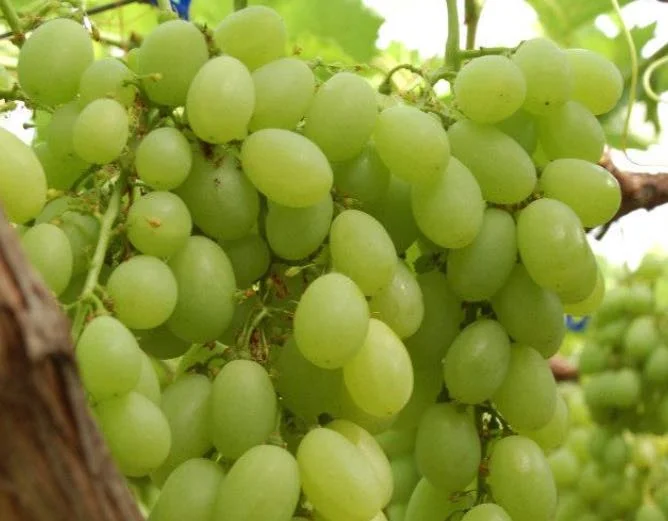
Each variety boasts unique traits. The white grapes split into Italia and Victoria: Italia’s berries are almost perfectly round, while Victoria’s are more elongated.
Palieri’s grapes resemble Italia in shape but sport a deep blackish-purple colour. Black Magic and Black Pearl also lean towards violet hues, with distinctly elliptical berries.
Red Globe stands alone as the sole red variety, with plump, round berries glowing a vivid purplish-red.
Despite their differences, all Mazzarrone PGI table grapes share a firm, crunchy flesh and a sweet yet light flavour, even with their naturally high sugar content.
Uses for Mazzarrone PGI Table Grapes
Thanks to their purity, Mazzarrone table grapes are perfect eaten fresh, especially first thing in the morning for a natural energy boost, or juiced.
They also make delicious jams and feature in a variety of mouthwatering recipes.
Recognising their significance, Mazzarrone’s table grapes earned PGI status in 2003 and take centre stage at the International PGI Table Grape Festival held every late summer in Mazzarrone, now affectionately known as the “city of grapes.”
Did You Know?
Grapes are packed with health benefits, forming the basis of ampelotherapy—a treatment named after Ampelos, a satyr beloved by Dionysus, linking the fruit forever to the god of wine and vines.
The grape cluster, a symbol of fertility, appears in countless artworks and fables, including Aesop’s “The Fox and the Grapes,” and features in many sayings.
“Eat grapes on New Year’s Day, and you’ll have money all year.”
“Fine vineyard, poor grape.”
“When the fox can’t reach the grapes, she says they’re sour.”