Overview
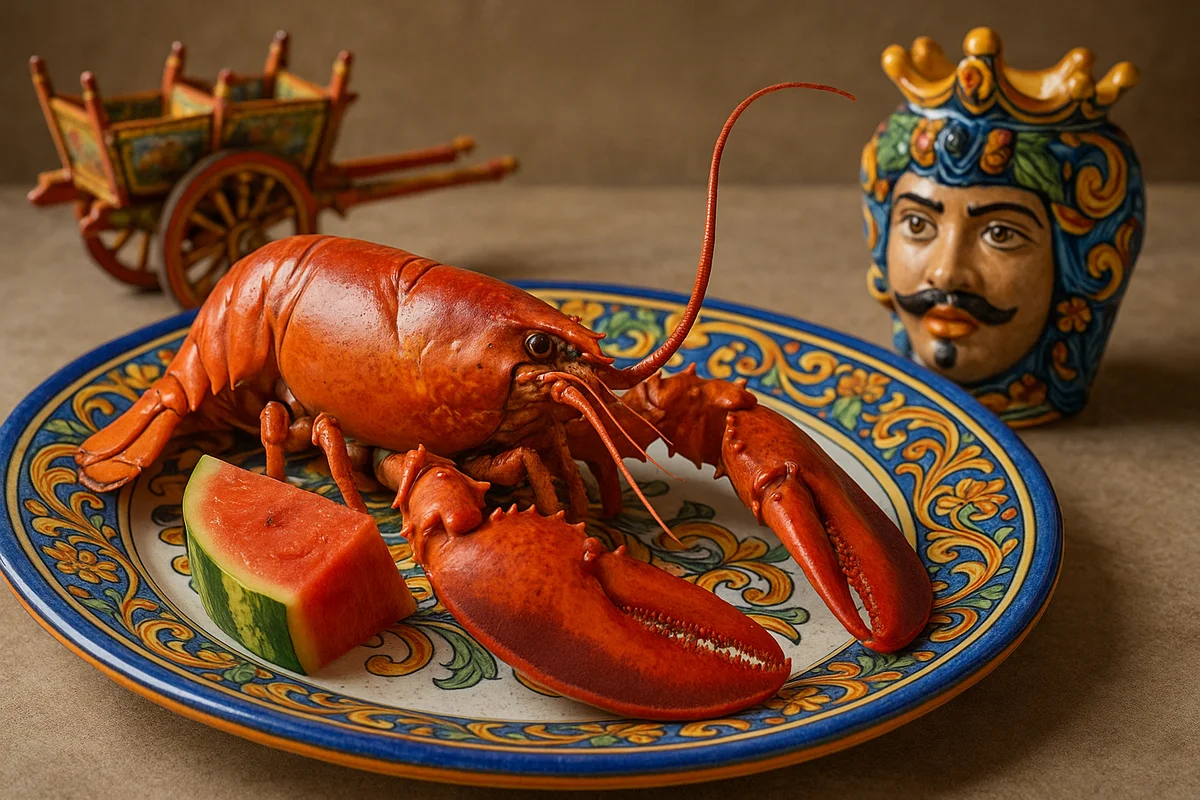
Lobster stands as one of the most esteemed and sought-after seafood treasures in Sicilian cuisine, symbolising elegance and celebration during special occasions. With its striking reddish-brown shell and long, slender antennae, this crustacean is easily recognisable and epitomises the gastronomic excellence of the Mediterranean waters surrounding the island.
In Sicily, lobster is sustainably harvested along the rugged coastline—particularly near Trapani, the Egadi Islands, Pantelleria, and the eastern shores. Its white, tender flesh boasts a naturally sweet flavour that is celebrated in a variety of dishes, from simple steaming to sophisticated oven-baked or grilled preparations.
Characteristics
The Mediterranean lobster (Palinurus elephas) is distinct from its clawed cousin, the European lobster, by its lack of pincers and its vivid red antennae. Its body is protected by a hard, spiny carapace, coloured a deep reddish-brown that turns vibrant red when cooked.
Size can vary considerably: commercial specimens usually weigh between 500 grams and 2 kilograms, though in the wild, they may reach up to 5 or 6 kilograms. The tail—often referred to as the "belly"—houses the majority of the prized meat.
Seasonality
Lobster fishing in Sicily is carefully regulated, with biological rest periods in place to ensure sustainable harvesting. Generally, the prime fishing season runs from May to September, peaking in the summer months when lobsters are most plentiful in markets.
During off-seasons, which coincide with their breeding period, lobsters from other parts of the Mediterranean or the Atlantic may be available, though locally caught, in-season specimens are prized for their superior freshness and flavour.
Nutritional Profile
Lobster is a wonderfully nutritious yet light option, delivering roughly 85 calories per 100 grams of tender meat. It is rich in protein—around 18 grams—and contains minimal fat.
It also offers a valuable source of minerals such as phosphorus, calcium, selenium, and zinc, alongside B vitamins, with a notable presence of B12. Its high-quality proteins are easily digestible, and while it contains cholesterol, it is balanced by beneficial omega-3 fatty acids.
In the Kitchen
Sicilian culinary tradition honours lobster by preparing it in ways that highlight its delicate flavour.
Grilled Lobster
The classic approach involves halving the lobster lengthwise, seasoning it with olive oil, salt, pepper, and Mediterranean herbs like oregano and garlic, then grilling it flesh-side down over the heat. It’s typically served with a gentle squeeze of fresh lemon to brighten the palate.
Boiled Lobster
Boiling in salted water scented with bay leaves, lemon, and parsley is perhaps the simplest way to appreciate the lobster’s pure taste. It’s often served warm or cold, accompanied by homemade mayonnaise or just a drizzle of extra virgin olive oil and lemon.
Lobster Pasta
A Sicilian classic, this dish features lobster chopped into pieces and sautéed with fresh cherry tomatoes, garlic, parsley, and a splash of olive oil. The pasta is then tossed directly in the lobster-infused sauce, melding the flavours beautifully.
Catalan-style Lobster
Originating from Spain but popular in western Sicily, this dish presents boiled lobster, served cold atop a bed of salad leaves, tomatoes, and onions, dressed simply with oil, vinegar, and salt.
Lobster Risotto
A refined preparation where the lobster shell is simmered to create a flavour-packed broth that infuses the rice, with the tender meat folded in at the last moment to keep it moist and luscious.
Preparation
To prepare raw lobster, it is split down the middle with a sharp knife, removing the dark digestive tract running along the tail. If roe is present, it can be reserved and used to enrich sauces.
When boiling, allow approximately 15 minutes for the first kilogram and an additional 10 minutes per kilogram thereafter. The lobster should be placed into salted, boiling water.
Buying Tips
A fresh lobster should be lively, with intact antennae and responsive movements. Its shell ought to be glossy and free from dents, and it should emit a fresh, briny scent of the sea.
Always check the source to ensure sustainable fishing practices. Locally caught Sicilian lobsters tend to be fresher and of superior quality. Prices vary considerably by size and season, with summer fetching the highest rates.
Storage
Lobster is best enjoyed alive or shortly after being killed. Cooked lobster should be kept well-covered in the fridge and consumed within one to two days.
Cooked lobster meat can be wrapped tightly in cling film and frozen for up to two or three months. Freezing live lobster is not recommended as it can greatly diminish quality.
Fun Facts
In Sicily, lobster has long been viewed as a celebratory dish, traditionally reserved for significant occasions such as weddings or the patron saint festivals along the coast. Its vibrant red hue post-cooking makes it a striking centrepiece on festive tables.
Fishing for lobster demands deep local knowledge and skill. Sicilian fishermen employ traditional traps and nets, carefully positioned amid rocky reefs where lobsters seek shelter.
Particularly in the Egadi Islands and Favignana, there is a rich heritage of lobster fishing and cuisine, with some island restaurants renowned across Sicily for their masterful lobster dishes.