Where Sicily Holds Tight to Its Past
Between Catania’s volcanic breath and the sun-washed plains rolling toward Siracusa, Lentini rises as a proudly agricultural town—one of those Sicilian places where the earth still dictates the rhythm of daily life. The morning I arrived, the air was fragrant with citrus and damp soil, the sky a soft winter blue. I had come to witness something rare: a return to traditions that many fear have already slipped beyond recall.
“We must never forget our past,” Cosimo told me as we walked toward the courtyard where the day’s work would unfold. “No, never, never, never.” He said it with the insistence of a man defending something precious—not an object, but a memory, a way of being, an inheritance stitched into the land. Today we would meet his father, 92-year-old Alfio, and prepare maccheroni in the old way, using a torchio restored to life after decades of silence.
The Grain, the Hands, the Heart
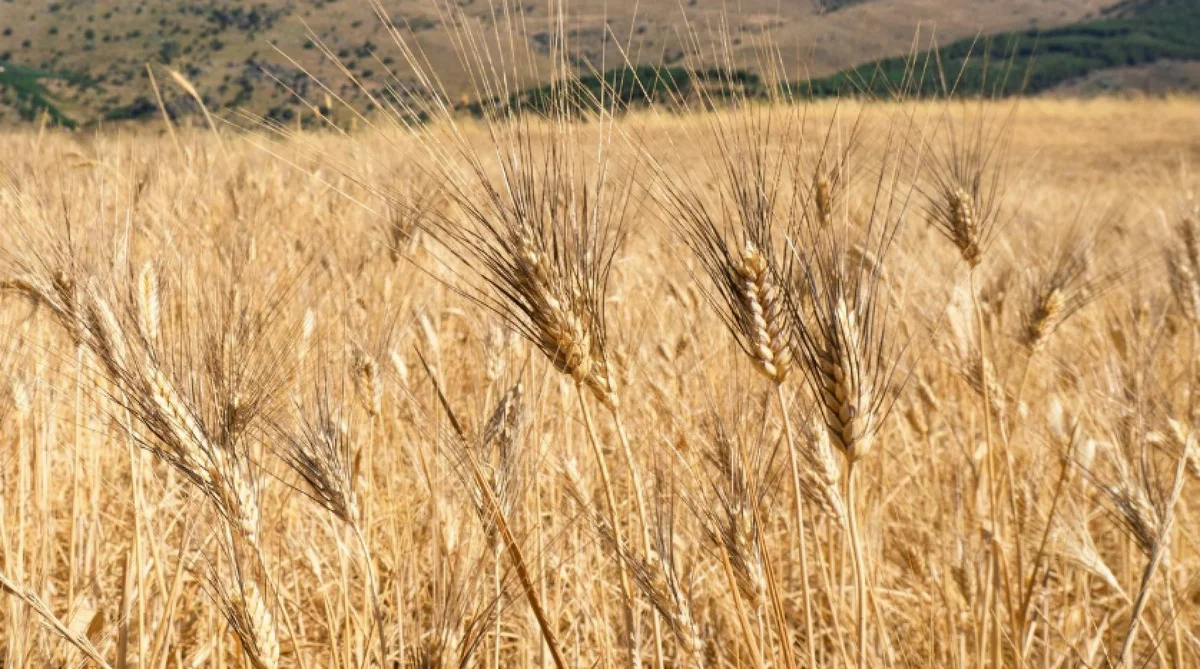
The table was already set with a heap of coarse flour milled from the family’s own wheat. Its colour was deeper than commercial flour, flecked with tiny amber fragments that whispered of fields and sun. Rita and Federica—one Sicilian, one German by birth but now firmly rooted in Lentini—leaned over the sieve, coaxing the flour into a soft mound. What remained on top would be used for feed and soups, nothing wasted, everything honoured.
“Eight eggs per kilo,” Rita explained, cracking the golden-yolked treasures freshly collected from the henhouse. Yet this was not strict mathematics. Everything here was done by eye, by instinct, by touch—the way generations of Sicilian women learned at the hands of mothers and grandmothers. The dough fought back at first, stubborn and unyielding, but slowly it softened beneath her palms, transforming into something that looked like the promise of a meal.
The Torchio Awakens
Behind us stood the torchio, a squat wooden contraption older than anyone present. Once, every home in the area owned one. Now it survives only in the corners of memory and in the hands of families like Cosimo’s who refuse to surrender tradition to convenience. Bartolomeo and Franco stepped forward, ready for the work of muscle and rhythm that the torchio demands.
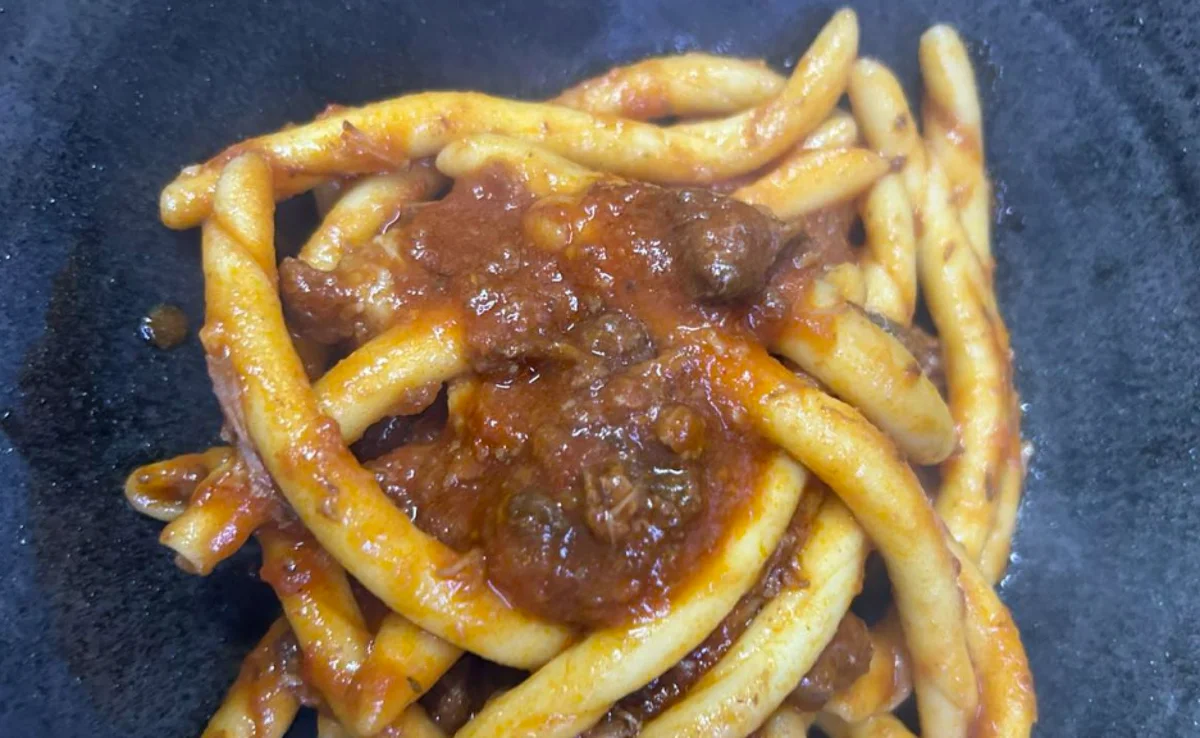
The dough—cut into thick filoncini—was pushed inside the cylinder. With each heavy turn of the lever, the pasta emerged in slow, determined strands. Rita sliced them cleanly with a practiced flick of the wrist. They unfurled onto the table like little ropes of Sicily’s past, darkened by the unrefined semolina, textured with the roughness of real grain.
“Once, we made kilos of these,” Nonno Alfio smiled, watching the scene with bright, boyish eyes. “At Carnevale, always. There was little money, yes. But there was harmony. We danced, we cooked, we laughed.” His voice carried that unmistakable Sicilian mixture of nostalgia and pride—a recognition that life had been hard, but also full.
From Soil to Sauce
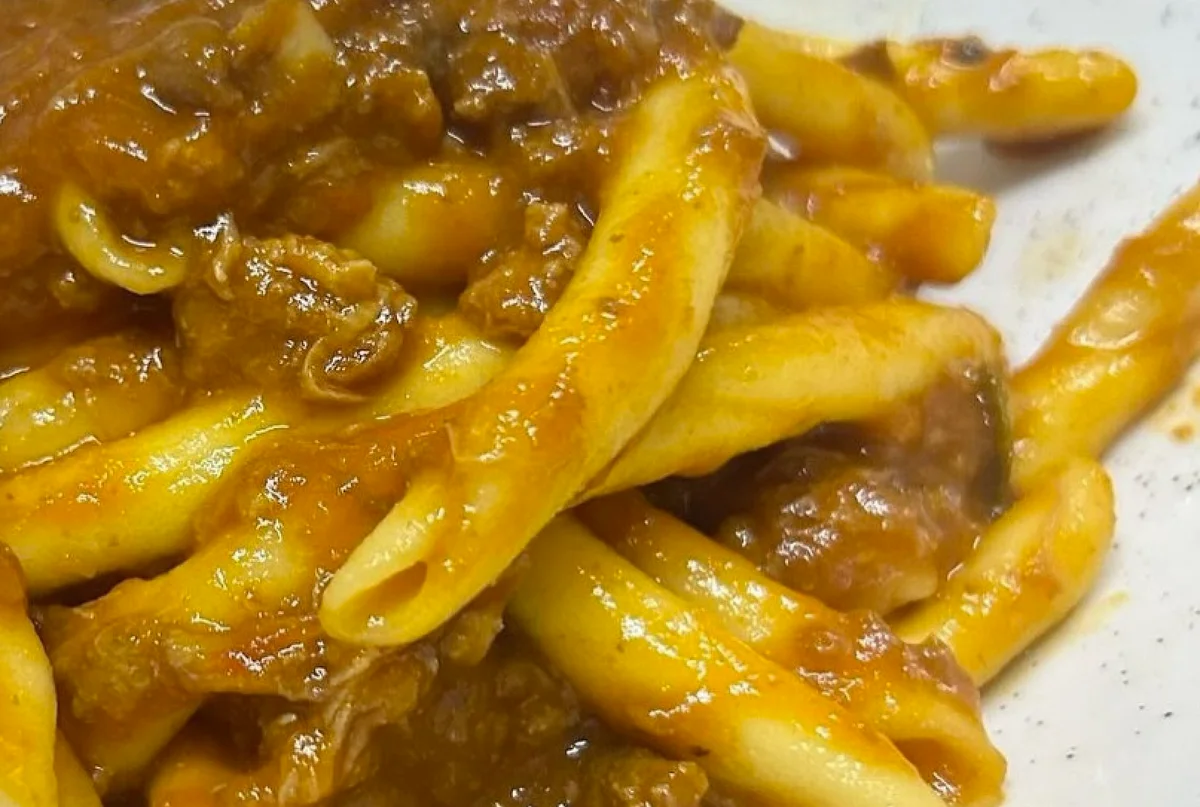
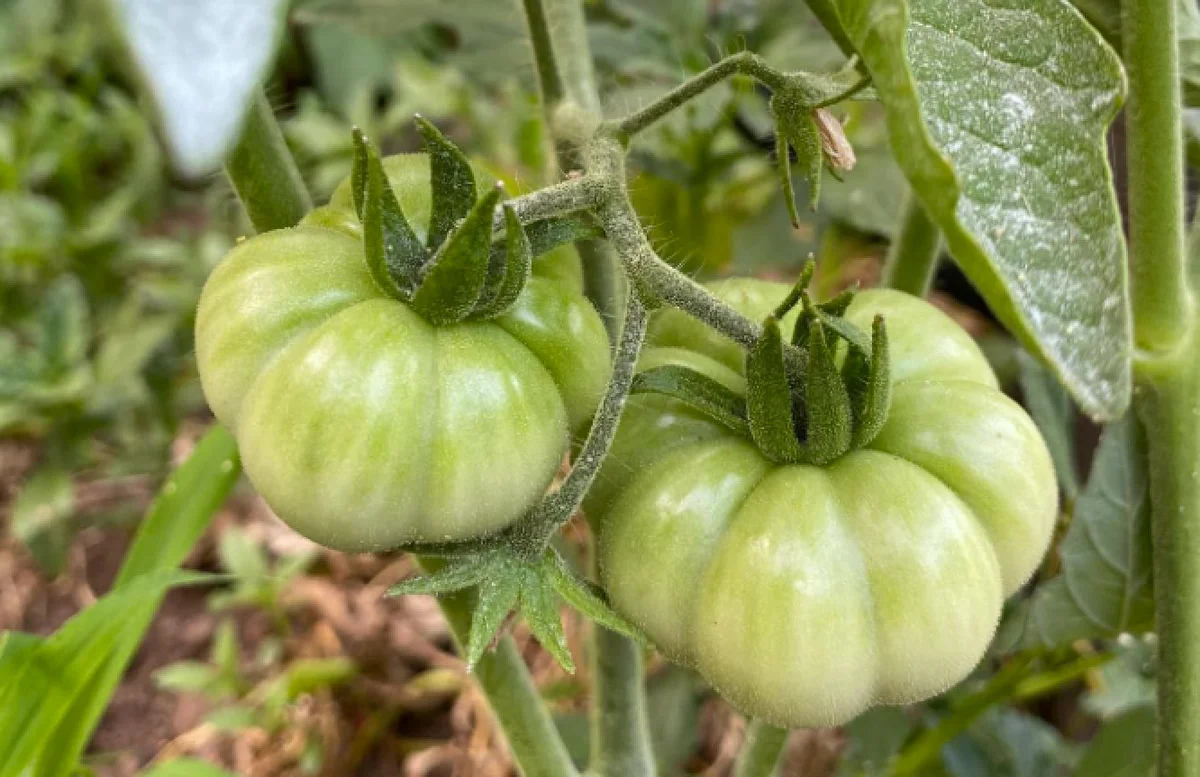
No maccheroni would be complete without a sugo capable of warming a whole winter afternoon. In the kitchen, the terracotta pot had been simmering since early morning, filled with pork, tomato sauce made from Cosimo’s own harvest, and a spoonful of estratto—an intensely concentrated tomato paste almost no one makes anymore. It lent the air an aroma both ancient and comforting, the smell of Sundays long gone.
“Everything we grow, Rita transforms,” Cosimo said. “Nothing is bought if it can be made.” Their life is one of labour, certainly, but also of extraordinary abundance: crates of tomatoes, branches heavy with fruit, chickens clucking beneath the lemon trees. It is a Sicily many imagine but few experience—one where the land still gives, and people still listen.
A Feast of Memory
When the last strand of maccheroni was cut, the table was a tapestry of rustic beauty. The pasta rested briefly before being plunged into boiling water. Minutes later, steaming bowls were brought out, the sugo ladled generously over the top, a final leaf of bay perfuming the dish.
Nonno Alfio tasted first. He nodded slowly, a man who has lived nearly a century tasting not just pasta but time itself. “Beautiful,” he said simply—and in that word lived decades of tradition, loss, joy, and perseverance.
As we ate, someone began to sing—just a few notes, soft and familiar. “Once, we always sang in the fields,” Alfio said. The melody hovered above the bowls, above the courtyard, above Lentini itself, like a thread sewing past to present.
What Sicily Teaches
Watching Federica, who left Germany to build a life on Sicilian soil, I understood something essential: Sicily continues to seduce those who seek authenticity, who crave the taste of something real. Here, traditions endure because people choose to guard them—not out of obligation, but out of love.
Lentini may be a modest agricultural town, but on this day, in the company of a 92-year-old farmer, his devoted son, and a gathering of friends, it felt like the beating heart of Sicily itself. A place where the past is not forgotten. A place where maccheroni, kneaded by hand and pressed through ancient wood, still carry the flavour of memory.