
Overview
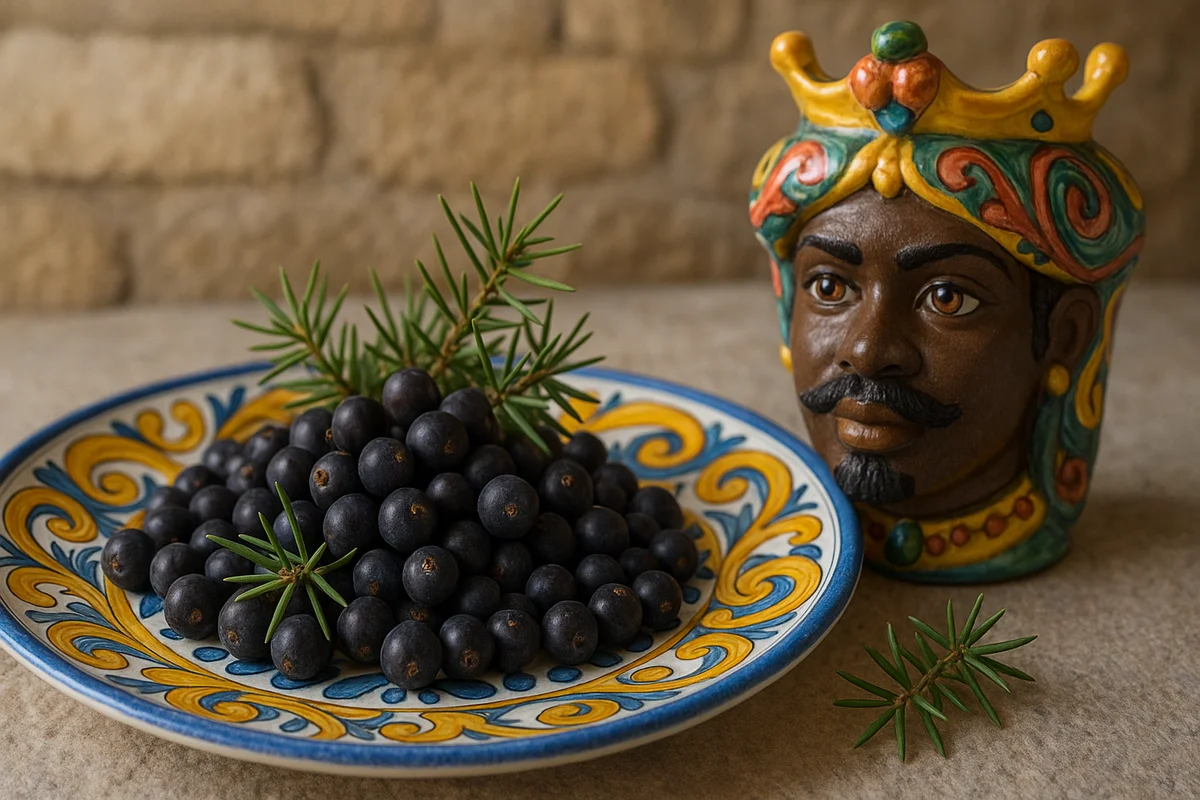
Juniper berries are the fruit of an evergreen shrub found throughout Sicily, especially in the island’s hilly and mountainous regions. These small, rounded berries, which take on a deep bluish-purple hue when ripe, have been cherished for centuries in Sicilian kitchens to enhance the flavour of meats, game, and traditional recipes, imparting a subtle resinous and balsamic note.
In Sicilian culinary heritage, juniper berries serve as a bridge between mountain fare and the island’s inland gastronomy, valued not only as a spice but also for their digestive and preservative qualities, particularly useful in curing hams and meats.
Characteristics
Juniper berries are actually fleshy cones rather than true berries, requiring two to three years to fully mature. Once ripe, they develop their characteristic dark bluish-purple colour and strongest aroma. Fresh berries have a slightly sticky feel, owing to their essential oils.
The scent of juniper berries is complex: woody-resinous, lightly bitter with balsamic undertones and a faint sweetness lingering on the palate. Given their potent, lingering flavour, they are used sparingly in cooking. Dried berries, which are most commonly used, retain their aromatic qualities for a long time.
Harvesting and Processing
In Sicily, juniper berries are traditionally hand-picked from wild shrubs between late summer and autumn, once fully mature. They predominantly grow in the hill country, especially across the Nebrodi, Madonie mountains and on the slopes of Etna.
Following harvest, the berries are dried in the shade in well-ventilated spaces—a process that intensifies their aroma and ensures long shelf life. Properly dried berries maintain their deep blue-black colour and develop a slightly wrinkled surface.
Culinary Uses
Within Sicilian cuisine, juniper berries are primarily used to flavour meat and game dishes.
Roasts and Braises
Juniper berries are a classic seasoning for roast pork, lamb and kid. They are gently crushed before use to release their essential oils, then added to the meat alongside herbs like rosemary, sage and garlic during cooking.
Game
In dishes with wild boar, hare and rabbit, juniper berries are almost indispensable. Their robust flavour balances the strong notes of game and helps make the meat easier to digest. They feature in marinades as well as slow-cooked stews.
Sauces and Gravies
In certain Sicilian regions, juniper berries are stirred into hearty meat sauces to deepen the flavour. They excel in braises and ragù made with game, where their fragrance harmonises beautifully with red wine and spices.
Preserves and Curing
In the tradition of Sicilian pork butchery, juniper berries are used to season salamis, especially those made from pig and wild boar. Their natural antiseptic qualities also contribute to preserving the meats.
Properties and Benefits
Beyond their culinary use, juniper berries are celebrated for digestive and diuretic properties. In Sicilian folk medicine, they were brewed into digestive infusions, especially after hearty, meat-heavy meals.
The essential oils within juniper possess antiseptic and balsamic qualities. However, it’s wise to use the berries sparingly in cooking and to avoid them during pregnancy or if you have kidney issues.
How to Use
To unlock the full aroma of juniper berries, gently crush them with the back of a knife or a pestle before adding to your dish. This helps release the essential oils and intensify the flavour.
Typical quantities range from 3 to 6 berries per kilogramme of meat, depending on the desired strength. It’s important not to overdo it, as the flavour can quickly dominate and overshadow other ingredients.
The berries can be added during cooking and removed before serving, or left in the dish as a garnish—with a polite warning to diners not to eat them whole.
Storage
Dried juniper berries keep remarkably well for two to three years if stored in an airtight container away from light and moisture. Over time, however, their aroma gradually fades, so it’s best to use them within a year of purchase to enjoy their full intensity.
Ensure your berries retain their dark bluish-purple colour and show no signs of mould or spoilage. When rubbed between your fingers, they should still release a strong, resinous fragrance.
Buying Tips
Juniper berries are readily available from herbalists, spice shops or well-stocked supermarkets, usually in the spice aisle. Opt for whole berries rather than ground powder to preserve their aroma better.
Good-quality berries should be intact, with an even, deep blue-purple colour, and free from excessive dust or impurities. Avoid packets containing brownish or dull-looking berries, as these suggest old or poorly stored produce.
Did You Know?
In Sicily, juniper is locally known as “jinepru” or “nespru”, varying by area. The shrubs hold a special place in Sicilian folklore, often regarded as sacred plants and used in folk traditions to ward off the evil eye.
Juniper berries are famously the key ingredient in gin, the renowned spirit originating from the Netherlands. The use of juniper to flavour alcoholic drinks stretches back millennia, and Sicilians traditionally crafted homemade liqueurs blending juniper, honey and grappa.
In Sicily’s mountain cuisine, juniper berries and branches were also used to smoke meats and cheeses, utilising the aromatic smoke from burning juniper wood—a technique still alive in some artisanal producers today.