If we were to pick a plant that truly embodies Sicily, it would undoubtedly be the lemon.
This fruit, especially in its vibrant yellow form, is a familiar sight along Sicilian streets, brightening the landscape like a painter’s palette and filling the air with the delicate scent of orange blossoms.
The lemon was introduced to Sicily during the Crusades and quickly spread across the island, particularly flourishing along the coastal areas where the climate suits it perfectly.
Initially grown purely for decoration, it was thanks to the Jesuit Fathers that specialised lemon cultivation took off, turning the fruit into a cornerstone of Sicily’s agricultural economy.
Lemon groves began to blanket the countryside, giving rise to various local varieties over time.
Among these is the ariḍḍaru, a distinctive type native to the coastal zones of Messina.
It was here that Colonel Interdonato, retiring from public life after Italy’s unification, crossed this variety with the citron, creating an exceptionally sweet lemon thanks to its low citric acid content.
Thus was born the Interdonato lemon, a Messina speciality that remains central to the region’s agriculture and proudly holds the PGI (Protected Geographical Indication) status.
A Brief History of the Lemon
Colonel Interdonato’s lemon is just one among many varieties of Citrus Limon, a member of the Rutaceae family, which includes all citrus fruits.
This tree, a hybrid between the citron and the bitter orange, first appeared in Burma before making its way to the Middle East and Persia.
It was in Persia that it acquired its current name, derived from the Persian word līmū, which originally referred to the entire citrus family.
Known to the Romans and Greeks as the “apple of Media” (likely through imported fruits), its cultivation in Europe is credited to Crusaders returning from the Holy Land, who brought lemon saplings with them.
The Sicilian Fruit
The Citrus Limon tree thrives in Sicily’s climate, perfectly balanced by the surrounding sea and constant gentle breezes.
Initially valued only as an ornamental plant due to its tartness, it was the Jesuit Fathers in the 17th century who recognised the lemon’s potential, rich in vitamins and essential oils with notable healing properties.
Thanks to their dedicated cultivation, the ornamental lemon became the backbone of Sicilian agriculture, with vast citrus groves established and exports reaching across Europe — as seen with the Siracusa Lemon PGI.
Colonel Interdonato
The lemon tree flourishes in a belt of the world that includes South Africa, Uruguay, Mexico, and of course, the Mediterranean.
Sicily’s coasts are painted yellow by the lemon, including the Strait of Messina area where Giovanni Interdonato was born in 1813, the son of a landowner.
He played a part in the 1848 uprisings that briefly ousted the Bourbon rulers, who returned by year’s end, forcing the now-famous “colonel” to flee first to Palermo, then Malta.
After another failed revolt, he was imprisoned on Ustica, where he met Teresa Longo, whom he later married.
With Garibaldi’s Expedition of the Thousand, he led the vanguard in Messina but resigned the following year amid internal disputes, retiring from public life.
The Birth of the Interdonato Lemon PGI
He settled in the town of Nizza di Sicilia, renamed from “San Ferdinando” to shed its Bourbon associations — a change championed by the colonel himself, who served as mayor until his death in 1889.
In his leisure time, he devoted himself to his passion for citrus, cultivating them with care in his villa at contrada Reitano.
Experimenting with over 200 grafts, he finally created a special lemon, a cross between the citron and the local ariḍḍaru variety.
The Harvest
Today, the lemon bearing his name is grown along the Ionian coast from Messina to Giardini Naxos, passing through Scaletta, Roccalumera, and Taormina.
The tree is delicate and requires attentive care, including pruning after February and regular watering throughout the summer.
The Interdonato lemon PGI flowers up to twice a year, with hand-picking starting in September and continuing until February, sometimes extending as late as April.
Characteristics of the Interdonato Lemon PGI
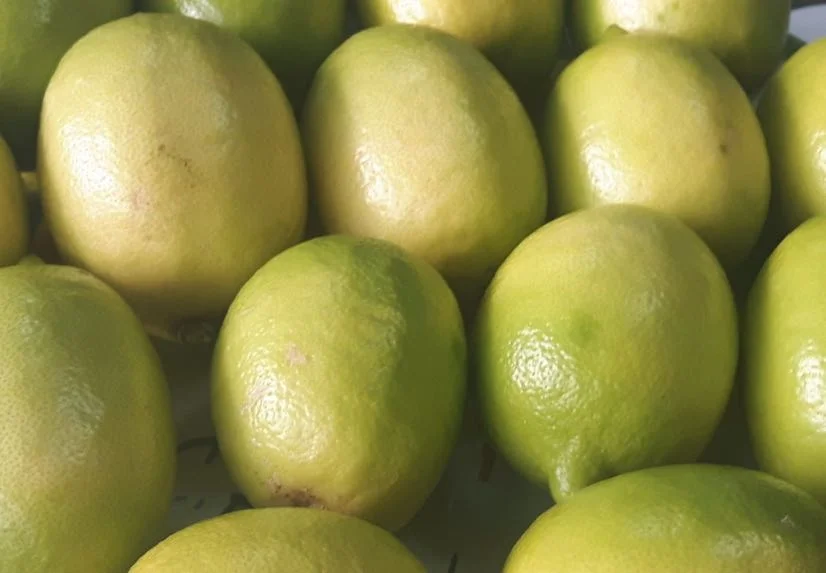
The Interdonato lemon PGI is a fairly large fruit, slightly elongated, with a yellow skin that fades to a subtle green at the tips.
Its flesh is also yellow, and its defining feature is its remarkable sweetness.
This sweetness comes from the citron parent, which has a low citric acid level, giving the lemon a milder, less tart flavour that makes it delightful to enjoy on its own or as a charming companion to a hot cup of tea.
It’s also perfect for fresh juices and traditional recipes like limone zuccarato — a Sicilian candied lemon treat.
Thanks to its unique sweet profile, the Interdonato lemon has earned its Protected Geographical Indication status.
Every August, the town of Alì Terme celebrates this local gem with a lively festival in its honour.
Did You Know?
The Romans believed lemons could counteract poisons, and more recently, they were thought to cure scurvy — a disease actually caused by a lack of vitamin C, which lemons are rich in.
In days gone by, lemon and olive oil hair treatments were used to give locks a glossy shine.
The heaviest lemon ever recorded weighed over 5kg and was grown in Israel in 2003.
Lemons have inspired many sayings and proverbs, such as:
If life gives you lemons, make a caipirinha (a Brazilian proverb)
The heart of a woman is like limoncello: a slice here and there, and love slips away.
Once squeezed, the lemon is discarded.