
Overview
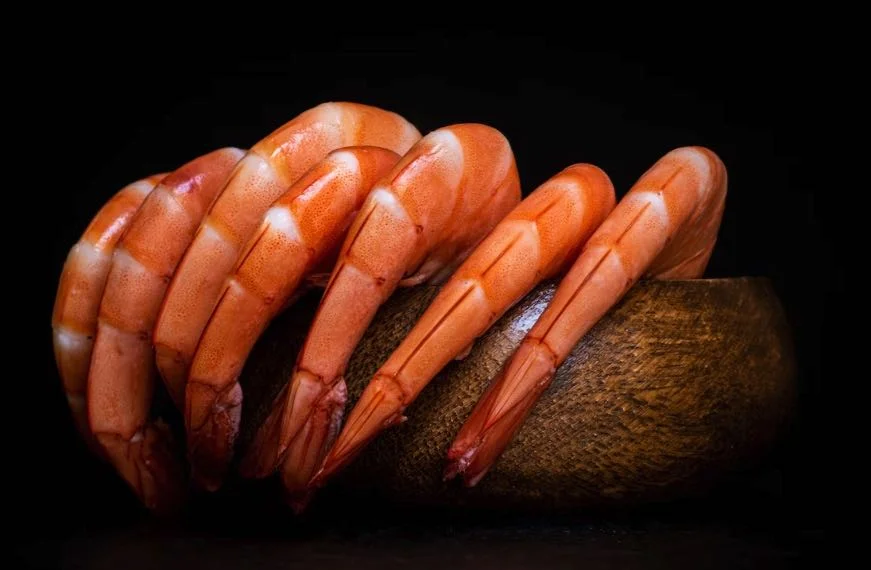
Giant prawns are crustaceans belonging to the prawn family.
They are mainly found in the Mediterranean Sea and the Atlantic Ocean, distinguished by a body divided into a front and rear section.
The front part includes the head, thorax, legs, and claws; atop the head sit the antennae, which serve as sensory organs.
The thorax is shielded by a hard carapace, while the rear is segmented into six parts, allowing them to move swiftly backwards.
Giant prawns are prized for their delicate flavour and succulent meat.
They differ from the so-called king prawn or scampi by their reddish colour (king prawns tend to be grey) and a more pronounced taste.
Mediterranean prawns grow up to 22 cm in length, whereas their Atlantic cousins can reach up to 33 cm.
Giant prawns are rich in protein, making them a highly nutritious choice.
Like all shellfish, they do contain a fair amount of cholesterol, so it’s best to enjoy them in moderation.
They also provide essential minerals such as potassium and phosphorus, along with vitamins A, B, and D.
Seasonality
Giant prawns are available throughout the year.
How to Clean Giant Prawns
Giant prawns should be rinsed thoroughly under cold running water.
Depending on the recipe, you might want to remove the heads and peel the shells, taking care to extract the black digestive tract running along the back.
Cooking with Giant Prawns
Giant prawns have a wonderful flavour that shines best in simple dishes, so their taste isn’t overwhelmed. The best ways to enjoy them are fried in olive oil, grilled over charcoal, or gently steamed.
They’re typically served with a squeeze of lemon and a sprinkle of fresh parsley. The key to perfect cooking is not to overdo it, as they can quickly dry out.
Giant prawns are also delicious when eaten raw, marinated in vinegar or lemon juice, but it’s vital to ensure they’re fresh and sourced responsibly.
Thanks to Sicily’s central spot in the Mediterranean, the island boasts dozens of traditional recipes featuring giant prawns.
Among these are baked giant prawns and lobster and prawn salad, both showcasing the region’s rich seafood heritage.
Buying Tips
Giant prawns should have a mild, fresh scent—not a strong fishy odour. Always pick ones with firm bodies and shiny shells.
Storage
Giant prawns are delicate and don’t keep well for long. Store them in the fridge for no more than a day, ideally sealed in a bag.
They can also be frozen at -18°C for up to three months.