Ricette di Sicilia
Cibo, cultura e tradizioni siciliane
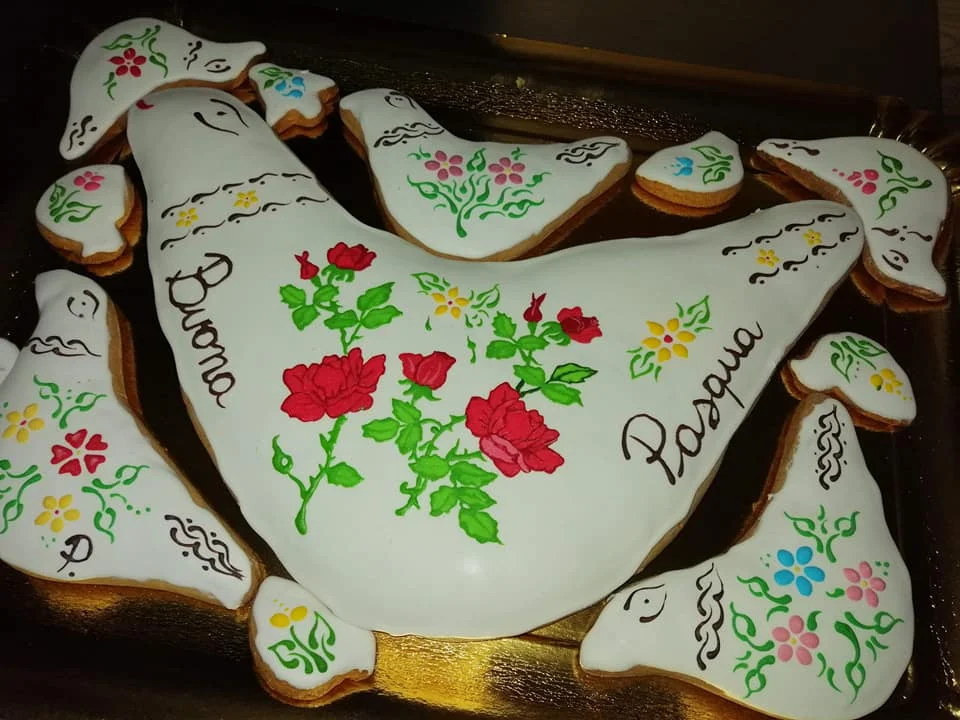
Agneddu Pasquale di Geraci Siculo – Sicilian Easter Cake
Authentic Agneddu Pasquale di Geraci Siculo recipe: traditional Sicilian Easter lamb cake from the Madonie, hand-decorated with white icing.
📖 What is it
Authentic Agneddu Pasquale di Geraci Siculo recipe: traditional Sicilian Easter lamb cake from the Madonie, hand-decorated with white icing.
🛒 Ingredients
▸ For the dough
- ✓ 1 kg plain flour
- ✓ 3 eggs
- ✓ 350 g caster sugar
- ✓ Zest of 1 lemon, finely grated
- ✓ 250 ml milk
- ✓ 15 g baking ammonia (baker’s ammonia)
- ✓ 250 g lard
▸ For the white icing (glaze):
- ✓ 500 g plain flour
- ✓ 250 g icing sugar
- ✓ 2 egg whites
- ✓ Food colouring (for decoration)
📊 Nutritional Information
Agneddu Pasquale di Geraci Siculo is a traditional Sicilian Easter cake from the Madonie mountains, shaped like a lamb or dove and coated in glossy white icing decorated by hand. Prepared during Holy Week, it symbolises resurrection and renewal and remains one of the most distinctive Easter sweets of inland Sicily.
👨🍳 Preparation
- 1
Sift the flour and mound it on a clean work surface. Make a well in the centre and add the sugar, lard, warm milk, lemon zest, and eggs.
- 2
Dissolve the baking ammonia in two tablespoons of milk, then incorporate it into the mixture.
- 3
Knead the dough until it’s soft and smooth.
- 4
Roll out the dough to about 1–2 cm thick and shape the lamb cakes using special moulds.
- 5
Place the lamb cakes on a baking tray lined with parchment paper and bake at 180°C for roughly 30 minutes, until golden.
- 6
Prepare the white icing by whisking the egg whites and gradually folding in the icing sugar and flour until you achieve a thick, white cream.
- 7
Brush the tops of the cakes with the icing and leave to dry in the turned-off oven while still warm.
- 8
Once dry, decorate the lamb cakes with floral patterns using food colouring. Allow the decorations to set completely before serving.
🧠 Why It Works
This recipe works because of its precise balance between structure, fat and chemical leavening. Baker’s ammonia creates a dry, compact crumb that expands evenly in the oven and stabilises once cooled, allowing intricate lamb or dove shapes to hold their form. Lard contributes tenderness without excessive spread, while milk regulates hydration for a dough that is pliable yet firm. Lemon zest introduces aromatic brightness that offsets the sweetness of the icing. Baking at 180°C ensures controlled evaporation and uniform browning, while the egg-white glaze forms a protective shell that enhances shelf life and provides a smooth surface for traditional hand-painted decorations.
🛠️ Troubleshooting
Why does the cake smell of ammonia after baking?
A slight smell during baking is normal, but it must disappear completely once cooled. If it lingers, extend the baking time slightly to allow full evaporation.
Why does the icing crack?
Cracking usually occurs if the glaze is applied too thickly or dries too quickly. Apply a thin, even layer and allow it to dry gradually in a switched-off warm oven.
Why is the crumb too dense?
Improper dissolution of the baker’s ammonia or overworking the dough can reduce aeration. Dissolve it fully in warm milk before incorporating.
Why does the shape lose definition in the oven?
Excess hydration or insufficient fat can cause spreading. Ensure the dough is firm and well-balanced before shaping.
💡 Tips and Variations
- •
For a richer aroma, add a pinch of cinnamon or a few drops of vanilla extract to the dough.
- •
If you prefer a glossier, silkier icing, try replacing some of the flour with cornflour.
- •
Personalise the decorations with traditional Sicilian Easter motifs, such as stylised flowers or baroque-style religious symbols.
- •
For a more indulgent version, fold in candied citrus peel or chopped almonds into the dough.
- •
To make a vegan alternative, swap the milk for a plant-based drink and use an egg substitute to bind the dough.
- •
The key to perfect icing is working it at a low temperature and applying it gently to preserve its shine.
📦 Storage
- • Store the lamb cakes in a tin or airtight container to keep them fresh for up to a month.
- • Keep the cake in a cool, dry place away from humidity and heat sources to prevent the icing from spoiling.
- • Avoid freezing the cake, as this can affect the soft texture of the dough and the delicate icing.
🍷 Pairing
A Passito di Pantelleria DOC offers concentrated notes of dried apricot, honey and balanced acidity that complement the sweet icing and citrus aroma. A Moscato di Siracusa DOC adds floral elegance and freshness, enhancing the lemon zest without overpowering the cake’s structure. From southern Italy, a Moscato di Trani from Puglia provides aromatic intensity and gentle sweetness that harmonise with the compact crumb and decorative glaze.
❓ F.A.Q.
What is Agneddu Pasquale di Geraci Siculo?
It is a traditional Sicilian Easter cake from Geraci Siculo in the Madonie area, shaped like a lamb or dove and covered with white icing decorated by hand.
Why is baker’s ammonia used in this Easter cake?
Baker’s ammonia produces a dry, stable crumb ideal for sculpted festive cakes, helping the dough maintain its defined shape after baking.
When is Agneddu Pasquale traditionally prepared?
It is made during Holy Week and served at Easter as a symbolic dessert representing rebirth and Christian resurrection.
How long does the cake keep?
Stored in an airtight tin in a cool, dry place, it can keep for up to one month thanks to its low moisture structure and protective icing.
Can I replace lard with butter?
Yes, but the texture will be slightly softer and less traditional. Lard provides the authentic crumb typical of Madonie Easter baking.
🏛️ History and Tradition
The agneḍḍu pasquale from Geraci Siculo is one of the most emblematic sweets of the Madonie mountains. Despite its name (“Easter lamb”), it actually has the shape of a stylised dove, coated in white icing and decorated by hand with floral and Easter motifs.
Origins and the “oddity” of its name
The term agneḍḍu/agnello clearly refers to the quintessential Easter symbol, the Lamb of God, associated with sacrifice and the Resurrection.
In Geraci, however, the sweet has taken on the shape of a dove, symbol of the Holy Spirit and peace, while keeping the traditional name of “lamb”.
Two main explanations are usually given:
- in the past, lambs made of almond paste were also prepared in Geraci and were later replaced by this dove-shaped biscuit, while the original name was retained;
- in a symbolic reading, the word “lamb” refers to the Son, the dove shape to the Holy Spirit, and the painted flowers to the Father, forming a kind of Trinity “told” through the sweet.
Basic recipe and appearance
This is a rich biscuit made with flour, sugar, eggs, milk, lard and baker’s ammonia. Once baked, it is coated with a white icing made from icing sugar and egg white (sometimes with a little flour or starch added), which creates a smooth, brilliant surface.
When the icing has dried, the surface is hand-painted with edible colours to create flowers, branches, small crosses and other decorative motifs typical of Sicilian baroque tradition.
Each piece thus becomes a small edible “painting”: it is precisely this interplay between pastry and painting that makes it so recognisable and striking.
Monastic tradition and diffusion
The agneḍḍu pasquale has a strong connection with the monastic world. It is often remembered as a sweet created and guarded for a long time by the cloistered nuns of Geraci, who are said to have kept the recipe secret.
A legend mentioned in various accounts tells of a nun forced to leave the monastery for health reasons. To support herself, during the Easter period she began to make and sell these sweets, thereby spreading the recipe outside the convent.
Rituals, gift and community life
In Geraci Siculo the agneḍḍu pasquale is not just a dessert but also a ritual gift. Traditionally, the fiancé offers his beloved an agneḍḍu larger than the usual size, as a wish for prosperity for her and her family.
The sweet is prepared at home and in a few village bakeries and artisan workshops and, according to local custom, is also distributed to members of the town’s confraternities, especially on Maundy Thursday after the Coena Domini Mass.
During the Easter period many families gather to make them together, passing down from generation to generation the secrets of the dough, the icing and, above all, the decoration.
Symbolic and cultural value
Symbolically, the dove shape and the tiny coloured flowers recall, on the one hand, the springtime rebirth of nature and, on the other, the Christian message of new life brought by Easter.
For Geraci Siculo, the agneḍḍu pasquale has become a true emblem of the village. It is often mentioned among the most representative sweets of the Madonie and appears in descriptions of local cuisine as an example of pastry “art” that brings together faith, memory and aesthetics.
Baking the Geraci Siculo Easter Lamb Cake is more than just making a dessert — it’s embracing a rich tradition that celebrates Easter with authentic flavours and exquisite artistry. Treat yourself to this journey through Sicily’s scents and colours, and don’t forget to share this charming cake with your loved ones — it’s a wonderful way to bring a little Sicilian sunshine to your table.
Rate this recipe
Click or tap the stars to rate