Overview
Garlic belongs to the lily family.
It is a plant with fibrous roots, characterised by a smooth stem and elongated green leaves that can reach heights between 50 and 80 cm.
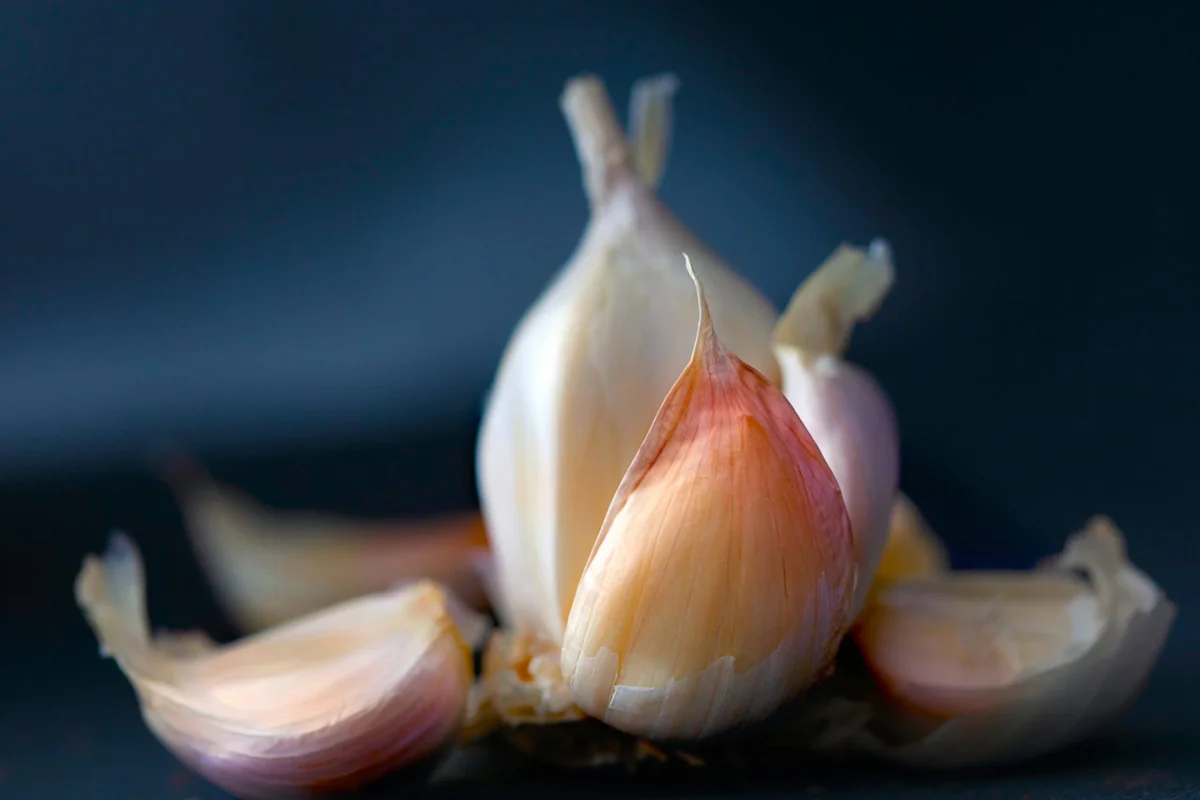
The part we cherish in the kitchen is the bulb, often called the head.
This bulb is wrapped in a dozen or so protective layers, known as sterile tunics, which have a reddish hue.
Each bulb typically contains between 6 and 15 cloves, each enveloped in thin, papery skins.
Aromatic Profile
Garlic’s signature qualities are its robust flavour and distinctive aroma, both owed to sulphur compounds, particularly allicin.
Whenever we crush, chop, or press a clove, an enzyme called alliinase is activated, converting alliin into sulphenic acid, which gives garlic its unmistakable pungency.
Intact cloves remain odourless until they’re broken.
Moreover, high heat deactivates alliinase, which is why cooked garlic tends to have a much milder scent than raw.
Consumption and Uses
Garlic can be enjoyed raw, cooked, dried, or freshly harvested. The latter has a more pronounced aroma and is usually available from late May through July.
It is primarily used as a seasoning or flavour-enhancer but also features as a key ingredient in many dishes.
Beyond the kitchen, garlic has long been valued for its medicinal qualities.
Garlic Varieties
Italy cultivates numerous garlic varieties, but for authentic Sicilian cooking, we particularly recommend the Red Garlic of Nubia.
Nutritional and Health Benefits
Garlic boasts impressive healing virtues, mainly due to allicin which combats various microbes alongside other antibacterial agents.
However, while it offers many health perks, garlic can cause some side effects.
Health Benefits
One of the most prized attributes in natural medicine is garlic’s antibiotic prowess.
It tackles harmful microorganisms without disturbing, and indeed helping restore, the beneficial gut flora.
Bear in mind, though, that cooking diminishes many of its nutritional virtues, so raw garlic is the best choice for health purposes.
Garlic also acts as an effective vermifuge (worm expeller), an antifungal, boosts the immune system, and supports the body in combating respiratory inflammations.
It has cancer-preventative qualities by inhibiting the formation of nitrosamines—carcinogenic compounds that can develop during digestion.
Garlic benefits cardiovascular health through its blood pressure-lowering effects by:
- regulating arterial pressure;
- reducing risks of arterial hardening;
- exerting anti-platelet activity;
- preventing blood clots;
- balancing blood cholesterol and triglyceride levels.
This cholesterol effect also stems from allicin blocking certain cholesterol protein compounds.
Thanks to its phytic acid content, garlic promotes a healthy complexion and encourages hair growth.
Alkaloids within garlic mimic insulin’s effects, positively influencing blood sugar regulation, thereby aiding in the management of diabetes and other sugar-related conditions.
It also helps ease digestive discomfort and plays a beneficial role in fighting Helicobacter pylori, the bacterium behind stomach ulcers.
The sulphur compounds in garlic bind heavy metals like mercury, cadmium, and lead, facilitating their removal from the body.
Potential Side Effects
Despite its many virtues, excessive garlic intake can cause problems and may interfere with certain medications, especially blood thinners.
Overindulgence may also lead to unpleasant breath and bodily odour, alongside gastrointestinal upset.
Consuming large amounts of raw garlic over time risks damaging blood cells and may lead to anaemia.
For these reasons, it’s advisable to enjoy garlic in moderation—no more than one or two cloves daily.
Choosing Garlic
When selecting garlic, look for bulbs that feel firm and dense, avoiding any with soft spots, mould, or sprouting shoots.
Storage Tips
Store garlic in a cool, dry, well-ventilated spot away from direct light at room temperature.
Check regularly for any signs of mould or growth.
Preparing Garlic
A garlic bulb consists of many cloves, each encased in a protective membrane.
Garlic can be prepared in several ways, organised here by increasing strength of aroma:
- In its skin. Leave the papery layer intact;
- Peeled. Remove the outer membranes;
- Crushed. Peeled and pressed on both sides with a fork;
- Sliced. Peeled and thinly sliced. Removing the inner green shoot lessens the pungency;
- Minced. Peeled and finely chopped.