Overview
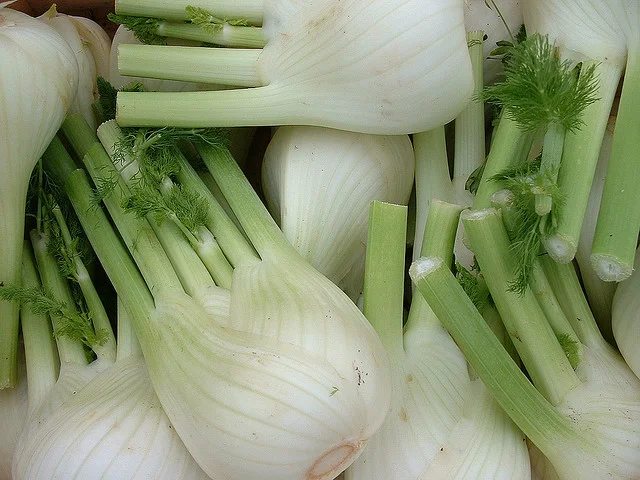
Finocchio, or fennel, is a member of the Apiaceae family, known commonly as the carrot or parsley family. The part we eat is the swollen, bulbous base called the grumolo, composed of white to pale green, fleshy leaf sheaths that layer delicately up to the stem.
The base of the plant comes in two shapes: rounded, known as the “male,” which is best enjoyed raw, and elongated, called the “female,” which lends itself beautifully to cooking.
From a nutritional perspective, finocchio is beloved for its refreshing flavour, crunchy texture, and myriad health benefits. Packed with vitamins and minerals yet very low in calories, it aids digestion and promotes diuresis.
Season
Available mainly in December, January, February, and March.
Varieties
Finocchio appears in the wild as Foeniculum vulgare and in cultivated forms known as sweet fennel.
The wild variety is a perennial plant with branching stems that can grow as tall as two metres. Its feathery leaves, green and reminiscent of hay (hence the name foeniculum), give way in summer to clusters of tiny yellow flowers, followed by fruits (known as achenes) that mature from green to grey.
Every part of the wild fennel is used—the shoots, leaves, flowers, and seeds.
Sweet fennel, the cultivated variety, is an annual or biennial plant with a large taproot, growing to between 60 and 80cm tall.
It is prized for its bulb and divides into two main groups, each containing numerous subspecies:
- “Nostrale” fennel, typical of central and northern Italy;
- “Grosso d’Italia” fennel, popular in the south, which includes the round Sicilian and Palermo varieties.
In the Kitchen
Finocchio is wonderfully versatile in the kitchen:
Raw, it frequently stars in salads—such as a crisp combination of lettuce and fennel—or is served at the end of a meal to aid digestion.
Cooked, it shines in a host of dishes like a baked fennel and pecorino flan or a sublime caponata made without aubergines.
Wild fennel is treasured as an aromatic herb in many meat and fish recipes.
Its seeds flavour Sicilian sausage, bestowing their characteristic aroma, and are even used in slightly spicy biscuits native to the Belice Valley.
How to Prepare Finocchio
To prepare finocchio, peel away any wilted outer leaves. Rinse it under running water and remove the feathery green fronds, which can be saved for garnish.
Tips for Buying
Opt for bulbs that feel firm and dense for their size. A heavier bulb is a good sign of freshness.
As mentioned, choose rounded bulbs if you plan to enjoy it raw, and elongated ones if you intend to cook it.
Storing Finocchio
Finocchio keeps well and can be stored in the fridge’s vegetable drawer for up to a week.
Trivia
The Italian verb infinocchiare means to take someone for a ride or to dupe them.
This expression springs from the fact that raw finocchio’s flavour can mask other tastes. Particularly with wine, its aroma can disguise a poor or poorly stored vintage, one that might otherwise taste vinegary.
Historically, Sicilian taverns would serve guests fennel slices or fennel-infused bread to mask the flavour of spoiled wine.
Thus, patrons were quite literally “finocchiati” — hoodwinked by the fennel.