A Mushroom That Carries a Landscape
There are ingredients that feel like relics, as if the land itself has pressed its memory into their flesh. The ferla mushroom — Pleurotus ferulae — is one of them. I first came across it in the bruised gold interior of Sicily, driving the long, gentle curves between Enna and Caltanissetta, where the hills rise like half-remembered hymns and the wind carries a dryness you can almost taste. Here, on the bleached roots of the ferla plant, this remarkable mushroom appears as quietly as a confession. It feels less foraged than found, a discovery rather than a harvest — a gift left out for those who pay attention.
Echoes of Old Sicily
Spend enough time in rural Sicily and you’ll notice how ingredients become family heirlooms. I met Signora Maria, an elderly woman with clear eyes and the sort of hands that seem permanently scented with flour and wood smoke. She remembered the mushroom not as a delicacy, but as a companion to harder years. “We used to call it the meat of the poor,” she told me, placing a basket on her kitchen table as if presenting a photograph. There was no sadness in her voice; only pride — the kind that turns frugality into a kind of grace.
The mushrooms in her basket were extraordinary: the size of an open palm, smooth and faintly glossy, their pale gills arranged with the impeccable symmetry only nature bothers to perfect. She spoke of days when they were carried home in worn wicker, still cool from the morning shade, and transformed into meals that stretched appetite and imagination alike. In those kitchens, flavour was currency, and the ferla mushroom paid generously.
A History Written in Curiosity and Caution
The mushroom’s presence in Sicily is ancient enough to have caught the attention of scholars long before modern gastronomy ever elevated it. Pliny the Elder, that indefatigable encyclopaedist of the Roman world, once noted mushrooms of this sort with a mixture of suspicion and admiration. He catalogued them with the cool pragmatism of a soldier — which, of course, he was — but one suspects that had he wandered through these Sicilian hills at dawn, had he knelt beside a fallen ferla stem and witnessed this soft miracle of resurrection, he might have written with a different pen.
Medieval clergy, meanwhile, regarded the mushroom with a wary fascination of an entirely different sort. Too delicious, too suggestive, they whispered — as though its earthy perfume and yielding flesh might coax the faithful toward pleasures better left unexplored. It is a peculiarly Sicilian paradox: the simplest foods are often the most arresting.
The Ritual of Cooking
Watching Signora Maria prepare the mushrooms felt almost like witnessing a ceremony. No water — never water — she insisted, brushing the caps clean with soft, deliberate strokes. On the cutting board, the mushrooms opened like well-worn books. A light scoring across the surface, nothing intrusive, just enough to let heat seep in gently.
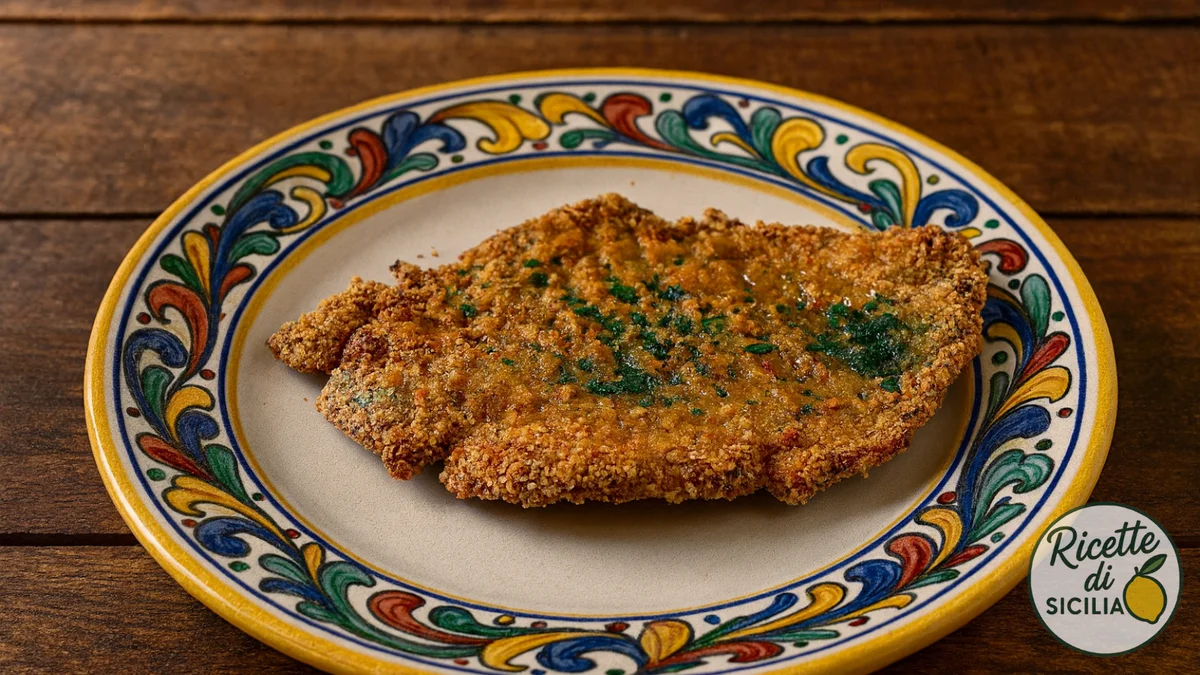
Then came the dressing: a dusting of flour as light as the first snow on Etna; a dip in beaten egg enriched with grated cheese, pepper and a whisper of parsley; and finally, the embrace of breadcrumbs that clung with a gentle, approving hush. Each layer added not just flavour but memory — Sunday kitchens, tidy tablecloths, the sense of something modest becoming momentarily splendid.
In the pan, the oil warmed with the patience of someone waiting by an open window. When the mushroom cutlets slid in, the sizzle that rose felt almost theatrical — not showy, but jubilant, like applause in a small theatre where every seat is taken by someone who cares. The fungi browned slowly, acquiring a caramel hue that suggested both strength and tenderness. You turn them only once, she reminded me. Even good things prefer not to be disturbed unnecessarily.
A Taste That Opens a Door
Served with a pinch of salt and a bright kiss of lemon, the fermented warmth of the mushroom blossomed on the tongue: earthy but not heavy, savoury yet gentle, the flavour of a land that has learned to make abundance from scarcity. There is something profoundly moving about food like this — food that holds its history softly, as if knowing that those who taste it will understand.
Eating it, I found myself thinking that Pliny, had he been offered a plate of these golden cutlets after one of his exhaustive inquiries, might have leaned back, loosened the straps of his armour and admitted with a laugh that some truths are better tasted than written.
And so the ferla mushroom remains what it has always been: the humblest of riches, a quiet miracle of the Sicilian interior, and proof that even the earth’s modest gifts can make a person feel unexpectedly fortunate.