Ricette di Sicilia
Cibo, cultura e tradizioni siciliane
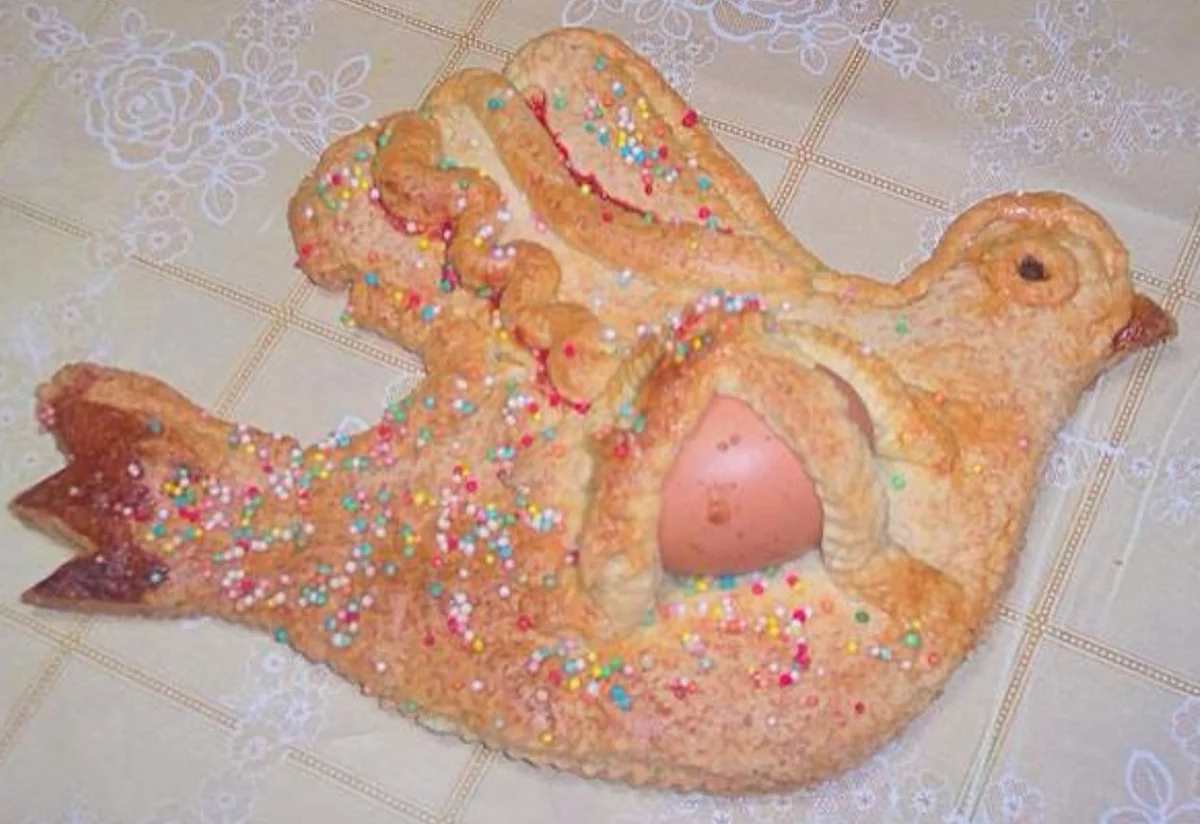
Aceḍḍu cull’ovu – Sicilian Easter Bread with Eggs
Authentic aceḍḍu cull’ovu recipe from Catania: traditional Sicilian Easter bread shaped as a dove with whole eggs, symbolic and festive.
📖 What is it
Authentic aceḍḍu cull’ovu recipe from Catania: traditional Sicilian Easter bread shaped as a dove with whole eggs, symbolic and festive.
🛒 Ingredients
- ✓ 1 kg plain flour
- ✓ 400 g caster sugar
- ✓ 500 ml milk
- ✓ 200 g lard
- ✓ 1 sachet vanilla sugar
- ✓ 10 g baking ammonia
- ✓ 4 eggs
- ✓ 1 boiled egg per cake
- ✓ Sugar decorations (diavoletti)
- ✓ Natural food colouring (optional)
📊 Nutritional Information
Aceḍḍu cull’ovu is a traditional Sicilian Easter bread from Catania, shaped like a dove and decorated with whole eggs baked into the dough. Made with flour, sugar, lard and baker’s ammonia, it symbolises renewal and resurrection. Prepared during Holy Week, it remains one of the most recognisable Easter specialities of eastern Sicily.
👨🍳 Preparation
- 1
Sift the flour and mound it on your work surface.
- 2
Make a well in the centre and add the sugar, diced lard, warm milk, vanilla sugar, and eggs.
- 3
Dissolve the baking ammonia in a couple of tablespoons of warm milk and mix into the dough.
- 4
Knead the mixture until you have a smooth, firm dough.
- 5
Boil the eggs for 10 minutes until hard-boiled, then drain and leave to cool.
- 6
Roll out the dough with a rolling pin to about 2-3 cm thick and shape it into a dove form.
- 7
Use some extra dough to make strips to secure the boiled egg onto the cake.
- 8
Attach a boiled egg to the dough using the strips.
- 9
Place the cake on a baking tray lined with parchment and bake in a preheated oven at 180°C for 30 minutes.
- 10
Halfway through baking, brush the cake with egg white to give it a golden sheen.
- 11
Add the sugar decorations and finish baking.
- 12
Remove from the oven, allow to cool, and serve.
🧠 Why It Works
This recipe succeeds because of its structural balance between fat, sugar and controlled leavening. Lard ensures tenderness while maintaining shape definition during baking. Baker’s ammonia creates a dry, well-aerated crumb that becomes firm and sliceable once cooled, preventing collapse around the embedded egg. The relatively low hydration keeps the dough compact, allowing detailed shaping into doves or braids without spreading. Baking at 180°C promotes steady expansion and surface caramelisation, while brushing with egg white enhances Maillard browning and creates a subtle sheen. The whole egg baked into the dough retains moisture at the core, generating a textural contrast between the golden crust and the denser interior.
🛠️ Troubleshooting
Why does the bread crack excessively?
Over-kneading or insufficient fat can create excessive surface tension. Ensure balanced mixing and adequate lard incorporation.
Why does it smell strongly of ammonia?
A strong smell during baking is normal, but it must disappear once cooled. If it remains, extend baking slightly to allow full evaporation.
Why does the egg detach during baking?
Secure it firmly with thick dough strips pressed well into the base to prevent movement during oven spring.
Why is the interior too dense?
Insufficient ammonia activation or overly compact shaping can reduce aeration. Dissolve the ammonia properly in warm milk before incorporating.
💡 Tips and Variations
- •
For a personal touch, dye the boiled eggs with natural colours like turmeric or beetroot juice for a charming splash of colour.
- •
Try different shapes such as braided wreaths or bell forms to make the cake even more eye-catching and suitable for various occasions.
- •
For a richer flavour, add a pinch of cinnamon or grated orange zest to the dough to highlight Sicily’s signature aromas.
- •
To lighten things up, reduce the sugar in the dough and swap the lard for a mild extra virgin olive oil.
- •
The secret to this cake lies in a slow rise and using quality ingredients, which give it its soft texture and unmistakable flavour.
📦 Storage
- • Store the aceḍḍu in a tin or airtight container to keep it fresh for up to three weeks.
- • Wrap the cake in cling film to protect it from moisture and preserve its aroma and texture.
- • Avoid placing it near direct heat sources or in damp environments to maintain its delicate fragrance and quality.
🍷 Pairing
A Moscato di Siracusa DOC offers floral aromatics and balanced acidity that lift the sweetness without overwhelming the delicate crumb. A Passito di Pantelleria DOC adds notes of dried apricot and honey, harmonising with the caramelised crust and sugar decorations. From southern Italy, a Moscato di Trani from Puglia provides aromatic intensity and soft residual sugar, complementing the compact texture and symbolic richness of this Easter bread.
❓ F.A.Q.
What does aceḍḍu cull’ovu mean?
In Sicilian language, aceḍḍu means “bird” and cull’ovu means “with the egg”, referring to the dove-shaped Easter bread decorated with a whole egg.
Why is a whole egg baked into the dough?
The egg symbolises rebirth and resurrection in Christian tradition and represents fertility and renewal during Easter celebrations.
Is aceḍḍu cull’ovu the same as Italian Easter bread?
It is a Sicilian regional version, distinct for its use of baker’s ammonia and its compact, biscuit-like texture rather than a soft yeasted crumb.
Can baking ammonia be replaced?
Baking powder can be used, but the final texture will be softer and less traditional compared to the drier crumb produced by baker’s ammonia.
How long does it keep?
Stored in an airtight tin in a cool, dry place, it can keep for up to three weeks without losing its structure.
🏛️ History and Tradition
The aceḍḍu cull’ovu (“bird with egg”) is one of Sicily’s oldest Easter sweets, belonging to the widespread family of cuḍḍure cull’ova found across the island and southern Italy.
Origin of the name and shape
The name combines the Sicilian aceḍḍu (bird) and cull’ovu (with egg): the original shape is that of a small stylised bird “embracing” a hard-boiled egg embedded in the dough.
The cuḍḍura cull’ova variant takes the ring or wreath shape instead; the aceḍḍu represents one of many symbolic forms the same dough can take (dove, basket, bell, heart, doll).
Ancient roots and symbolic meaning
The cuḍḍura/aceḍḍu originated as festive bread: a simple everyday loaf enriched at Easter with eggs, a little sugar or honey, and sometimes lard or oil, transforming it into celebratory food.
The whole hard-boiled egg with shell is the true symbolic heart: it represents new life, resurrection, fertility and good fortune, making it essential to all variants (aceḍḍu, campanaru, panareḍḍu, pupu cull’ovu etc.).
Many accounts see the transition from plain daily bread to decorated sweet biscuit as the evolution from a rural “blessed bread” ritual to a proper Easter pastry.
Family tradition and Easter gift
Until a few decades ago, when chocolate eggs were rare or too expensive, the aceḍḍu cull’ovu was the Easter gift for children, sweethearts, relatives and godparents.
Preparation was a collective ritual in the days before Easter: women kneaded the dough, shaped birds, baskets and doves, embedded one or more eggs and decorated with sugar sprinkles and, in some areas, a touch of cinnamon.
The number of eggs also carried social meaning: gifts for sweethearts or important people might feature 5, 7 or 9 eggs, while others received fewer.
Regional spread and variants
Across Sicily the same tradition takes different names: aceḍḍu cull’ovu in Catania area, pupu cull’ovu around Palermo, campanaru in Trapani (bell-shaped), panareḍḍu in Agrigento and Syracuse (basket-shaped), palummeḍḍa (little dove) elsewhere.
Beyond Sicily similar sweets appear: Puglian scarcelle, Calabrian cuzzupe, puddhriche elsewhere in the South – all featuring plaited bread or pastry dough with embedded whole eggs.
Cultural significance today
The aceḍḍu cull’ovu is now recognised as one of Sicily’s most distinctive Easter pastries, frequently mentioned alongside cuddura among traditional Easter products.
Though partly overshadowed by commercial chocolate eggs, it survives in family kitchens and artisan bakeries, preserving its dual role: simple sweet and symbolic object that tells the story of Sicilian Easter, rural memory and affectionate bonds sealed through giving.
Making aceḍḍu cull'ovu is like bringing a slice of Sicily and its heartfelt traditions right into your home. I warmly encourage you to give this recipe a go — it’s a wonderful way to celebrate and share joyful moments with your loved ones. And don’t forget to share your lovely creation with friends and family online; spreading the joy of Sicilian cuisine is a pleasure that only grows when shared!
Rate this recipe
Click or tap the stars to rate