Overview
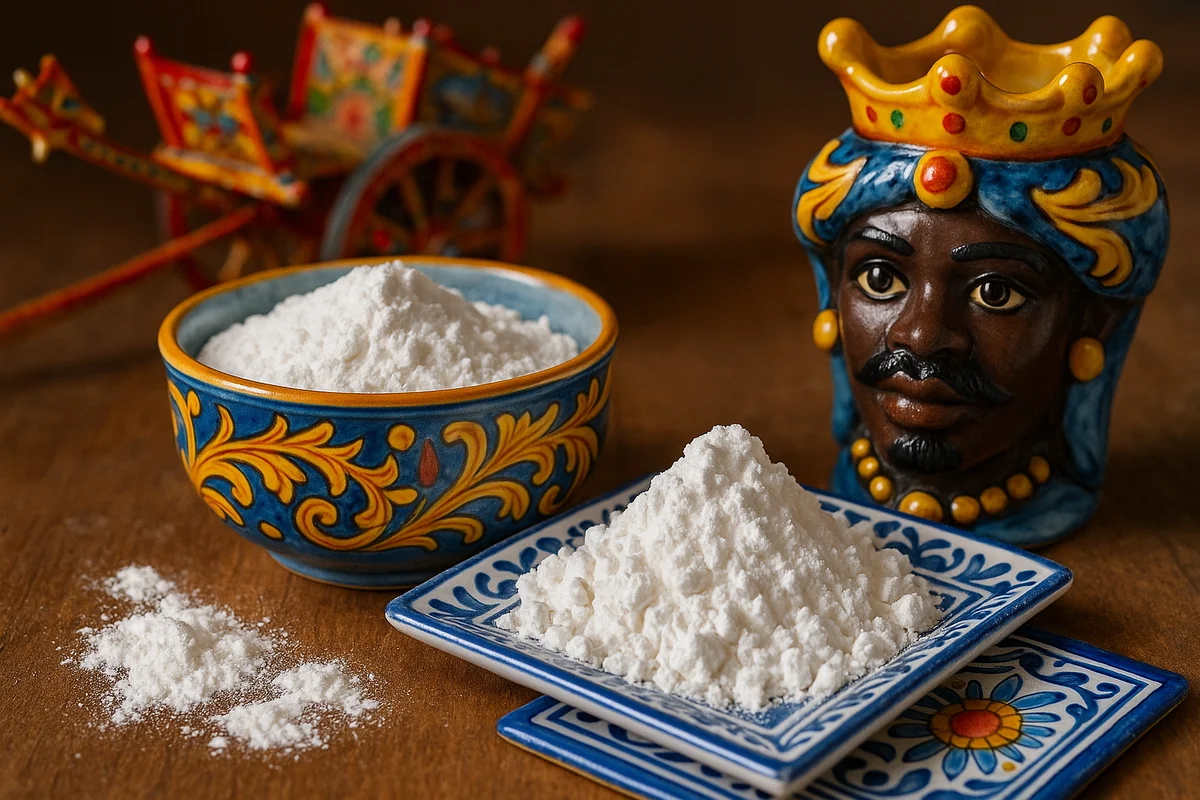
Cornflour, often known as maize starch or Maizena, is an essential ingredient in Sicilian baking. This pristine, finely milled white powder is derived from maize and is prized primarily as a thickening agent in a variety of the island’s traditional sweet preparations.
In Sicilian cuisine, cornflour is valued for imparting a beautifully smooth, velvety texture to spoon desserts without overpowering their delicate flavours. It yields creations with a light, tender consistency, quite unlike those made with ordinary wheat flour.
Properties
Cornflour consists almost entirely of complex carbohydrates and is naturally gluten-free, making it suitable even for those with coeliac disease. Its thickening power far surpasses that of common flour, so only a small amount is needed to achieve the desired texture.
Unlike wheat flour, cornflour contains no proteins or fats, resulting in a more neutral taste that allows the other ingredients to take centre stage. When dissolved in cold liquids and gently heated, it forms a clear, smooth gel free from lumps.
Culinary Uses
Within Sicilian sweet-making traditions, cornflour features in many beloved recipes.
Biancomangiare
Perhaps the most renowned is biancomangiare, a spoon dessert of Arab origin. It combines milk, sugar, cornflour, and lemon zest to create a soft, silken white pudding, often garnished with a dusting of cinnamon and chopped pistachios.
Gelo di Melone
This refreshing summer pudding from Palermo uses cornflour to thicken sweetened watermelon juice, resulting in a ruby-red jelly-like dessert flavoured with cinnamon and topped with jasmine, chocolate shavings, and pistachios.
Pastry Cream
In Sicilian pastry cream, cornflour is sometimes blended with flour or used on its own to produce a smoother, more delicate cream perfect for filling cannoli, cassata, and other baked treats.
Spoon Desserts
Cornflour is the cornerstone for numerous traditional Sicilian custards and puddings, including coffee-flavoured and almond-based gels, as well as various milk-infused delicacies.
Cakes and Loaves
For light, airy cakes, cornflour is frequently mixed with wheat flour, typically one part cornflour to three parts flour, to achieve a finer crumb and a softer, more velvety texture.
How to Use
To use cornflour correctly and avoid lumps, a few simple steps are essential. Always dissolve the cornflour in cold liquids—milk, water, or juice—whisking vigorously before adding it to other ingredients.
Then, gently bring the mixture to the boil, stirring constantly, since cornflour only thickens when heated. Keep stirring for a few minutes after the cream reaches the desired consistency, allowing the starch to fully gelatinise and eliminating any starchy aftertaste.
Once cooked, mixtures with cornflour tend to set further upon cooling. For preparations that must remain creamy, it’s best to add cornflour sparingly.
Storage
Cornflour keeps very well when stored in a cool, dry place away from direct light. It should be kept in a tightly sealed container to prevent moisture absorption, which could cause clumping.
Once opened, it’s advisable to use the cornflour within six to twelve months to maintain its thickening power, although it does not spoil and can still be used beyond this period if stored correctly.
Buying Tips
Cornflour is widely available in supermarkets, usually found among flours or baking ingredients.
There’s little difference in quality between brands, so aim for pure maize starch with no additives. You may find it labelled as "cornflour" or "Maizena," both referring to the same product.
Alternatives and Substitutions
If necessary, cornflour can be replaced with other starches such as potato, rice, or tapioca starch, which share similar thickening properties. The quantities may vary slightly depending on the starch used.
Replacing cornflour with ordinary flour typically requires doubling the amount (for example, 40g of cornflour equals roughly 80g of flour). Bear in mind, though, that the texture will be less translucent, the flavour more pronounced, and the mouthfeel less delicate.
Did You Know?
Traditionally in Sicily, cornflour wasn't just used in cooking – it also played a role in household chores such as starching linens to give fabrics stiffness and shine. Sicilian housewives would prepare a boiled cornflour solution for ironing their finest garments.
The name "Maizena" stems from the French brand "maïzena," which became synonymous with cornflour itself.
Many Sicilian spoon desserts, like biancomangiare and the various "geli," trace their origins back to the Arab rule of the island, when new starch-processing techniques and sweet recipes were introduced—legacies that continue to define Sicilian patisserie today.