Overview
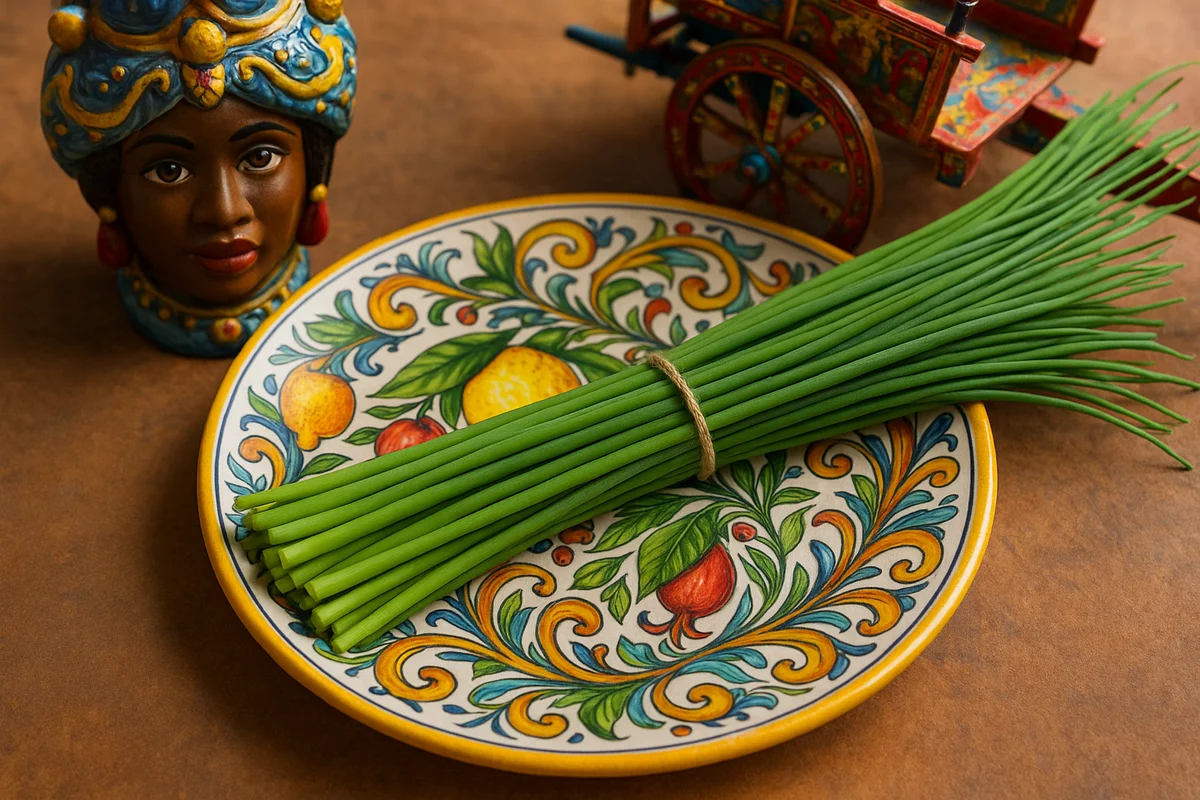
Chives are a perennial aromatic herb belonging to the Alliaceae family, the same as onion and garlic. Characterised by slender, tubular leaves of deep green and a gentle flavour reminiscent of onion in a more refined, less pungent form, this herb is used in Sicilian cooking particularly in delicate preparations where a subtle allium note is desired without the assertiveness of fresh onion.
Although not among the most traditional herbs of classic Sicilian cuisine—which favours basil, parsley, mint and oregano—chives have found their place on the island especially in modern cooking and in dishes requiring finesse and delicacy. Their gentle flavour makes them ideal for fresh salads, fish dishes, frittatas and fresh cheeses.
Characteristics
Chives appear as long, slender, hollow leaves of cylindrical shape, a bright and intense green. The leaves grow in dense clumps directly from the underground bulb, reaching a height of 20–40 centimetres. When fresh, their texture is crisp and juicy.
The flavour is delicate, fresh and slightly sweet, with clear onion notes but far milder and more refined. They do not leave the lingering pungency associated with raw onion. The aroma is aromatic and herbaceous, characteristic of alliums, yet gentle and pleasant.
The plant also produces edible flowers of pink-violet hue, gathered in spherical heads that are highly decorative. The flowers have a flavour similar to the leaves but slightly sweeter and are used to garnish and flavour salads and cold dishes.
Cultivation
In Sicily, chives can be easily grown in pots or in open soil. They prefer sunny or semi-shaded positions and well-drained soil rich in organic matter. They are hardy plants that tolerate the Sicilian heat well if kept adequately watered.
Propagation is by division of the clumps in spring or autumn, or by seed. Once established, chives regrow continuously after cutting, providing fresh leaves for many months. Growth may slow in winter but resumes vigorously in spring.
Harvesting is done by cutting the leaves at the base with clean scissors, ideally in the morning when they are firmer. It is important never to cut more than one-third of the plant at a time so it can regenerate.
Use in cooking
In Sicilian cuisine, chives are used in various preparations.
Fresh salads
Finely chopped chives enhance tomato salads, mixed salads and seafood salads. Their delicate flavour does not mask the other ingredients but adds a fresh, aromatic note.
Fish dishes
Used to flavour fish carpaccio, tartare, fish baked in foil and delicate preparations where fresh onion would be too overpowering. Chives are always added raw at the end to preserve their flavour.
Frittatas and eggs
Finely chopped chives are mixed with beaten eggs to make aromatic, delicate frittatas. They are also excellent in scrambled eggs, omelettes and other egg-based dishes.
Fresh cheeses
Chives pair beautifully with ricotta, soft spreadable cheeses and fresh goat cheeses. Finely chopped and mixed into the cheese, they create aromatic creams for canapés and starters.
Potatoes
Chives are the classic accompaniment to boiled, steamed or baked potatoes. They are added chopped together with butter or extra-virgin olive oil and salt.
Soups and veloutés
Added at the end of cooking to soups and veloutés as an aromatic garnish. Particularly suited to delicate vegetable or fish soups.
Dressings and sauces
Chives are used in cold sauces, vinaigrettes and salad dressings. They are mixed with mayonnaise, yoghurt or sour cream to create aromatic sauces.
Preparation
Chives should always be used fresh to appreciate their flavour and aroma fully. Rinse gently under cold running water and dry by patting with kitchen paper or spinning lightly.
Cut with sharp scissors or a finely honed knife into thin rings or chop finely depending on use. Sharp blades are essential to avoid crushing the leaves, which would lose juice and aroma.
Chives should always be added raw or at the end of cooking, never subjected to prolonged heat, as high temperatures quickly destroy their delicate aroma. In cooked dishes, add them in the final minutes or directly to the plate before serving.
Storage
Fresh chives keep in the refrigerator for 4–5 days wrapped in damp kitchen paper and placed in a perforated plastic bag, or with the stems immersed in a glass of water like a bouquet, covered with a plastic bag.
They can be stored chopped in ice-cube trays, covered with water or oil and frozen. The cubes can be used directly in cooked preparations. Chives can also be frozen whole in bags, though they lose some crispness while retaining flavour.
Drying is not recommended, as chives lose almost all their aroma and flavour. It is preferable to grow them in pots for a steady supply of fresh leaves or use freezing as a preservation method.
Buying tips
When buying fresh chives, choose bunches with leaves of bright, intense green, firm and upright. Avoid yellowing, wilted, limp leaves or those with dark patches indicating deterioration.
The leaves should be firm, crisp and free of blemishes. Ensure there are no slimy or foul-smelling leaves at the base of the bunch. Fresh chives have a delicate characteristic aroma; if odourless, they may be old.
It is preferable to buy chives at the market or from a greengrocer rather than pre-packaged in the supermarket, as they are generally fresher. Even better, grow a pot of chives at home for a constant supply of the freshest leaves.
Nutritional properties
Chives are very light: 100 grams provide around 30 calories. They are composed of about 90% water and contain modest amounts of carbohydrates (around 4 grams per 100 grams) and protein (around 3 grams per 100 grams). Fat content is negligible.
They are a good source of vitamins, particularly vitamin C, vitamin K, vitamin A and folates. They also contain minerals such as potassium, calcium, iron and magnesium. Like all alliums, they contain sulphur compounds with beneficial properties, although in smaller quantities than garlic and onion.
Chives have digestive, diuretic and mildly antiseptic qualities. The allicins and other sulphur compounds have beneficial effects on the cardiovascular system. In folk medicine, allium herbs were regarded as tonics and purifying agents.
Used in small quantities as an aromatic herb, their direct nutritional contribution is limited, yet they remain a healthy addition to dishes.
Chive flowers
Chive flowers are entirely edible and make an elegant, flavourful decoration. They bloom in spring and summer, forming spherical heads of lilac-pink composed of many tiny florets.
The flowers have a flavour similar to the leaves but slightly more delicate and sweet. They can be used whole to decorate salads, cold dishes, canapés and cheeses, or the individual florets can be separated and scattered over dishes as a colourful garnish.
To use the flowers, pick them when fully open, shake gently to remove any insects, and use them fresh. They should always be added at the last moment to preserve their beauty and flavour.
Difference from spring onions and Chinese chives
Chives (Allium schoenoprasum) should not be confused with spring onions, which are young onions harvested before the bulb fully forms, with larger leaves and a stronger flavour.
There is also Chinese chives (Allium tuberosum), also called Chinese garlic or “gau choi”, with flat rather than tubular leaves and a flavour closer to garlic than onion. It is less common in Sicily but used in some modern fusion dishes.
Curiosities
Chives have been used since antiquity. The Romans cultivated them in their gardens and used them in cooking. In the Middle Ages, they were considered a magical plant capable of warding off evil spirits and were hung at the entrances of houses.
In Sicily, although not one of the oldest traditional herbs, chives are now grown in many home gardens and appreciated by those seeking delicate aromas for modern cooking. They are particularly popular among chefs reinterpreting traditional dishes in a contemporary key.
Chive flowers are much loved by bees and other pollinating insects. Growing chives in the garden or vegetable patch helps promote biodiversity and the pollination of other plants.
In traditional herbal practice, chives were used as a digestive remedy and to stimulate appetite. Infusions were made with the fresh leaves and consumed before meals. These practices, though less common today, reflect the long-standing knowledge of the beneficial properties of allium plants.
A traditional way of preserving chives, used in some parts of Europe and now also in Sicily, is by preparing an “aromatic butter”: finely chopped chives are mixed with softened butter, shaped into logs, wrapped in cling film and frozen. Sliced into rounds, it is used to flavour vegetables, fish and meats.