Ricette di Sicilia
Cibo, cultura e tradizioni siciliane
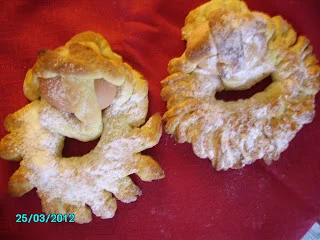
Campanaro di Castelvetrano – Sicilian Easter Sweet
Authentic Campanaro di Castelvetrano recipe: traditional Sicilian Easter sweet with baked egg, typical of the Belice Valley and Holy Week.
📖 What is it
Authentic Campanaro di Castelvetrano recipe: traditional Sicilian Easter sweet with baked egg, typical of the Belice Valley and Holy Week.
🛒 Ingredients
- ✓ 500 g semolina flour
- ✓ 500 g plain flour (00)
- ✓ 300 g margarine
- ✓ 300 g sugar
- ✓ 1 sachet of baking powder
- ✓ Milk, as needed
- ✓ 10 hard-boiled eggs
📊 Nutritional Information
Campanaro di Castelvetrano is a traditional Sicilian Easter sweet made from a soft semolina and flour dough shaped into a decorated round and baked with a whole hard-boiled egg in the centre. Typical of the Belice Valley in western Sicily, it symbolises rebirth and is prepared during Holy Week for Easter Sunday tables.
👨🍳 Preparation
- 1
Work together the flour, sugar, diced margarine, baking powder and enough milk to form a soft and elastic dough.
- 2
Wrap the dough in cling film and chill in the fridge for 30 minutes.
- 3
Divide the dough into 10 equal portions and shape each one into a circle. Score the edges with a small blade to create a decorative pattern.
- 4
Place one hard-boiled egg in the centre of each circle and secure it with two thin strips of dough arranged in a cross.
- 5
Bake at 200°C until golden brown.
- 6
Once cooled, dust with icing sugar or drizzle with a sugar glaze, if desired.
🧠 Why It Works
This recipe works because it combines structural strength with controlled tenderness. The blend of fine semolina and 00 flour creates a dough that holds decorative scoring and supports the central egg without collapsing. Margarine (traditionally lard in older versions) provides plasticity and limits gluten development, ensuring a compact yet soft crumb. Baking powder introduces gentle lift, preventing density while maintaining shape. The high oven temperature promotes rapid surface setting and even browning, locking moisture inside. The hard-boiled egg not only carries symbolic value but also contributes slight internal humidity, preventing excessive dryness and balancing sweetness with subtle savoury contrast.
🛠️ Troubleshooting
Why did my dough crack during baking?
The dough may have been too dry or insufficiently rested. Add milk gradually and allow proper chilling before shaping.
Why is the Campanaro too dense?
Overworking the dough can develop excess gluten. Mix only until combined and avoid prolonged kneading.
Why does the egg detach after baking?
Ensure the dough strips are firmly pressed over the egg and slightly embedded before baking.
Why is the base too dark?
Bake on the middle rack and use parchment paper to prevent direct contact heat from over-browning the underside.
💡 Tips and Variations
For a richer variation, add chocolate chips to the dough. You can also colour the hard-boiled eggs with natural food dyes for a cheerful and festive touch.
📦 Storage
- • Store in an airtight container at room temperature for up to 3 days.
- • You can freeze baked campanari for up to 1 month.
- • Warm gently in the oven before serving to enhance their flavour.
🍷 Pairing
A Marsala Superiore Riserva from western Sicily offers oxidative depth and balanced acidity that complements the sweet dough without overwhelming it. A Passito di Pantelleria DOC provides honeyed and dried apricot notes that enhance the biscuit-like texture and festive character. As an alternative from southern Italy, Moscato di Trani from Puglia delivers aromatic sweetness and floral lift, harmonising with the dessert’s delicate crumb.
❓ F.A.Q.
What is Campanaro di Castelvetrano?
It is a traditional Sicilian Easter sweet from Castelvetrano, shaped from enriched dough and baked with a hard-boiled egg secured on top.
Why is there an egg in the centre?
The egg symbolises rebirth and Resurrection, making it a central element of Easter baking traditions in Sicily.
Is Campanaro the same as cuddura?
They are similar Easter sweets with baked eggs, but the Campanaro is specific to the Belice Valley and has distinctive proportions and decoration.
Can I prepare it in advance for Easter?
Yes. It keeps well for up to three days in an airtight container and can be gently reheated before serving.
Can I replace margarine with butter?
Yes, butter can be used for a richer flavour, though the texture may become slightly softer and less traditional.
🏛️ History and Tradition
The Origins of the Campanaro of Castelvetrano
The campanaro of Castelvetrano is one of the most distinctive Easter sweets from the Belice Valley in western Sicily. Its name derives from its bell-like shape, a powerful symbol within Christian tradition. Church bells, which remain silent during the days leading up to Easter Sunday, ring out again to announce the Resurrection. The campanaro transforms this liturgical symbol into a celebratory confection, blending faith and food in a deeply rooted local tradition.
A Sweet Born from Domestic Tradition
The origins of the campanaro lie in the home kitchens of western Sicily, where Easter baking marked an important moment in the annual rhythm of family life. In the days before the feast, households would prepare festive breads and sweets, passing down recipes and techniques through generations. The campanaro emerged not as a refined patisserie creation, but as a community-based, rural sweet closely connected to both agricultural cycles and religious observance.
The Symbolism of Bells and Eggs
A defining feature of the campanaro is the presence of eggs, either incorporated into the dough or placed whole on top before baking. The egg has long symbolised new life and rebirth, making it particularly appropriate for Easter celebrations. Combined with the bell shape, the sweet becomes a visual expression of renewal: the bell that proclaims resurrection and the egg that represents life restored.
Ingredients and Territorial Identity
The dough is typically soft and gently sweet, flavoured with citrus zest, vanilla or occasionally aniseed, reflecting Sicily’s aromatic culinary heritage. Olive oil or lard often forms the fat component, mirroring the agricultural landscape of the Belice Valley, an area historically devoted to olive cultivation and farming. While small family variations exist, the symbolic structure and recognisable form remain constant.
A Collective Ritual in the Belice Valley
In Castelvetrano and surrounding towns, preparing the campanaro was once a communal event. Local ovens filled with trays of shaped dough in the days before Easter, and children eagerly awaited their own personalised version. The sweet was frequently given as a gift or shared during festive visits, reinforcing family bonds and neighbourhood ties.
A Living Easter Tradition
Today, the campanaro continues to be prepared each spring, preserving its symbolic and cultural significance. Though tastes may evolve, its essential meaning remains unchanged. More than a seasonal treat, it stands as a reminder of how food sustains collective memory and keeps regional identity alive through simple yet meaningful gestures.
Thank you for discovering the Campanaro of Castelvetrano with me. I hope this recipe brings a touch of Sicilian tradition to your Easter table. Happy baking and enjoy your treat!
Rate this recipe
Click or tap the stars to rate