Overview
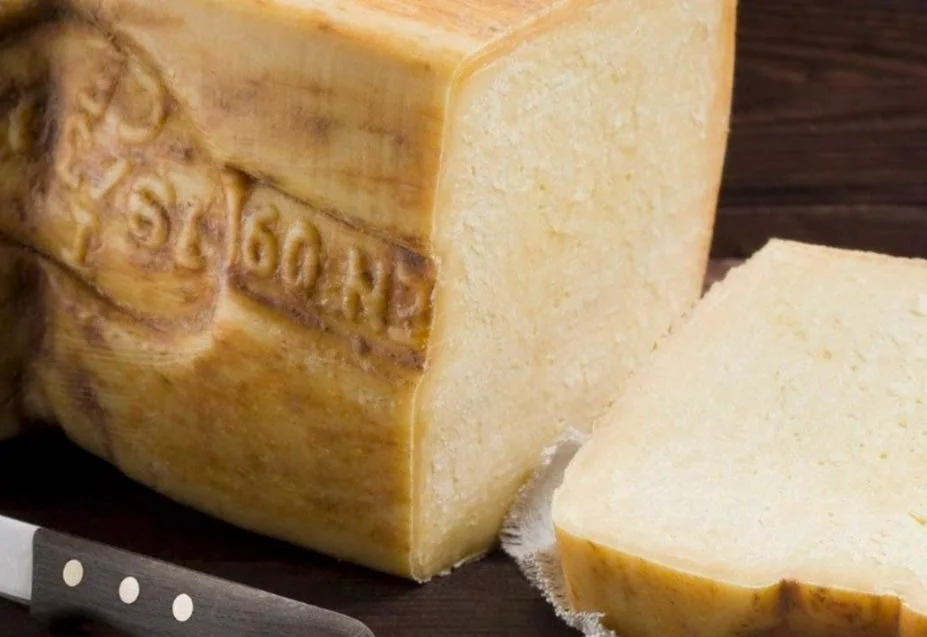
Caciocavallo is a traditional Italian stretched-curd cheese, crafted from the milk of Podolica cows, a hardy breed raised in semi-wild or free-range conditions.
Its name, meaning “cheese on horseback,” reflects its distinctive shape: two cheese forms tied together by a single loop, allowing them to be hung for ageing.
While caciocavallo traces its roots to southern regions like Puglia, Campania, Calabria, and Sicily, its appeal has spread throughout Italy and beyond.
The cheese boasts a gentle yet slightly piquant flavour that deepens as it matures.
Widely appreciated in the kitchen, caciocavallo enhances dishes such as aubergine parmigiana and pizza, though it also shines when served simply alongside crusty, freshly baked bread.
Seasonality
Caciocavallo is available throughout the year since its production isn’t tied to a specific season. However, the ageing process can vary depending on when it’s made.
Typically, production runs from March to October, when cows produce more milk, the essential ingredient for cheese-making.
Warmer summer months help speed up maturation, delivering sharper flavours sooner.
Nonetheless, well-aged caciocavallo can be found year-round, thanks to careful storage that preserves its flavour and quality.
Varieties of Caciocavallo
Depending on its maturation and the type of rennet used, caciocavallo can range from mild and creamy to robust and tangy.
There’s a distinction between table cheeses aged for 3 to 6 months and grating varieties matured up to 9 months for a more intense flavour.
In Sicily, two main types stand out:
- Palermitano, or the Godrano variety, also charmingly known as ‘fiore a quattro facce’ (flower with four faces). This style is chiefly made from the milk of Cinisara cows, a native black-coated Podolica breed. The Godrano caciocavallo has a rounded rectangular shape, weighing between 8 and 15 kilos. Its pale straw rind encases a firm paste with a unique bouquet, which gradually evolves with ageing. It can be enjoyed fresh just a week after production, semi-aged after one to four months, or fully matured at six months—perfect for grating in the latter stage.
- Ragusano DOP: Hailing from the countryside between Ragusa and Syracuse, also called scalune in Sicilian dialect, this rectangular cheese features prominently in Sicilian cookery. Its flavour swings from sweet to aromatic, depending on ageing time.
There's a dedicated piece exploring this exquisite cheese in greater depth.
Nutritional Profile of Caciocavallo
The nutritional qualities of caciocavallo are influenced by the fat content of the milk and the methods employed during production.
Generally speaking, caciocavallo is rich in protein and minerals such as calcium, phosphorus, and sodium.
Yet, thanks to its fat content, it also carries a relatively high calorie count.
Here’s a snapshot of the typical nutritional values for caciocavallo per 100 grams:
- Calories: approximately 350-400 kcal
- Protein: around 25-30 grams
- Fat: roughly 25-30 grams
- Carbohydrates: about 2-3 grams
- Calcium: roughly 800-900 milligrams
- Phosphorus: approximately 550-600 milligrams
- Sodium: about 500-600 milligrams
Bear in mind these figures will vary depending on the producer and cheese type.
Additionally, caciocavallo may contain traces of lactose, so those with intolerances should be cautious.
Culinary Uses
Caciocavallo enjoys much affection in Sicilian kitchens, frequently enhancing baked pasta dishes, savoury flans, stuffed breads like scacciata, various focacce, and traditional sfincioni. It’s also delicious grated over pasta.
Explore our collection of Sicilian recipes featuring caciocavallo to inspire your cooking.
How to Clean Caciocavallo
Follow these straightforward steps to clean your caciocavallo:
- First, gently peel away any wax or paper coverings from the cheese.
- Prepare an equal parts solution of water and vinegar, then briefly soak the cheese in this mixture.
- Using a soft-bristled brush, lightly scrub the surface to remove any dirt or bacteria.
- Rinse the cheese under cold water and pat dry with a clean cloth.
- Store the cheese in the fridge until ready to serve.
Storage Tips
To keep your caciocavallo in prime condition, here are some handy tips:
- Keep it refrigerated: Store caciocavallo between 4°C and 8°C. Once opened, wrap it tightly in cling film or foil to lock in freshness and prevent drying out.
- Keep it whole when possible: It’s best to store caciocavallo as a whole cheese, rather than in pieces, to protect its interior from air and light which can cause oxidation and mould.
- Cut only what you need: When slicing, take only the portion you intend to use right away to minimise exposure.
- Use airtight containers: If storing cut cheese, place it in an airtight container made of glass or food-grade plastic, sealing it well to retain moisture.
- Use promptly: Even with careful storage, caciocavallo has a limited shelf life—aim to enjoy it within a few days of purchase or opening.