Overview
Cabbage, known in Sicilian as "càvulu" or "càvulu tunnu", is a cherished member of the Brassicaceae family, cultivated and savoured across Sicily since time immemorial. This winter vegetable, available in a variety of forms, is a cornerstone of traditional Sicilian fare, especially in simple, rustic dishes that have nourished generations of farmers and fishermen alike. Its crisp leaves and uniquely nuanced flavour—both sweet and slightly bitter—make it ideal for warming soups, side dishes, and rich fillings.
In Sicilian culinary tradition, cabbage holds a special place during the colder months, when its varieties reach peak maturity and flavour. From the humble black cabbage soup to more elaborate recipes featuring sausage and wild fennel, this vegetable embodies the heart and soul of Sicily’s authentic winter cuisine.
Characteristics
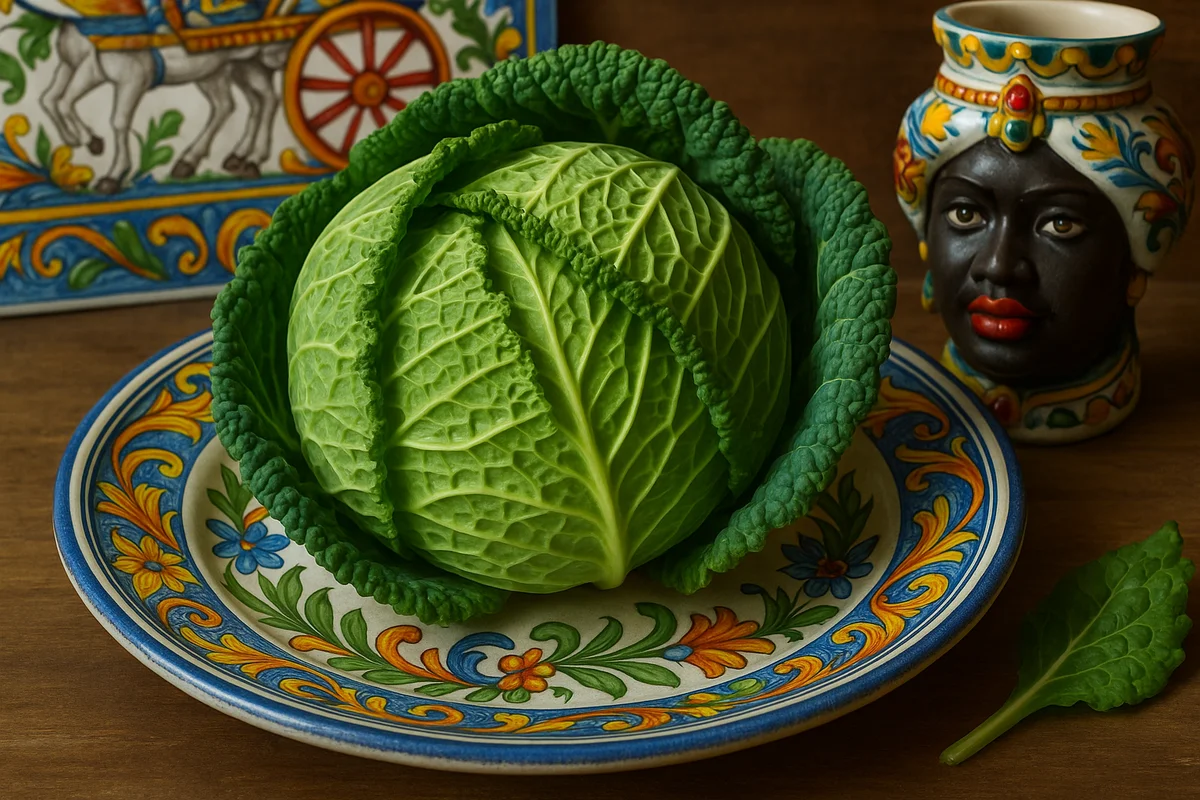
Cabbage presents itself in diverse shapes depending on the variety: the pointed cabbage forms a tight, round head of smooth leaves; savoy cabbage boasts crinkled, darker-green leaves; black cabbage features long, narrow, deep green foliage. Its palette spans from pale to deep green, through to the striking purple-red of red cabbage.
The flavour is distinctive—sweet with subtle hints of bitterness and sulfurous notes that deepen when cooked. Raw cabbage offers a satisfying crunch, which softens to a silky tenderness through cooking. Its aroma intensifies whilst cooking, thanks to the characteristic sulphur compounds typical of cruciferous vegetables.
Outer leaves tend to be tougher and more robust in flavour, while the inner heart leaves are tender, sweeter, and delicate. Quality cabbage can be judged by its firmness, weight, and the freshness of its leaves.
Varieties
Pointed Cabbage
This variety forms a compact, spherical head with smooth, pale green or white leaves. Delicately flavoured, it’s perfect raw in salads, as a side, or fermented into sauerkraut.
Savoy Cabbage
Recognised by its dark green, crinkled leaves and looser heads, savoy cabbage carries a bolder flavour and suits hearty soups, stews, and stuffed rolls wonderfully.
Black Cabbage
A Tuscan favourite also beloved in Sicily, black cabbage has long, slender, very dark green leaves. Its intense taste is ideal for brothy soups and rustic stews.
Red Cabbage
Distinguished by its deep purple-red colour, red cabbage offers a slightly sweet flavour. It shines in raw salads or effortlessly transforms in sweet and sour dishes.
Seasonality
In Sicily, cabbage is very much an autumn and winter vegetable. Its prime season stretches from October through March, with December to February marking its flavourful peak. The first frosts actually enhance the cabbage’s sweetness, as the cold converts starches into sugars.
Throughout the colder months, cabbage is a staple on Sicilian tables, warming and nourishing in countless traditional dishes. Come spring, the plant flowers and the leaves become tough and bitter, signalling the end of its prime.
In the Kitchen
Cabbage enjoys a multitude of uses in Sicilian cookery, appearing in a range of time-honoured recipes.
Cabbage Soup
A rustic preparation where cabbage simmers gently in a broth with pulses, pasta or stale bread. In some regions, a grating of salted ricotta cheese is sprinkled on top. This hearty, thrifty dish has long been a staple of rural households.
Sautéed Cabbage
Boiled leaves are stir-fried with garlic, olive oil, chilli and anchovies to create a flavoursome side. Variations often include black olives and capers for added character.
Cabbage with Sausage
A classic of the Sicilian hinterland, cabbage is stewed with fresh sausage, tomatoes and wild fennel. A beloved winter dish that’s rich and comforting.
Stuffed Cabbage Rolls
Leaves are blanched, filled with a mixture of minced meat, rice, cheese and herbs, then rolled and baked in tomato sauce. These resemble Greek dolmades but with a distinctly Sicilian twist.
Raw Cabbage Salad
Finely shredded pointed cabbage is eaten raw, dressed simply with olive oil, lemon juice, salt and occasionally anchovies for an invigorating starter or side.
Preparation
To prepare cabbage, discard the outer leaves if they’re wilted or damaged, then trim away the tough core. Rinse the leaves thoroughly under running water. Depending on the dish, leaves can be sliced into strips, chopped, or left whole for stuffing.
To soften the cooking aroma, add a crust of stale bread, a splash of vinegar or a bay leaf to the boiling water. For stuffed leaves, blanching them in salted boiling water for 2-3 minutes makes them pliable.
Raw cabbage for salads should be finely sliced and left to marinate for about 30 minutes with salt and lemon to tenderise and aid digestion.
Cooking
Cabbage can be cooked in various ways. When boiling, cook in plenty of salted water for 10-20 minutes depending on size and variety, until tender but still holding shape.
For pan-frying, blanch leaves for 5-7 minutes, drain well and then sauté in oil with herbs and aromatics for 5-10 minutes. Baking involves arranging cabbage in a tray, drizzled with oil, seasoned and covered with parchment, then roasting at 180°C for 30-40 minutes.
Overcooking should be avoided as it causes the cabbage to become mushy, lose its flavour and nutrients, and intensify its sulphurous scent. The ideal cook renders the leaves tender yet slightly crisp.
Storage
Whole fresh cabbage keeps well in the fridge vegetable drawer for 1-2 weeks, wrapped loosely in perforated paper. It should be washed just before use, not beforehand.
Once sliced, cabbage should be wrapped tightly in cling film and stored for 3-4 days to prevent browning and odour transfer. Cooked cabbage lasts 2-3 days refrigerated in a sealed container.
Cabbage freezes excellently: blanch for 2-3 minutes, cool rapidly in ice water, drain thoroughly, then freeze in bags. It keeps well frozen for 6-8 months.
Buying Tips
Choose cabbage heads that feel heavy and firm for their size — a sure sign of freshness. Outer leaves should be crisp, bright in colour, free from dark spots or wilting.
The core should be pale and slightly moist, not dry or browned. Avoid cabbages with yellowing leaves, insect damage or signs of decay. A fresh, green vegetal aroma indicates good quality.
Opt for seasonal, locally grown cabbage whenever possible. Winter cabbages that have weathered a frost are sweeter and pack more flavour.
Nutritional Benefits
Cabbage is a wonderfully light vegetable, providing just 20-25 calories per 100 grams. Comprised of over 90% water with negligible fat, it’s a fantastic source of dietary fibre (about 2-3 grams per 100 grams), which supports healthy digestion.
Rich in vitamin C (around 50 mg per 100 grams) for immune health, and vitamin K for blood clotting, it also offers vitamins A, folate and B-complex nutrients.
Mineral content includes potassium, calcium, magnesium and iron. Cabbage contains antioxidants—particularly glucosinolates and flavonoids—with anti-inflammatory properties and potential cancer-protective effects.
In Sicilian folk medicine, cabbage was prized for its cleansing, anti-inflammatory virtues and benefits to stomach and digestion. Fresh leaves were even used externally as compresses to soothe swelling and inflammation.
Curiosities
Within Sicilian tradition, cabbage earned the affectionate title of the "poor man's doctor" thanks to its health virtues and affordability. It was a winter staple for peasant families, providing vital vitamins and minerals through lean times.
During the Second World War, when food was scarce, cabbage’s importance only grew. Families cultivated it in their home gardens and used it in myriad ways, from soups to sides, ensuring nourishment when resources were tight.
Folk remedies involved applying cabbage leaves to the chest to ease coughs and bronchitis, or to sore joints for anti-inflammatory relief—remedies passed down through generations and grounded in the vegetable’s inherent healing properties.