Overview
Butter is a dairy staple crafted by churning cream gathered from milk. Primarily made up of fats and water, it also contains trace amounts of proteins, carbohydrates, and fat-soluble vitamins such as A, D, and E.
Rich in saturated fats, butter is quite an energy-dense ingredient. Yet, it also provides essential fatty acids like linoleic and arachidonic acids, which our bodies cannot produce and must obtain from our diet to function properly.
Praised for its flavour and its ability to lend softness and body to dishes, butter is used widely in kitchens. However, its high saturated fat and calorie content mean it’s best enjoyed in moderation. Moreover, those with lactose intolerance or high cholesterol should approach it cautiously.
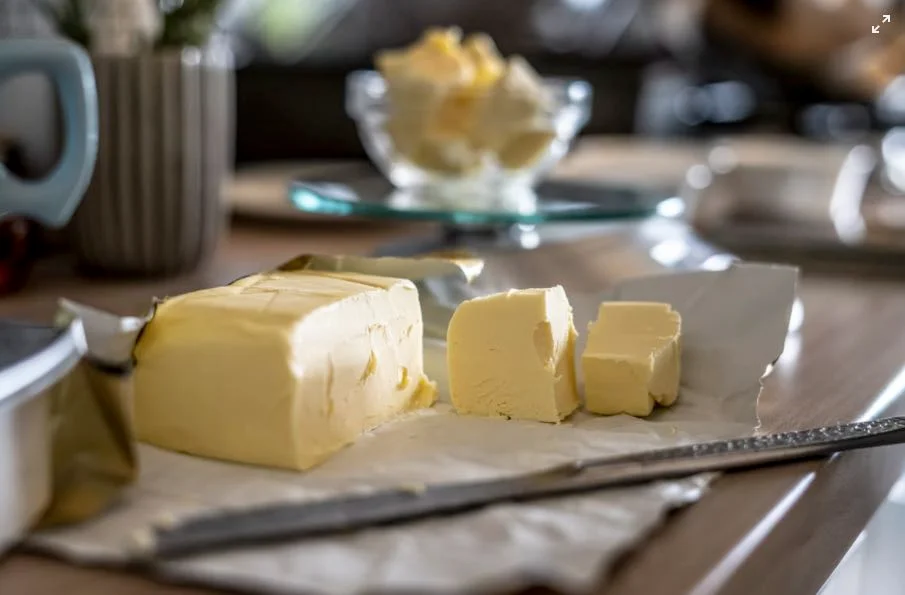
The taste of butter is gentle and pleasing, with hues that vary from creamy white to rich yellow, influenced by the milk source and the animals’ diet.
Its texture is characteristic: solid when chilled, easily softening at room temperature and melting when gently warmed—so distinctive that other foods with a similar feel are often described as "buttery."
In cooking, it finds its way into an array of recipes across the board.
Varieties
Butter comes in many forms, crafted from the milk of different animals. A notable example is buffalo butter, which is particularly rich and offers a delicate flavour.
On the shelves, you’ll find an eclectic selection of butters infused with extra ingredients to enhance taste and colour: from classic salted varieties to more imaginative blends featuring garlic, basil, mushrooms, smoked salmon, prawns, anchovies, and even hints of coffee or orange.
These special butters are often enjoyed spread on starters or snacks, bringing bursts of flavour.
Cooking with Butter
Butter plays a starring role in numerous dishes, especially in French and Northern European cuisine where it’s often used for frying and roasting, unlike Mediterranean kitchens which favour olive oil.
From breakfast to aperitifs, butter is perfect smeared generously on fresh bread, forming a sumptuous base for toppings ranging from jam to smoked salmon, anchovies or ham.
It’s fundamental to many pastries too: puff pastry, shortcrust pastry, and sweet pastry all rely on butter to achieve their synonymous flaky and tender qualities, whether sweet or savoury.
Butter is also a key player in sauces and other preparations, often blended with flour to create smooth, rich roux bases.
In the realm of patisserie, its uses are extensive—from delicate biscuits to luscious chocolate cakes, often melted alongside chocolate to give that unbeatable, silky texture.
Thanks to its mildness, butter partners beautifully with a vast spectrum of flavours: it balances robust tastes like cured meats and anchovies, while preserving the subtlety of dishes such as ricotta and spinach ravioli, typically dressed simply with butter and sage.
Tips for Buying Butter
Butter’s colour ranges from pale white to deep yellow, depending on the source milk and the animals’ diet.
Generally, due to seasonal grazing patterns, butter tends to be yellower in summer and paler in winter.
Here are a few pointers when selecting butter:
- Check the origin: Butter from cows that graze outdoors often boasts richer flavour than that from animals fed solely on processed feed.
- Choose your salt preference: Unsalted or salted—if you prefer precise control over your salt intake, opt for the unsalted variety.
- Assess freshness: Fresher butter tastes sweeter and feels creamier—always check the use-by date before purchasing.
- Read the label: Look out for any unwanted additives such as preservatives, colourings, or artificial flavourings.
Storing Butter
To keep butter at its best, consider these handy storage tips:
- Refrigerate promptly: Butter should be kept in the fridge at around 4°C to maintain freshness and avoid spoilage.
- Use airtight containers: Protect it from picking up other food odours by storing in a sealed container or well-wrapped in cling film.
- Avoid the fridge door: Temperatures here fluctuate; store butter on a central shelf where it stays consistently cool.
- Don’t leave out too long: Unlike some oils, butter doesn’t do well left at room temperature for lengthy periods, as it may quickly go rancid.