
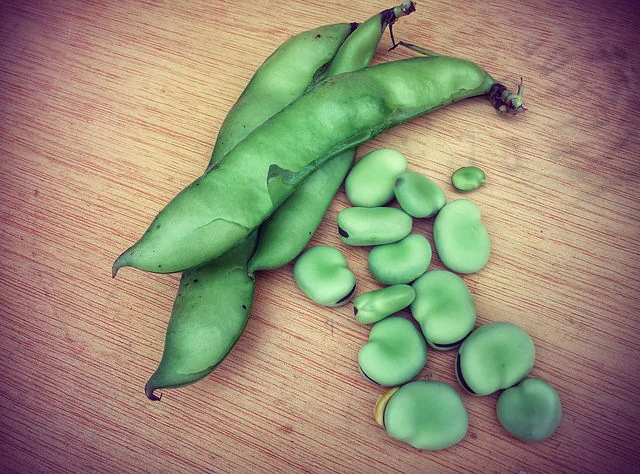
Overview
Broad beans belong to the fabaceae family.
Unlike many other pulses, broad beans can even be enjoyed raw, especially the smaller varieties.
Nutritionally, these beans are remarkable, packed with fibre, vitamins, proteins and minerals.
Compared to common beans, broad beans offer superior quality protein, although in smaller quantities.
They roughly contain 5% protein, 5% fibre, 4.5% carbohydrates and a mere 0.4% fat.
The remaining 84% is water.
Broad beans are rich in iron, potassium, magnesium, copper, selenium and an array of vitamins, predominantly vitamin C.
It’s important to note that cooking leads to the loss of many vitamins and minerals, and drying also alters their nutritional profile.
Thanks to their iron content, broad beans are traditionally thought to help combat anaemia.
Dried broad bean leaves are even used in herbal medicine as a natural diuretic.
Seasonality
Fresh broad beans are harvested in spring.
Varieties
There are many varieties of broad beans, the most common in Italy being aguadulce, which features a long pod containing 8 to 9 seeds.
Other notable types include the early Aquitaine, prized as the finest, the Sevilla variety with usually six seeds, and those from Caltagirone, Riesi and Marsala.
The Leonforte broad bean is a cherished Slow Food Presidium.
Preparing Broad Beans
Shell the broad beans from their pods, snap off both ends, remove the fibrous “string” and take out the seeds.
Soak the beans in water for 16 to 18 hours to soften them, though freshly picked ones may not require this step.
Only around 25% of the pod is edible.
We recommend peeling off the delicate outer skin of each bean, especially when making creamy dishes, to improve digestibility and texture.
In the Kitchen
As mentioned, you can enjoy these beans raw or cooked.
Raw broad beans are traditionally served with pecorino cheese and cured meats, or paired with fresh spring onions.
Cooked, they shine in soups and stews such as the classic macco, often enriched with pancetta, cured pork cheek (guanciale) or pork rind; they’re also delicious in salads or tossed with pasta and ricotta.
Shopping Tips
Look for fresh pods that are a vibrant, glossy green.
They should feel firm and be free from blemishes.
Storage
Keep fresh broad beans in the fridge’s fruit and veg compartment and use within three days.
Dried broad beans store much longer; keep them in a cool, dry place and use by the best-before date on the packet.