Overview
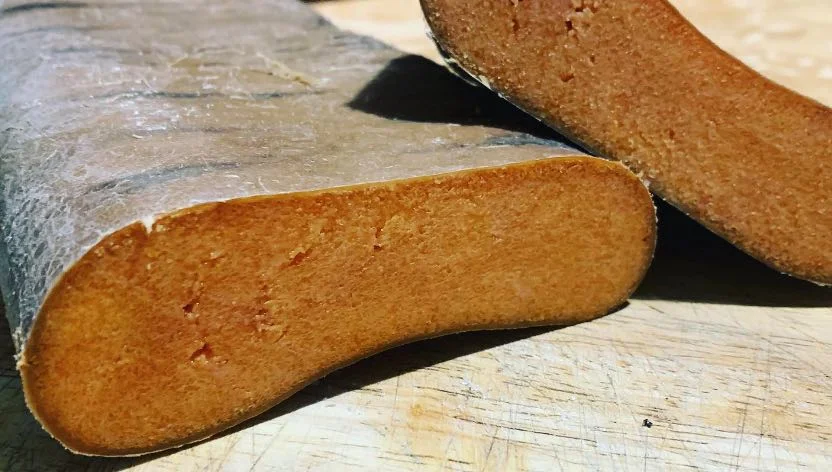
Bottarga di tonno is a cherished ingredient in the kitchen, often used to elevate the flavours of various dishes.
More broadly, bottarga refers to salted and dried fish roe, a traditional method of preserving the eggs of certain fish species.
There are many types of fish whose roe can be transformed into bottarga, but the most commonly known and treasured varieties come from mullet and tuna, each offering a distinct price point and flavour profile.
This delicacy is usually sold either whole or finely grated, vacuum-packed or wrapped in sachets.
Its production is a Mediterranean specialty; in Sicily, bottarga di tonno is especially crafted around Siracusa and Trapani, regions steeped in this time-honoured tradition.
Types of Bottarga
Bottarga features prominently in the cuisine of the larger Mediterranean islands, notably Sardinia and Sicily, though nowadays it is made in significant quantities elsewhere as well.
In Sicily, the bottarga is primarily made from bluefin tuna (Thunnus thynnus), although stricter fishing regulations have led to much of it now being produced from yellowfin tuna (Thunnus albacares).
Meanwhile, in Sardinia, the term bottarga is often linked to the roe of the mullet (Mugil cephalus), which imparts a different but equally beloved taste.
Culinary Uses of Bottarga di Tonno
Bottarga di tonno lends itself beautifully to an array of seafood recipes, but its uses go beyond just fish dishes.
When incorporated into sauces, its distinctive flavour complements a wide spectrum of ingredients, offering a savory umami boost.
It’s worth experimenting with bottarga in your cooking, though it’s best not to overdo it – a little goes a long way, and overuse can result in overpowering saltiness.
Bottarga di tonno is often enjoyed grated raw, a sprinkle that brings depth to risottos and other rice preparations.
It can also star on its own as a sophisticated starter or add an elegant punch to main courses centred on seafood.
In Sicilian kitchens, its signature role is in simple pasta dishes or as the highlight of a refined appetizer.
Tips for Buying Bottarga di Tonno
To pick superior bottarga di tonno, look out for several key signs of quality:
- a firm, compact texture;
- a consistent, even colour;
- and the presence of the so-called “chiodo” – a silvery thread of tissue still attached to the sack of eggs during extraction, which is a mark of freshness and authenticity.
Storing Bottarga di Tonno
Bottarga di tonno keeps well when refrigerated, either preserved in oil or wrapped snugly in aluminium foil, where it will stay fresh for up to two weeks.