Overview
Known across Sicily as “vope” or “aue,” depending on the region, boghe are small bluefish belonging to the Sparidae family, native to the Mediterranean Sea. Their slender, silvery bodies are marked with elegant golden longitudinal stripes, making them a familiar sight along Sicilian shores. For centuries, these modest fish have been a reliable and affordable source of protein for coastal communities.
In Sicilian culinary heritage, boghe hold a special place among the so-called “poor man’s fish” — humble species once eaten daily by fishing families and now enjoying a well-deserved revival. Their gentle yet distinct flavour and tender flesh make them ideal for a range of traditional seafood dishes.
Characteristics
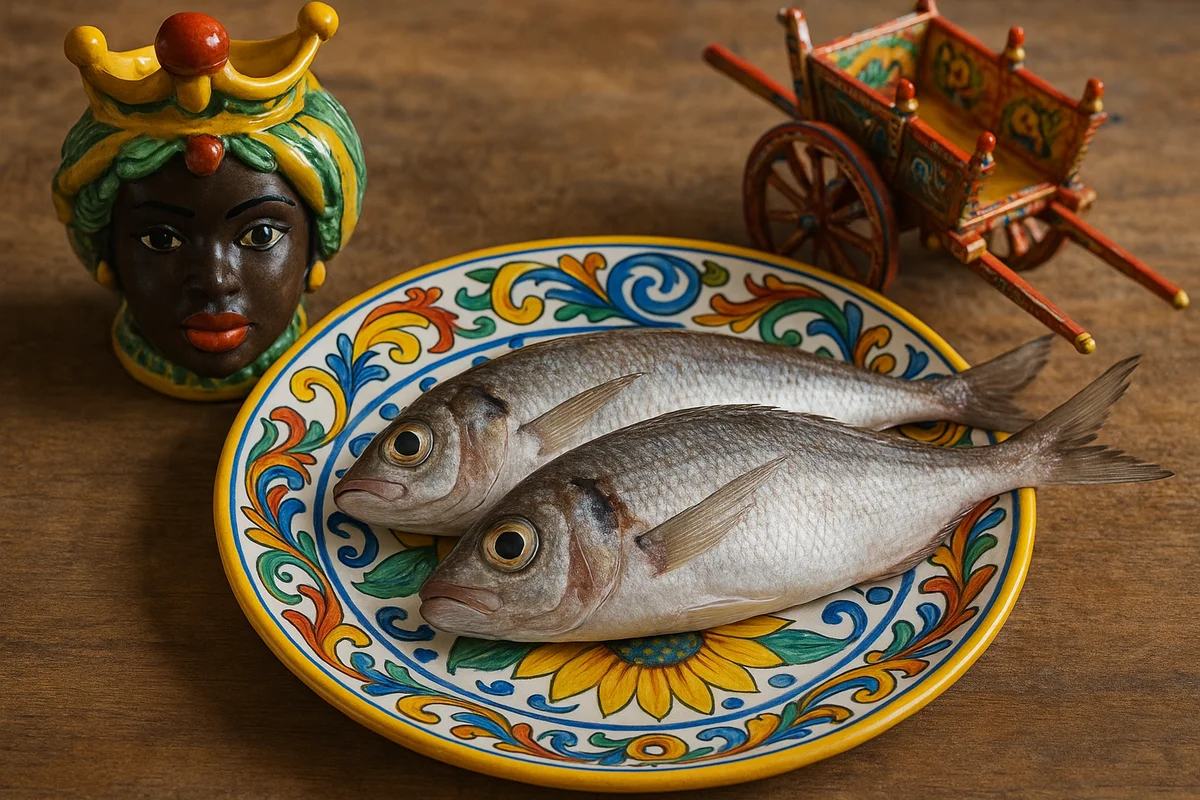
The boghe (Boops boops) is a petite fish, typically measuring 15-20 centimetres, though some can stretch up to 30 centimetres. Their bodies are laterally compressed with an oval, elongated shape, adorned with silvery scales that glint with a golden sheen.
A distinctive feature is the 3 to 5 shimmering golden lines that run from head to tail along their flanks. Their eyes are notably large and protruding, with a small mouth framed by fleshy lips. The flesh is white, soft and delicate, carrying a subtle sweetness and a hint of shellfish-like brininess, reflecting their diet of seaweed and tiny marine creatures.
Seasonality and Fishing
Boghe can be found in Sicilian waters throughout the year, yet the prime season for catching and enjoying them spans spring to autumn, peaking in the summer months when shoals draw closer to the shore. During this time, their meat is at its most flavoursome and firm.
Traditional fishing methods include surrounding nets, fixed nets, and hand lines. Boghe swim in large schools, favouring rocky coasts and lush beds of Posidonia seagrass, where they feed on algae and small invertebrates. This mostly vegetarian diet imparts a distinctive, sometimes faintly herbaceous flavour to the fish.
Nutritional Profile
Boghe are a lean, nourishing choice. They offer roughly 90 to 100 calories per 100 grams of edible flesh, boasting 18-20 grams of protein. Their fat content is low at 2-3%, largely made up of heart-healthy omega-3 fatty acids.
They’re an excellent source of minerals such as phosphorus, vital for strong bones and teeth; selenium, a powerful antioxidant; and iodine, essential for thyroid function. Additionally, they provide B vitamins—especially B12, important for the nervous system—as well as vitamin D.
Like all blue fish, boghe contain beneficial compounds, are gentle on the digestive system, and present an excellent option for a balanced, wholesome diet.
Culinary Uses
In traditional Sicilian cooking, boghe are prepared in numerous ways, each designed to exalt their subtle flavour and tender texture.
Fried Boghe
The most classic and popular preparation is frying. The fish are cleaned, lightly dusted with flour, and fried in plenty of olive oil until golden and crisp. Served hot, simply seasoned with salt and a squeeze of lemon, some prefer to dip them in a light batter before frying for extra crunch.
Baked Boghe
A gentler method involves baking. The cleaned fish are laid in a roasting dish with olive oil, garlic, parsley, oregano, and a sprinkling of breadcrumbs, then baked in a hot oven for 15-20 minutes. The result is a flavoursome dish that’s lighter than frying.
Grilled Boghe
Along the coastline, it’s traditional to cook boghe over glowing embers or on a grill. Simply seasoned with salt, olive oil, and oregano, they’re quickly grilled on both sides. The smoky char from the embers adds a distinct and irresistible aroma.
Marinated Boghe
In parts of Sicily, fresh boghe are marinated raw in lemon juice, extra virgin olive oil, garlic, parsley, and a pinch of chilli. This preparation, reminiscent of a carpaccio, highlights the freshness of the fish while tenderising the flesh.
In Broth
Boghe also lend themselves to hearty fish soups alongside other rocky shore varieties. They enrich the flavour and texture of the broth, though their petite size often means they are removed once the stock is well-infused.
Preparation and Cleaning
Cleaning boghe is straightforward but demands patience due to their small size. Begin by scaling under running water, rubbing gently from tail to head. Then make an incision along the belly to remove the innards, taking care to discard the dark sac inside—leaving it in can introduce bitterness.
Rinse the interior and exterior thoroughly in cold water. Depending on the recipe and taste, the head can be left on or removed. For frying, many keep the fish whole, while for other preparations decapitating is common.
Some fishermen, particularly with larger specimens, make crosswise cuts along the sides to promote even cooking and better absorption of seasonings.
Tips for Buying
When selecting fresh boghe, look for bright, convex, and clear eyes—not dull or sunken. The gills should be a vivid red, not brown or greyish. Their skin must be shiny, moist, and taut, with scales firmly attached.
The body should feel firm and heavy relative to size, not limp. The smell ought to be fresh, mild and unmistakably of the sea—not unpleasant or overpowering. Avoid any with unusual spots or damaged skin.
At Sicilian markets, boghe are often sold alive in tanks or freshly caught. It’s best to purchase from trusted fishmongers who can confirm the local catch and proper cold chain handling.
Storage
Boghe are delicate and best enjoyed as fresh as possible—ideally on the day they’re caught, or at most within 24 hours of purchase. Keep them refrigerated in the coldest section, well wrapped in cling film or stored in a sealed container, preferably resting on crushed ice.
Cleaning and gutting before refrigeration will extend their freshness. Avoid airtight containers without drainage, which may cause water accumulation and spoilage.
Due to their size and tender flesh, raw boghe are not suited to freezing. If necessary, it’s preferable to freeze them cooked and consume within a month of thawing.
Pairings and Variations
The mild flavour of boghe pairs beautifully with simple, Mediterranean-style seasonings. Sicilian extra virgin olive oil, fresh lemon, garlic, parsley, and oregano are classic accompaniments. Wild fennel, a Sicilian native herb, also complements these fish wonderfully.
When it comes to wine, crisp, lively Sicilian whites such as Grillo, Catarratto, or Inzolia, served chilled, make perfect matches. For richer baked dishes, more complex whites or even light rosés work splendidly.
Curiosities
The scientific name Boops boops stems from Greek, meaning “bull’s eye,” a nod to their prominent, bulging eyes. Regional names in Sicily differ: “aue” is common in the east, while “vopa” prevails in the west.
In Sicilian maritime lore, boghe were once dubbed “emergency fish”—the reliable catch during rough seas or leaner times when other species were scarce. Nevertheless, fishing families treasured their flavour and passed down recipes through generations.
An old Sicilian saying goes: “Quannu 'u mari è 'nfuriatu, vopi fritta e core cuntentu” (“When the sea is stormy, fried boghe and a happy heart”), highlighting how these humble fish offered comfort in challenging times.
Boghe also play a vital role in the Mediterranean ecosystem, grazing on algae and serving as prey for larger predatory fish. Their abundance is a good sign of healthy marine environments.
Modern Sicilian chefs and restaurateurs are rediscovering boghe as part of a wider movement to celebrate “forgotten fish,” showcasing them in contemporary dishes that elevate their natural qualities while promoting sustainable seafood practices.