Overview
Bieta, also known in Sicily as "bietola" or by its local names "gira" or "jira", is a leafy green belonging to the Chenopodiaceae family — the same family that includes spinach and beetroot. It is one of the island’s most cherished and widely available vegetables, present in markets throughout the year and a staple of many rustic Sicilian recipes.
This hearty, generous vegetable thrives in the Mediterranean climate and has for centuries been a vital part of Sicilian home cooking, prized for its culinary flexibility and nutritional benefits. Bieta embodies the simplicity and authenticity of Sicily’s humble kitchen, transforming modest ingredients into dishes bursting with flavour.
Varieties
There are primarily two types of bieta cultivated in Sicily, distinguished by their leaves and ribs.
Leaf Bieta or "Erbetta"
This variety has small, tender leaves of a deep green hue, with slender, understated ribs. It is harvested young and used whole, much like spinach. Ideal for soups, stews, and fillings, it lends itself to delicate preparations.
Rib Bieta or "Coste"
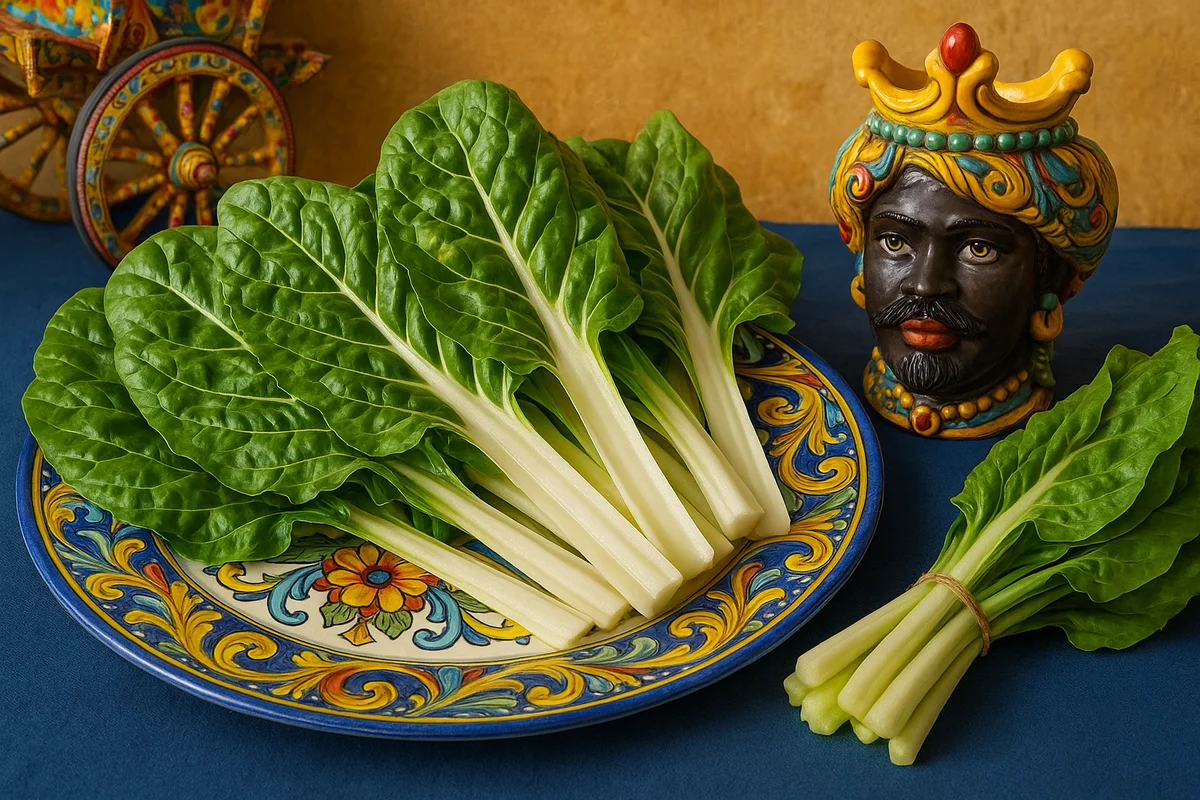
Characterised by large leaves with prominent, thick ribs — known locally as "costole" — which can be white or silvery in colour. These ribs are fleshy and crunchy, often requiring longer cooking times. This variety is perfect for gratins or sautéed dishes, where their texture can shine.
Seasonality
Thanks to Sicily’s mild climate, bieta is available nearly year-round, though its peak season stretches from autumn through to spring. The finest bieta is gathered in the cooler months, from October to May, when the leaves are at their most tender and flavoursome.
During the hot summer, the plant tends to bolt, sending up seeds quickly, which makes the leaves tougher and more bitter. Consequently, summer bieta is less sought after and less commonly found in markets.
Nutritional Profile
Bieta is remarkably nutritious while being very light, containing roughly 20 calories per 100 grams. It’s over 90% water and a great source of dietary fibre, which supports digestion and helps you feel full.
It provides an excellent supply of vitamins, particularly vitamin A, which is crucial for eyesight and skin health; vitamin K, vital for blood clotting; and vitamin C, known for its antioxidant qualities. It also contains a good amount of folate, especially important during pregnancy.
On the mineral front, bieta offers potassium, magnesium, iron, and calcium. That said, like many leafy greens, it contains oxalates which can hinder calcium and iron absorption, so it’s best enjoyed alongside varied foods.
Culinary Uses
Bieta is a star ingredient in many traditional Sicilian dishes, from simple sides to more elaborate fare.
Boiled and Sautéed Bieta
The classic method involves boiling the leaves in salted water, then briefly sautéing them with garlic, extra virgin olive oil, and a touch of chilli. Some versions add black olives or cherry tomatoes for extra depth.
Savoury Pies and "Impavate"
Bieta is the heart of numerous rustic Sicilian tarts, such as the "impanata di bieta", where boiled, well-drained leaves are mixed with ricotta, eggs, grated cheese, then wrapped in a flaky pastry. These "scacce" are traditional dishes from the Ragusa and Modica regions.
Soups and Stews
In rural cuisine, bieta is a fundamental component of hearty soups, often paired with legumes like chickpeas or beans, potatoes, and pasta. The "minestra di bieta e patate" is a simple yet nourishing dish beloved across Sicily.
Pasta with Bieta
A Sicilian classic sees bieta combined with anchovies and toasted breadcrumbs. The leaves are boiled then sautéed with garlic, anchovies melted into the olive oil, and chilli, creating a delicious sauce for spaghetti or bucatini.
Fillings
Finely chopped bieta is used to stuff an array of dishes — from meatballs to sardines a beccafico, and from ravioli to cannelloni. Its gentle flavour pairs beautifully with ricotta, pine nuts, and sultanas.
Preparing and Cleaning
Preparing bieta requires thorough washing. Separate the leaves from the ribs by slicing them at the base with a knife. Rinse the leaves under plenty of cold running water, soaking them if particularly muddy, changing the water several times.
Clean the ribs by removing the tougher fibres either with a knife or by hand. Chop them into the desired size.
Cook the bieta by boiling in plenty of salted water. Leaves usually take 5-7 minutes, while ribs need 10-15 minutes. Drain well and, if needed, squeeze out excess moisture before sautéing or using in other recipes.
Buying Tips
When selecting fresh bieta, look for bunches with vibrant green leaves, firm and free from yellow or brown spotting. The ribs should be crisp, thick, and bright white, without any dark patches or bruising.
Avoid wilted, yellowing, or damaged leaves. Larger leaves tend to be tougher and more fibrous, while medium-sized leaves are generally more tender and flavoursome.
Where possible, choose local, seasonal bieta for the best freshness and taste. In Sicilian markets, you’ll often find it sold in tied bunches with roots still attached—a sure sign of freshness.
Storage
Store fresh bieta in the vegetable drawer of your fridge for 3-4 days. It’s best kept wrapped in a damp cloth or a paper bag rather than sealed plastic, which can cause the leaves to wilt.
Don’t wash it before storing — moisture speeds up spoilage. Wash only when ready to use. For larger ribs, it’s wise to store leaves and ribs separately, as their shelf lives differ slightly.
Cooked bieta keeps well in the fridge for 2-3 days in a sealed container. You can also freeze boiled, well-drained bieta, portioned out, for 6-8 months.
Pairings
Bieta’s mild, earthy flavour lends itself to many combinations. It pairs brilliantly with garlic, anchovies, olives, capers, and tomato. It also complements cheeses like ricotta, pecorino, and caciocavallo.
In Sicily’s traditional sweet-and-savory dishes, bieta goes well with sultanas and pine nuts. Spices such as nutmeg, chilli, and wild fennel seeds also bring out its character.
Did You Know?
The name "bieta" comes from the Latin "beta", a term used for this plant since Roman times. In Sicily, the dialect words "gira" or "jira" likely trace back to the Greek "seuklon", passed down through Arabic influence during the island’s Islamic period.
In Sicilian folk tradition, bieta was valued as a refreshing, cleansing food, especially recommended during seasonal changes. Older women often prescribed it as a natural remedy to aid digestion and regulate the bowel.
In many rural parts of Sicily, growing bieta in home gardens remains common. It flourishes with little care, providing abundant crops. Younger leaves were often enjoyed raw in salads, mixed with other wild greens.
As an old Sicilian saying goes: "Gira e favi, manciali tutti i jorna" (Bieta and broad beans, eat them every day), underscoring the importance of these simple yet nourishing foods in daily peasant diets.