Overview
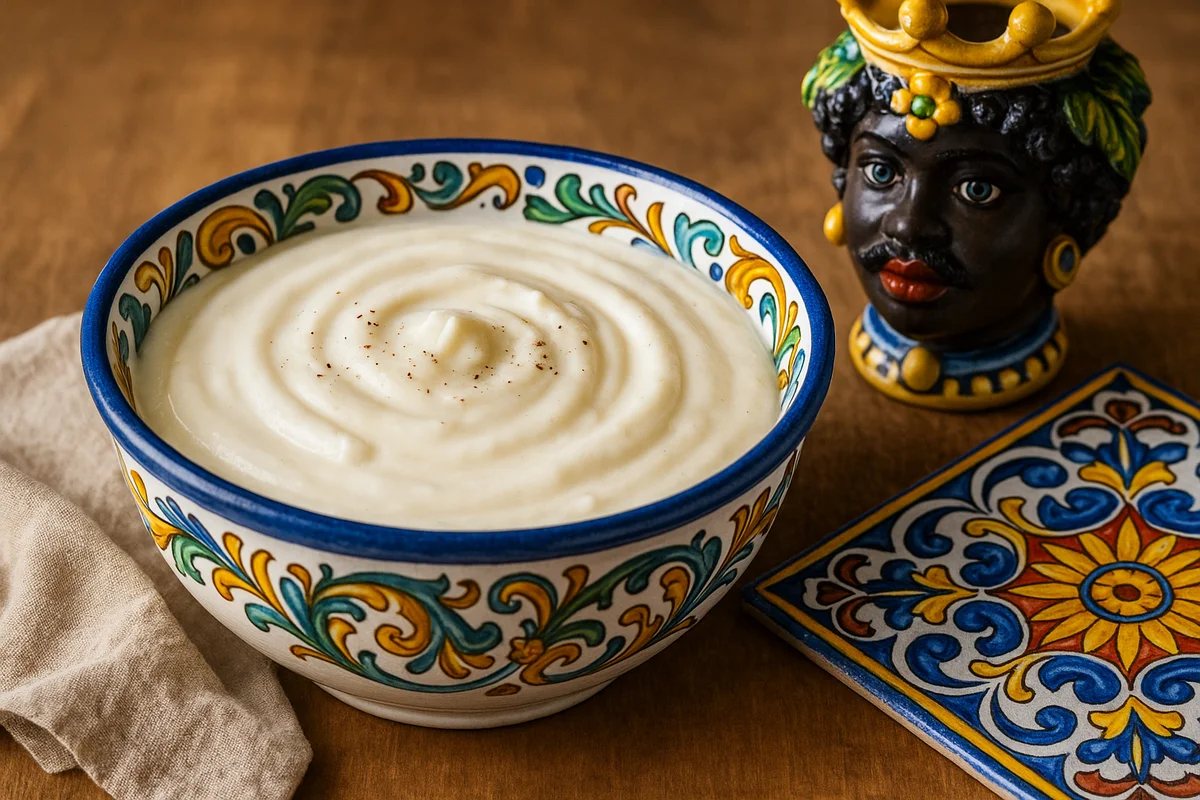
Besciamella, one of the cornerstone sauces of classical cooking, has become an indispensable element within Sicilian culinary traditions. Known locally in Sicilian as "balsamella" or simply "white sauce," this silky, velvety blend of butter, flour, and milk underpins countless traditional recipes across the island.
In Sicily, besciamella shines particularly in oven-baked dishes — from timbales to gratinated pastas, savoury soufflés to cannelloni — where its creamy texture and delicate flavour marry beautifully with the robust tastes of ragu, vegetables, and aged cheeses emblematic of the region.
Characteristics
Besciamella is a white sauce of creamy consistency, achieved by cooking a roux (a mixture of butter and flour) with warm milk. Depending on the balance of ingredients and the dish it complements, the texture can range from light and runny to rich and thick.
Its flavour is gentle and milky, enriched by the buttery notes and the subtle warmth of freshly grated nutmeg — a spice traditionally used to aromatise the sauce. In the kitchen, it acts as a binder, lending softness and creaminess to recipes, and forms a beautifully golden, gratinated topping when baked.
Ingredients and Ratios
The foundation of besciamella lies in just three ingredients: butter, flour, and milk. Ratios vary according to the desired thickness. For a smooth, medium-bodied sauce suitable for most uses, roughly 100 grams each of butter and flour are combined with one litre of milk.
For a lighter, more fluid sauce — ideal for dressing pasta or as a base for soups — the flour is reduced to around 60-70 grams per litre of milk. Conversely, a thicker besciamella, perfect for fillings or as the base of croquettes and soufflés, sees the flour increased to 120–150 grams per litre.
The milk can be full-fat or semi-skimmed, with full cream lending extra richness and body. Using good-quality, unsalted butter is best, allowing greater control over the seasoning.
Traditional Preparation
Making besciamella demands care and technique to avoid any lumps. Begin by gently melting the butter in a pan over moderate heat, taking care not to brown or sizzle it. Once fully melted, stir in all the flour at once, whisking briskly.
Cook the roux for 2–3 minutes, stirring constantly, to rid it of any raw flour taste. Then gradually pour in the warm milk a little at a time, whisking continuously to prevent lumps. It’s crucial to keep whisking throughout this stage.
Once all the milk is incorporated, raise the heat slightly to bring the mixture to a simmer, stirring steadily. The sauce will thicken progressively. Continue cooking for about 10 minutes, stirring all the while, until the desired texture is reached. Season with salt and a dusting of freshly grated nutmeg right at the end.
Culinary Uses
Within Sicilian cooking, besciamella plays a starring role across both traditional and contemporary recipes.
Baked Pasta
Besciamella is fundamental in classic baked pasta like lasagne and cannelloni. Layered with pasta sheets, ragu, and cheeses, it creates a luscious, gratinated dish. The Sicilian twist often includes fried aubergines, salty ricotta, and hard-boiled eggs, adding depth and character.
Timballes and Soufflés
Festive timballes—a highlight of Sicilian celebratory fare—rely heavily on besciamella to bind pasta with ingredients like meatballs, peas, boiled eggs, and cheese. The sauce is also the base for gratinated vegetable soufflés featuring cauliflower or broccoli.
Croquettes and Arancini
A very thick besciamella is used to fill potato or fish croquettes with a rich, creamy interior. In some modern takes on arancini, besciamella replaces or accompanies the traditional ragu, especially in buttery versions featuring ham and peas.
Gratins
Boiled vegetables such as fennel, artichokes, or cauliflower are often baked under a cloak of besciamella, pecorino, and breadcrumbs, creating indulgent, flavour-packed side dishes typical of refined Sicilian cuisine.
Variations
The classic besciamella can be enhanced or altered to suit various dishes. Stir in grated cheese, like pecorino, to create a Mornay sauce ideal for gratins. Adding whipped egg yolks enriches its velvetiness.
Contemporary Sicilian kitchens sometimes opt for lighter versions made with extra virgin olive oil instead of butter or plant-based milks for special dietary needs, though these tweaks do change the traditional flavour profile.
Storage
Besciamella is best enjoyed freshly made. If necessary, it can be kept in the fridge for 2–3 days, covered tightly with cling film directly on the surface to prevent a skin from forming.
Before using again, warm gently over a low heat, stirring constantly, and add a splash of milk if it has thickened too much. It can be frozen in airtight containers for up to a month, although the texture might be a little altered when thawed.
Common Issues and How to Fix Them
The main challenge in making besciamella is preventing lumps, often caused by adding cold milk too quickly to the roux or insufficient stirring. The key is to add warm milk slowly, whisking vigorously throughout.
If lumps do form, strain the sauce through a fine sieve or blitz it briefly with a hand blender. If it’s too thin, return to the heat gently to reduce and thicken; if too thick, loosen it by adding a little more warm milk, bit by bit.
Practical Tips
For a flawless besciamella, the milk should be warm — not boiling — when added to the roux, easing incorporation and reducing lumps. Keep the heat moderate to avoid burning the base and imparting an unpleasant taste.
Always grate nutmeg fresh; pre-ground spice quickly loses its aroma. Just a pinch per litre is enough to flavour the sauce beautifully. When making gratins, prepare the besciamella slightly thicker than usual as it tends to thin out with the moisture released during baking.
A Little Backstory
The origins of besciamella are disputed between French and Italian culinary history. While it’s famed as a French mother sauce, some food historians argue it began as an Italian "cola glue" sauce and was brought to France in the 16th century by Catherine de’ Medici.
In Sicily, besciamella was introduced under the French and Spanish aristocratic influence before becoming beloved in everyday cooking, affectionately called "a balsamedda" in the Sicilian dialect. Its versatility has made it a star of both festive and homely tables.
Among Sicilian families, mastering a smooth, creamy besciamella was often seen as a mark of a skilled cook. Grandmothers lovingly passed down the secrets — notably the importance of patience and constant whisking — teaching it as an art form to younger generations.