Overview
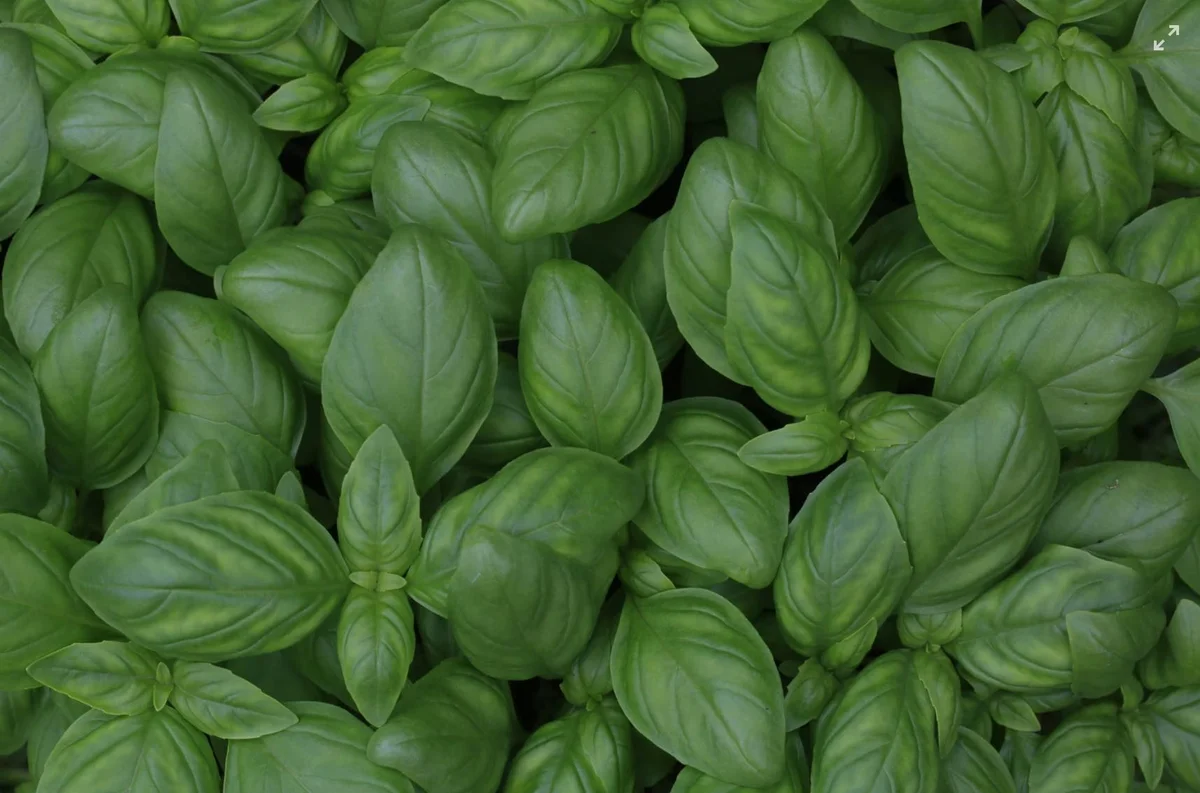
Basil is a fragrant herb belonging to the Lamiaceae family, prized for its aromatic leaves.
Originating from tropical Asia, the basil plant typically grows between 20 and 60 centimetres tall.
Towards late summer, it produces delicate pale flowers, which are usually snipped off to preserve the plant’s distinctive scent.
Its uniquely scented leaves are beloved and widely used in the kitchen to lend flavour to a variety of dishes.
Basil also boasts numerous nutritional and health benefits, being rich in essential nutrients including vitamin K.
It’s an important source of copper and vitamin C, as well as omega-3 fatty acids.
Moreover, basil leaves possess natural anti-inflammatory and digestive properties, making them as beneficial as they are fragrant.
Seasonality
Basil is at its freshest from early spring through to the end of summer.
Varieties of Basil
There are more than 40 varieties of basil, with some notable types including:
- Napolitano: Also known as lettuce-leaf basil, it features serrated leaves and a flavour akin to Genovese basil, with a hint of mint.
- Small-leaf: This variety has a distinctive lemony aftertaste.
- Genovese: The most recognised type, with broad leaves and a strong characteristic aroma, commonly used for making pesto.
- Purple Basil: Named for its deep reddish leaves, it has a slightly sharp, distinctive scent.
- Thai Basil: Its flavour brings to mind cloves with a minty fragrance, frequently used in exotic dishes.
- Mexican Basil: Also called cinnamon basil for its warm, spicy taste.
- Fine Green Basil: Offers large leaves and a gentle, pleasant flavour.
How to Prepare Basil
Basil should be rinsed swiftly under running water.
The best way to use it is to gently crumble the leaves with your hands to release their fragrance or to crush them in a mortar.
Always add basil at the last moment — it truly shines when used fresh, uncooked.
Culinary Uses
Among the delightful dishes starring this wonderful herb is the famous Trapani-style pesto, perfect for dressing traditional busiate pasta.
The distinctive aroma of these aromatic leaves makes them ideal to flavour simple first courses, such as pasta with tomato, as well as salads and numerous other Mediterranean recipes.
Basil also pairs wonderfully with oily fish and complements meat and vegetable dishes beautifully.
Buying Tips
When selecting basil, look for leaves that are whole and boast a vibrant, glossy green.
This Mediterranean herb can be effortlessly grown on a sunny terrace throughout the spring and warmer months. When harvesting from the plant, snip leaves from the top for the best flavour.
Storage
Fresh basil should be stored in the fridge’s vegetable drawer and used within a couple of days for optimum freshness.
To have basil on hand throughout spring and summer, it’s ideal to keep plants growing in your garden, on the terrace, or balcony.
Dried or frozen basil tends to lose much of its fragrance; in winter months, it’s better preserved under salt or incorporated into sauces made during the growing season to capture its wonderful flavour.