Overview
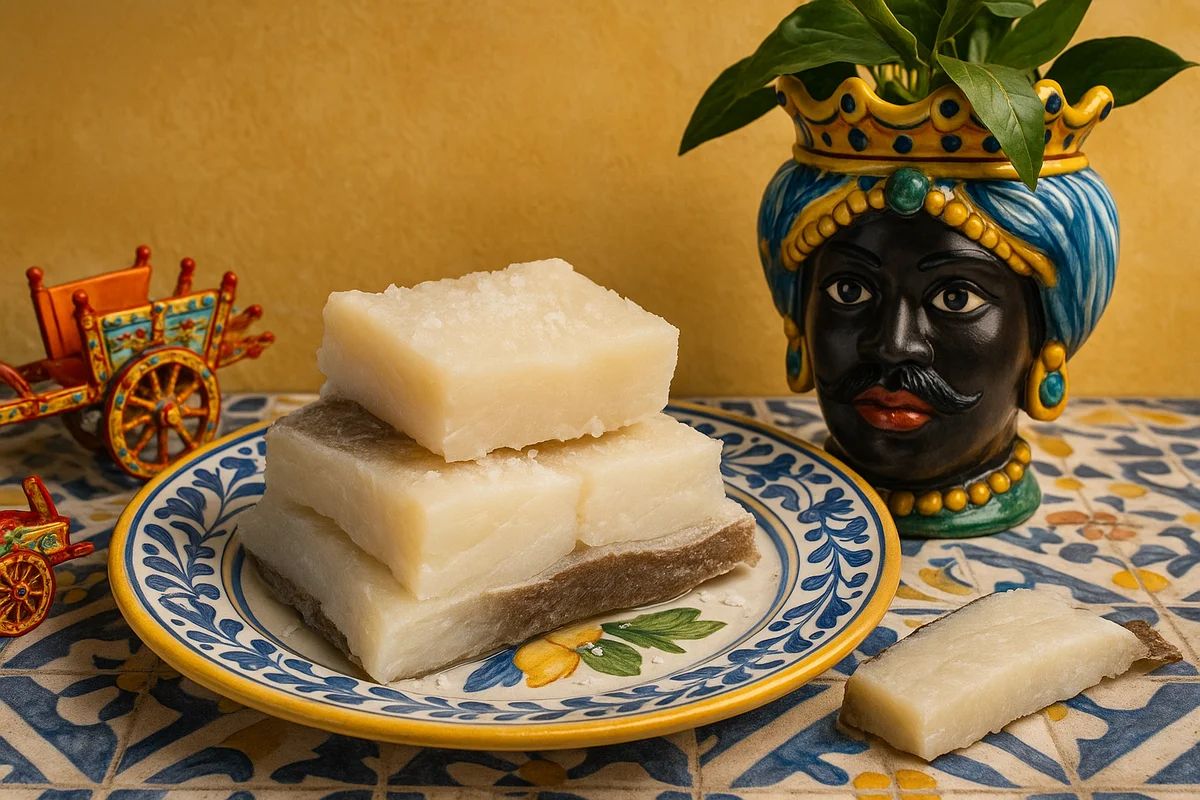
Baccalà is salted dried cod hailing from northern waters, yet it holds a cherished place in Sicilian cuisine despite its origins far from the Mediterranean. Its introduction to the island dates back centuries, when it was prized as a reliable, protein-rich staple that could be stored for long periods and eaten year-round — especially important during religious fasting.
Across Sicily, baccalà features heavily in traditional recipes that highlight its unique flavour, from the classic light batter-fried pieces to hearty stews enriched with tomatoes, olives, and capers. Each region has nurtured its own twists, weaving a diverse culinary tapestry around this preserved fish.
Characteristics
It’s worth distinguishing baccalà from stoccafisso: both come from cod, but stoccafisso is air-dried without salt. Baccalà undergoes heavy salting, which dehydrates the flesh, enabling extended preservation. Before cooking, the fish requires soaking to remove excess salt, a slow but essential step.
The cod is primarily caught in the cold North Atlantic, particularly off the coasts of Norway and Iceland. The quality of baccalà depends on the size of the original fish, salt content, and curing time.
Grades and Varieties
Baccalà varies in quality. The finest comes from large cod with thick, firm white flesh. The prime cuts are the central portions of the fillet, known locally as the "mezzo" or "filetto", while tail and fin sections tend to have thinner flesh and command lower prices.
Ready-to-use, desalted baccalà also appears in chilled sections, offering convenience though generally with slightly reduced quality compared to home-soaked fish.
Nutritional Profile
Once soaked and ready, baccalà retains the excellent nutrition of fresh cod. It’s packed with high-quality protein — around 20-25 grams per 100 grams — and is low in fat.
It provides valuable B vitamins, particularly B12 vital for the nervous system, along with minerals such as phosphorus, selenium, and iodine. Do bear in mind that even after soaking, baccalà remains saltier than fresh fish, so it should be enjoyed in moderation by those monitoring their sodium intake.
Culinary Uses
In Sicily, baccalà plays a starring role in many traditional dishes, especially during Lent and Christmas celebrations.
Fried Baccalà
One classic dish involves cutting the baccalà into chunks, dipping them in a light batter, and frying in generous olive oil. Served hot, they are crispy on the outside and tender within, often accompanied by a wedge of lemon.
Baccalà with Potatoes
A simpler variation on stoccafisso alla ghiotta, this dish bakes baccalà alongside sliced potatoes, onions, black olives, cherry tomatoes, and aromatic herbs like oregano and parsley.
Baccalà Croquettes
Boiled baccalà is flaked and mixed with mashed potatoes, parsley, garlic, grated cheese, and breadcrumbs to shape into croquettes, then fried until golden and crisp.
Pasta with Baccalà
In parts of Sicily, pasta is dressed with shredded baccalà, cherry tomatoes, garlic, chilli, and toasted breadcrumbs for a rustic, satisfying meal.
Preparation and Soaking
The soaking process is crucial to a perfect dish. The baccalà should be submerged in a large bowl of cold water, completely covered. Change the water every 6-8 hours for at least 48 hours, extending to 72 hours for thicker, saltier cuts.
Keep the bowl refrigerated or in a cool spot throughout. To test readiness, taste a small piece raw — it should be mildly salty but not overpowering.
After soaking, remove any skin or remaining bones before proceeding with your chosen recipe.
Buying Tips
When selecting dry baccalà, look for pieces with white or creamy-yellow flesh, avoiding any greyish hues. The fish should feel firm but not overly dry, with compact flesh rather than frayed fibres.
Good quality baccalà will have a strong, fresh sea aroma without unpleasant notes. Steer clear of fillets with dark spots, mould, or rancid smells. Whole fillets are generally superior to offcuts.
Storage
Properly stored in a cool, dry, ventilated spot, dry baccalà keeps for many months. Wrap it in brown paper or cloth and store it in your pantry — avoid sealed plastic containers that trap moisture.
Once soaked, keep baccalà submerged in fresh water in the fridge, changing the water daily and consuming within 2-3 days. Cooked baccalà dishes should be eaten within 2 days.
Curiosities
Baccalà was brought to Sicily through trade with Northern Europe and gained prominence in the 16th century when the Catholic Church mandated numerous fasting days. Its long shelf life was invaluable before refrigeration.
In many Sicilian areas, especially Messina, there are age-old customs centred on baccalà during festive times, notably the Christmas Eve "Scinnuta" feast, where this fish is the star.
The word "baccalà" likely derives from the Dutch "bakeljauw" or "kabeljauw", meaning cod. The salting technique was developed by Basque fishermen and spread across Europe through Dutch and Portuguese merchants.