Overview
Asparagus are vegetables belonging to the lily family, prized for their delicate and distinctive flavour.
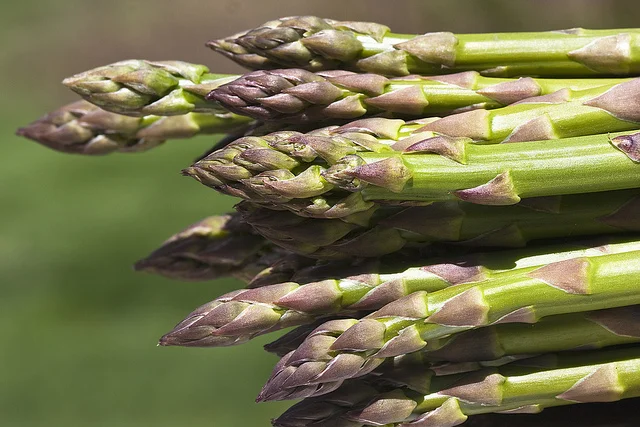
The edible portion consists of the shoots, known as turions, which vary in colour — green, white or purple — depending on the variety.
There is also a peculiar type, the asparagina, characterised by slender, tender shoots that are mainly used for ornamental purposes.
The hue of the turions changes depending on when they are harvested.
They remain white while underground, develop a violet tint as they sprout, and ultimately turn green once fully emerged.
Recipes usually call for green asparagus, the most common variety, but white and purple ones are equally delicious and can be used interchangeably.
Asparagus is a truly spring vegetable, typically harvested from late March to early June.
Asparagus should be eaten cooked, preferably steamed, to preserve their nutritional qualities. They pair wonderfully with eggs, prawns, rabbit, chicken and veal.
Thicker asparagus stalks are best suited to steaming or boiling.
While often cultivated, Sicily is renowned for its wild asparagus, which boasts a more pronounced, slightly bitter flavour yet is wonderfully intense and savoury.
Nutritional virtues of asparagus
Asparagus are a great source of fibre, vitamins A and C, carotenoids and essential minerals such as calcium and phosphorus.
They are low in calories, naturally detoxifying and support healthy kidney function.
Buying tips
The tips of asparagus should be bright in colour, straight and firm.
Overall, the shoots and stems should be unblemished and feel crisp to the touch.
If the tips begin to spread or open, it’s a sign that they are past their freshest.
Storage
Keep asparagus refrigerated in the fruit and vegetable drawer.
Given their delicate nature, they won’t keep long, so it’s best to enjoy them within 2-3 days of purchase.
How to prepare asparagus
The edible portion of asparagus is quite limited.
Rinse them thoroughly under running water, trim off the tough, white base, then prepare as required by your recipe.
If cooking whole, peel the stalks with a vegetable peeler to remove the fibrous layer, starting about 3-4 cm below the tip and down to the base.
If slicing, gently scrape the stalk with a small blunt knife, carefully avoiding the delicate tips.
Slice only until the knife cuts easily, discarding the tougher parts.
Cooking methods
- Steaming: the finest way to cook asparagus. Cook for 15–20 minutes.
- Boiling: use just enough salted water to cover the stalks; cook for around 15 minutes.
- In an asparagiera: a tall, narrow pan designed to cook asparagus upright, tied in small bundles. Add 3-4 cm of water and cook for 15–20 minutes.
- In a pan: slice the asparagus and gently sauté with garlic and extra virgin olive oil for about 10 minutes. Add vegetable broth if the pan dries out during cooking.